Bioinformatics, Institute of Biochemistry and Biology, University of Potsdam, 14476, Potsdam, Germany.
Systems Biology and Mathematical Modelling, Max Planck Institute of Molecular Plant Physiology, 14476, Potsdam, Germany.
Nat Commun. 2023 Aug 8;14(1):4781. doi: 10.1038/s41467-023-40498-1.
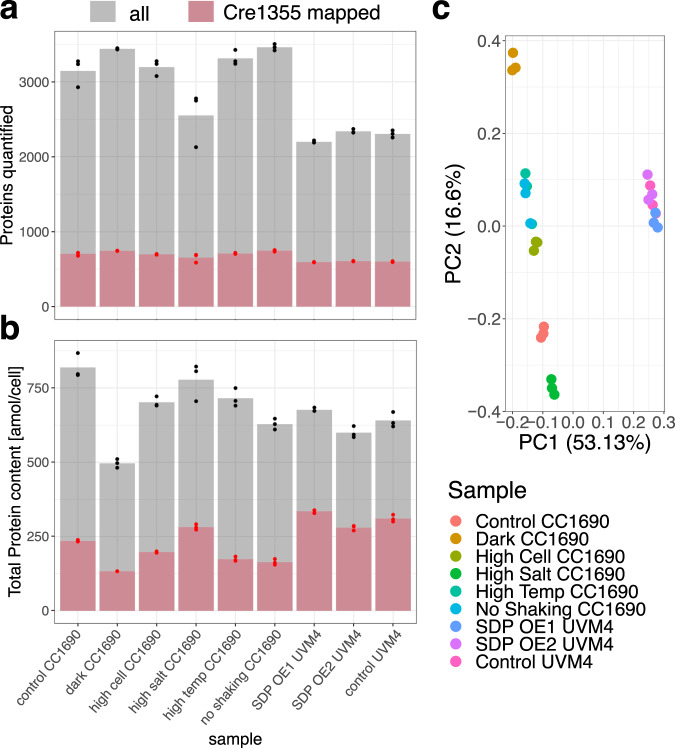
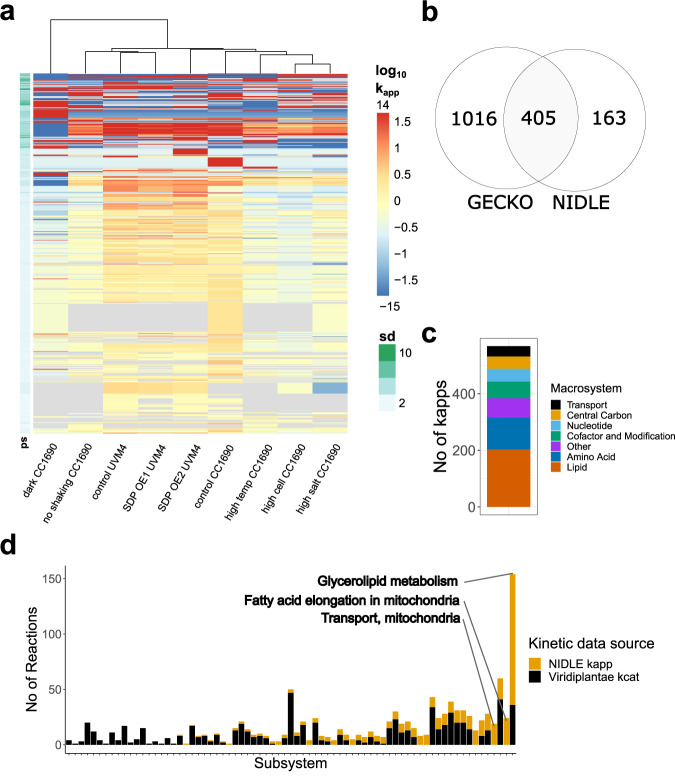
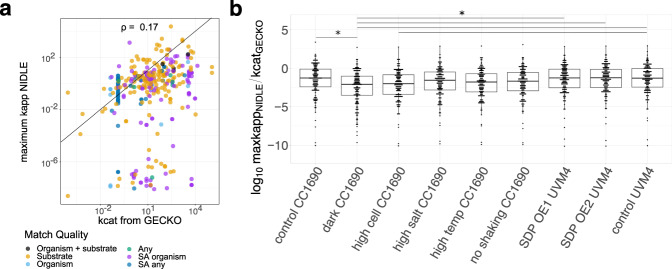
Metabolic engineering of microalgae offers a promising solution for sustainable biofuel production, and rational design of engineering strategies can be improved by employing metabolic models that integrate enzyme turnover numbers. However, the coverage of turnover numbers for Chlamydomonas reinhardtii, a model eukaryotic microalga accessible to metabolic engineering, is 17-fold smaller compared to the heterotrophic cell factory Saccharomyces cerevisiae. Here we generate quantitative protein abundance data of Chlamydomonas covering 2337 to 3708 proteins in various growth conditions to estimate in vivo maximum apparent turnover numbers. Using constrained-based modeling we provide proxies for in vivo turnover numbers of 568 reactions, representing a 10-fold increase over the in vitro data for Chlamydomonas. Integration of the in vivo estimates instead of in vitro values in a metabolic model of Chlamydomonas improved the accuracy of enzyme usage predictions. Our results help in extending the knowledge on uncharacterized enzymes and improve biotechnological applications of Chlamydomonas.
微藻的代谢工程为可持续生物燃料生产提供了一个有前途的解决方案,通过采用整合酶周转率的代谢模型,可以改进工程策略的合理设计。然而,与可进行代谢工程的异养细胞工厂酿酒酵母相比,模式真核微藻莱茵衣藻的周转率数据的覆盖率要小 17 倍。在这里,我们生成了涵盖各种生长条件下的 2337 至 3708 种蛋白质的定量蛋白质丰度数据,以估计体内最大表观周转率。使用基于约束的建模,我们为 568 个反应提供了体内周转率的替代物,这比莱茵衣藻的体外数据增加了 10 倍。在莱茵衣藻的代谢模型中,将体内估计值而不是体外值进行整合,可以提高酶利用预测的准确性。我们的研究结果有助于扩展对未鉴定酶的认识,并提高莱茵衣藻的生物技术应用。