School of Computer Science and Engineering, Central South University, Changsha, 410083, China.
Hunan Provincial Key Lab on Bioinformatics, Central South University, Changsha, 410083, China.
Commun Biol. 2023 Aug 24;6(1):870. doi: 10.1038/s42003-023-05243-w.
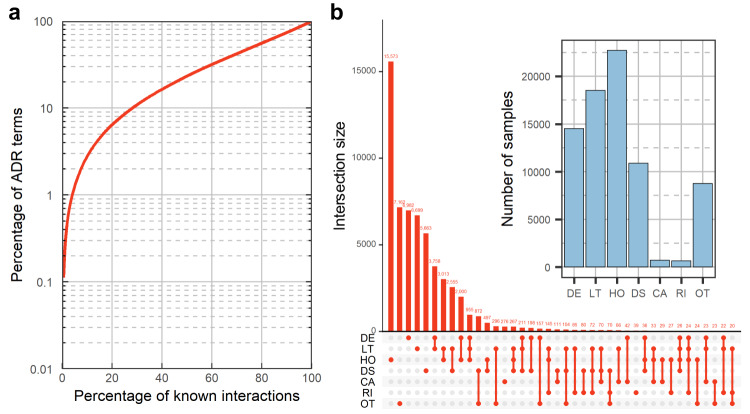
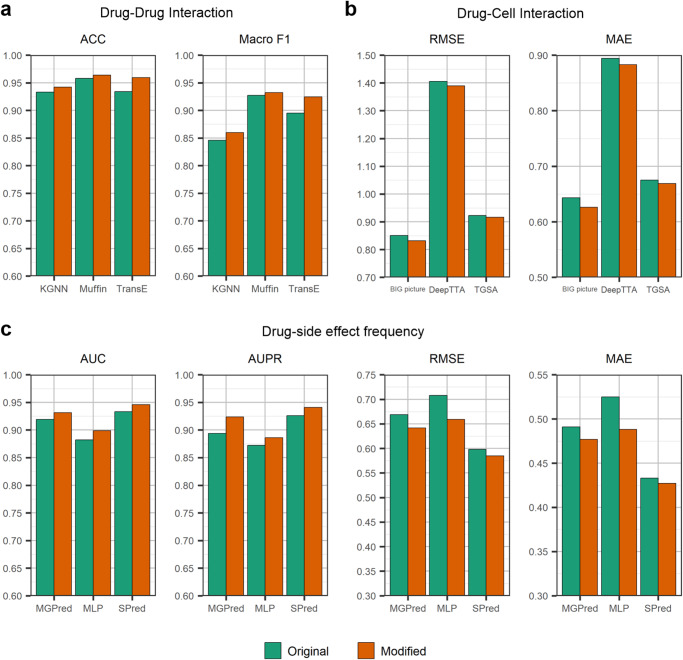
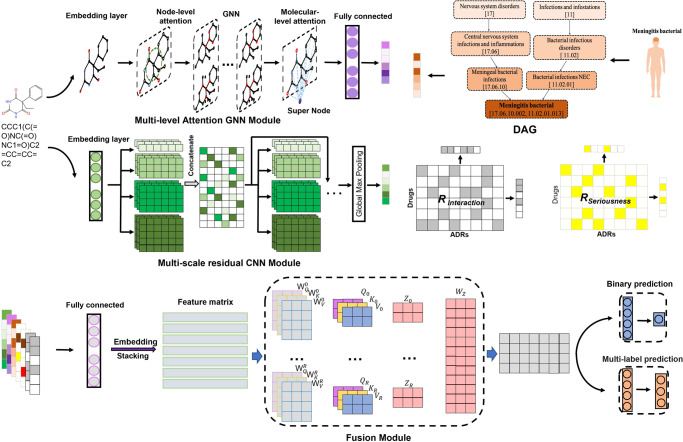
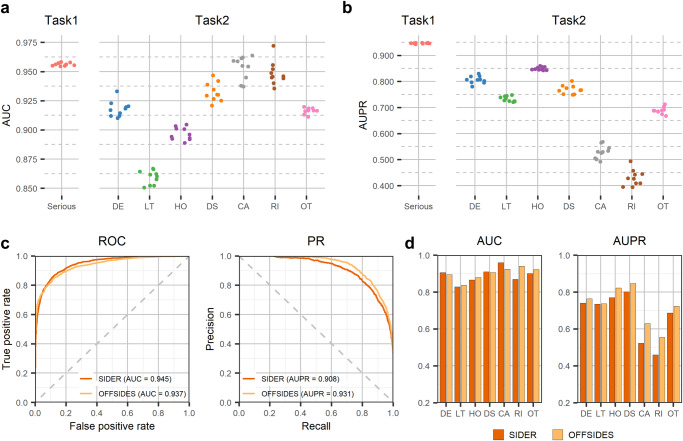
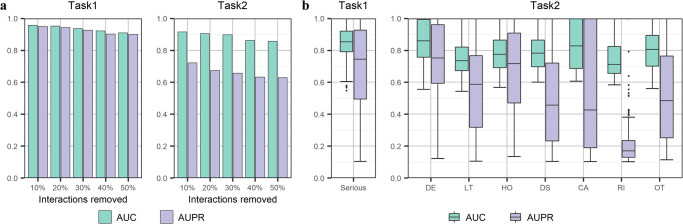
Adverse Drug Reactions (ADRs) have a direct impact on human health. As continuous pharmacovigilance and drug monitoring prove to be costly and time-consuming, computational methods have emerged as promising alternatives. However, most existing computational methods primarily focus on predicting whether or not the drug is associated with an adverse reaction and do not consider the core issue of drug benefit-risk assessment-whether the treatment outcome is serious when adverse drug reactions occur. To this end, we categorize serious clinical outcomes caused by adverse reactions to drugs into seven distinct classes and present a deep learning framework, so-called GCAP, for predicting the seriousness of clinical outcomes of adverse reactions to drugs. GCAP has two tasks: one is to predict whether adverse reactions to drugs cause serious clinical outcomes, and the other is to infer the corresponding classes of serious clinical outcomes. Experimental results demonstrate that our method is a powerful and robust framework with high extendibility. GCAP can serve as a useful tool to successfully address the challenge of predicting the seriousness of clinical outcomes stemming from adverse reactions to drugs.
药物不良反应(ADR)直接影响人类健康。由于持续的药物警戒和药物监测既昂贵又耗时,因此计算方法已成为很有前途的替代方法。然而,大多数现有的计算方法主要侧重于预测药物是否与不良反应相关,而不考虑药物获益-风险评估的核心问题——当发生药物不良反应时,治疗结果是否严重。为此,我们将药物不良反应引起的严重临床结局分为七个不同类别,并提出了一种深度学习框架,即 GCAP,用于预测药物不良反应的临床结局的严重性。GCAP 有两个任务:一个是预测药物不良反应是否会导致严重的临床结局,另一个是推断严重临床结局的相应类别。实验结果表明,我们的方法是一种强大而稳健的具有高可扩展性的框架。GCAP 可以作为一种有用的工具,成功地解决预测药物不良反应引起的临床结局严重程度的挑战。