
挖掘生物表面活性剂在生物医学和制药应用中的潜力。
Harnessing the Potential of Biosurfactants for Biomedical and Pharmaceutical Applications.
作者信息
Ceresa Chiara, Fracchia Letizia, Sansotera Andrea Chiara, De Rienzo Mayri Alejandra Díaz, Banat Ibrahim M
机构信息
Department of Pharmaceutical Sciences, Università del Piemonte Orientale "A. Avogadro", 28100 Novara, Italy.
School of Science, Engineering and Environment, University of Salford, Manchester M5 4WT, UK.
出版信息
Pharmaceutics. 2023 Aug 18;15(8):2156. doi: 10.3390/pharmaceutics15082156.
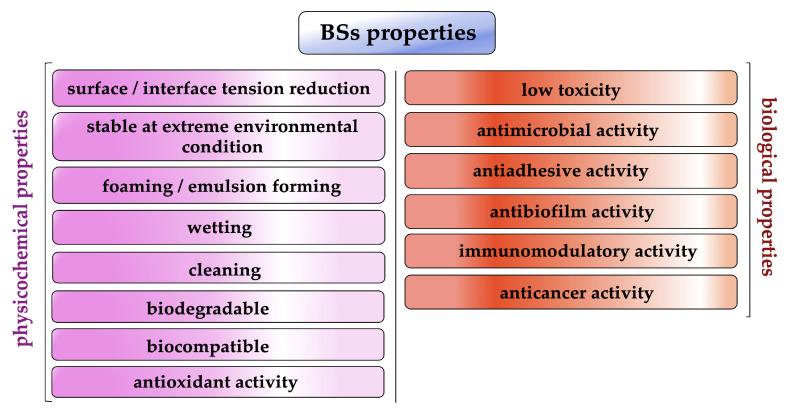
Biosurfactants (BSs) are microbial compounds that have emerged as potential alternatives to chemical surfactants due to their multifunctional properties, sustainability and biodegradability. Owing to their amphipathic nature and distinctive structural arrangement, biosurfactants exhibit a range of physicochemical properties, including excellent surface activity, efficient critical micelle concentration, humectant properties, foaming and cleaning abilities and the capacity to form microemulsions. Furthermore, numerous biosurfactants display additional biological characteristics, such as antibacterial, antifungal and antiviral effects, and antioxidant, anticancer and immunomodulatory activities. Over the past two decades, numerous studies have explored their potential applications, including pharmaceuticals, cosmetics, antimicrobial and antibiofilm agents, wound healing, anticancer treatments, immune system modulators and drug/gene carriers. These applications are particularly important in addressing challenges such as antimicrobial resistance and biofilm formations in clinical, hygiene and therapeutic settings. They can also serve as coating agents for surfaces, enabling antiadhesive, suppression, or eradication strategies. Not least importantly, biosurfactants have shown compatibility with various drug formulations, including nanoparticles, liposomes, micro- and nanoemulsions and hydrogels, improving drug solubility, stability and bioavailability, and enabling a targeted and controlled drug release. These qualities make biosurfactants promising candidates for the development of next-generation antimicrobial, antibiofilm, anticancer, wound-healing, immunomodulating, drug or gene delivery agents, as well as adjuvants to other antibiotics. Analysing the most recent literature, this review aims to update the present understanding, highlight emerging trends, and identify promising directions and advancements in the utilization of biosurfactants within the pharmaceutical and biomedical fields.
生物表面活性剂(BSs)是一类微生物化合物,由于其具有多功能性、可持续性和生物可降解性,已成为化学表面活性剂的潜在替代品。由于其两亲性性质和独特的结构排列,生物表面活性剂具有一系列物理化学性质,包括优异的表面活性、高效的临界胶束浓度、保湿性能、发泡和清洁能力以及形成微乳液的能力。此外,许多生物表面活性剂还具有其他生物学特性,如抗菌、抗真菌和抗病毒作用,以及抗氧化、抗癌和免疫调节活性。在过去二十年中,众多研究探索了它们的潜在应用,包括制药、化妆品、抗菌和抗生物膜剂、伤口愈合、抗癌治疗、免疫系统调节剂以及药物/基因载体。这些应用在应对临床、卫生和治疗环境中的抗菌耐药性和生物膜形成等挑战方面尤为重要。它们还可以用作表面涂层剂,实现抗粘附、抑制或根除策略。同样重要的是,生物表面活性剂已显示出与各种药物制剂兼容,包括纳米颗粒、脂质体、微乳液和纳米乳液以及水凝胶,可提高药物的溶解度、稳定性和生物利用度,并实现靶向和控释药物。这些特性使生物表面活性剂成为开发下一代抗菌、抗生物膜、抗癌、伤口愈合、免疫调节、药物或基因递送剂以及其他抗生素佐剂的有前途的候选物。通过分析最新文献,本综述旨在更新当前的认识,突出新兴趋势,并确定在制药和生物医学领域利用生物表面活性剂的有前途的方向和进展。




 Zotero 插件