Department of Nutrition, University of Oslo, Oslo, Norway.
CICERO Center for International Climate Research, Oslo, Norway.
Eur J Nutr. 2023 Dec;62(8):3383-3396. doi: 10.1007/s00394-023-03243-4. Epub 2023 Aug 31.
Introducing healthy and sustainable diets early in life can promote lifelong healthy dietary patterns with a low environmental impact. Therefore, we aimed to estimate the environmental and nutritional consequences of a dietary change for 2-year-old children in Norway towards healthier dietary patterns.
Environmental impacts of the current habitual diet among 2-year-olds (n = 1413) were estimated for six impact categories and compared with scenario diets based on the Norwegian food-based dietary guidelines (FBDG) and the EAT-Lancet Commission reference diet. Last, we evaluated the nutritional adequacy of the diets against the Norwegian nutrition recommendations for children aged 2-5 years. The current diet was assessed by an FFQ.
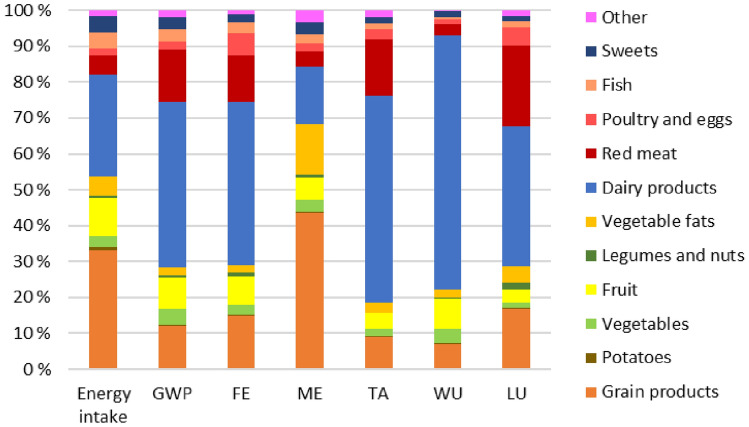
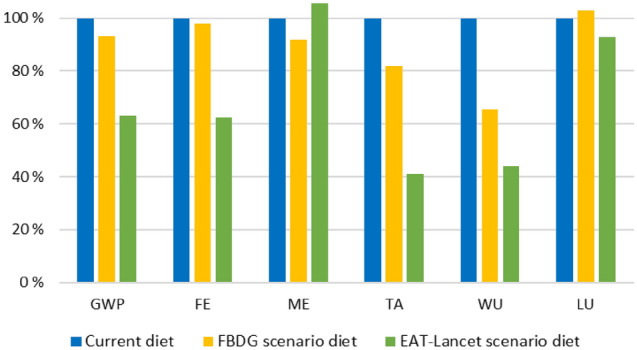
Environmental impacts of the current habitual diet were up to two times higher than those of the scenario diets. Compared with the current diet, impacts from the FBDG scenario diet were reduced by 35% for water use and 18% for terrestrial acidification, whereas impacts from the EAT-Lancet scenario diet were reduced by 51% for water use, 57% for terrestrial acidification, 36% for global warming potential and 27% for freshwater eutrophication. Milk and dairy products were the main contributors to environmental impacts in both the current diet and the FBDG scenario diet. The scenario diets were nutritionally adequate and improved the dietary quality among Norwegian 2-year-olds.
Compared to current diets among young children, more plant-based dietary patterns in line with national FBDG or the EAT-Lancet Commission reference diet can improve the nutritional adequacy of diets and simultaneously reduce environmental impacts.
在生命早期引入健康和可持续的饮食可以促进终生健康的饮食模式,并减少对环境的影响。因此,我们旨在估计挪威 2 岁儿童饮食向更健康的饮食模式转变的环境和营养后果。
我们估计了 1413 名 2 岁儿童当前习惯性饮食在六个影响类别中的环境影响,并将其与基于挪威食物为基础的饮食指南(FBDG)和 EAT-Lancet 委员会参考饮食的情景饮食进行了比较。最后,我们根据挪威 2-5 岁儿童的营养建议评估了这些饮食的营养充足性。当前的饮食通过 FFQ 进行评估。
当前习惯性饮食的环境影响比情景饮食高 2 倍。与当前饮食相比,FBDG 情景饮食的水使用和陆地酸化影响分别减少了 35%和 18%,而 EAT-Lancet 情景饮食的水使用、陆地酸化、全球变暖潜能和淡水富营养化影响分别减少了 51%、57%、36%和 27%。牛奶和奶制品是当前饮食和 FBDG 情景饮食中环境影响的主要贡献者。情景饮食在营养上是充足的,并改善了挪威 2 岁儿童的饮食质量。
与幼儿的当前饮食相比,更符合国家 FBDG 或 EAT-Lancet 委员会参考饮食的植物性饮食模式可以提高饮食的营养充足性,同时减少环境影响。