Levine Adam C, Park Anna, Adhikari Anindita, Alejandria Maria Carinnes P, Bradlow Benjamin H, Lopez-Portillo Maria F, Mutwafy Salma, Zumbyte Ieva, Heller Patrick
Watson Institute for International and Public Affairs, Brown University, Providence, Rhode Island, United States of America.
Department of Sociology, Brown University, Providence, Rhode Island, United States of America.
PLOS Glob Public Health. 2023 Sep 14;3(9):e0002341. doi: 10.1371/journal.pgph.0002341. eCollection 2023.
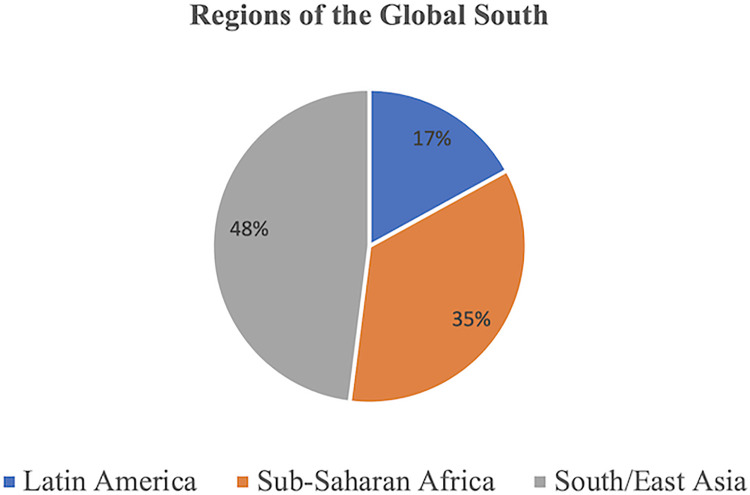
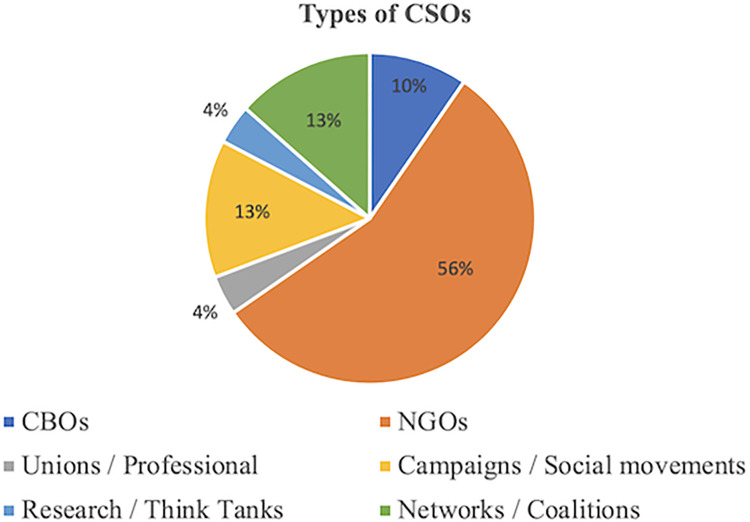
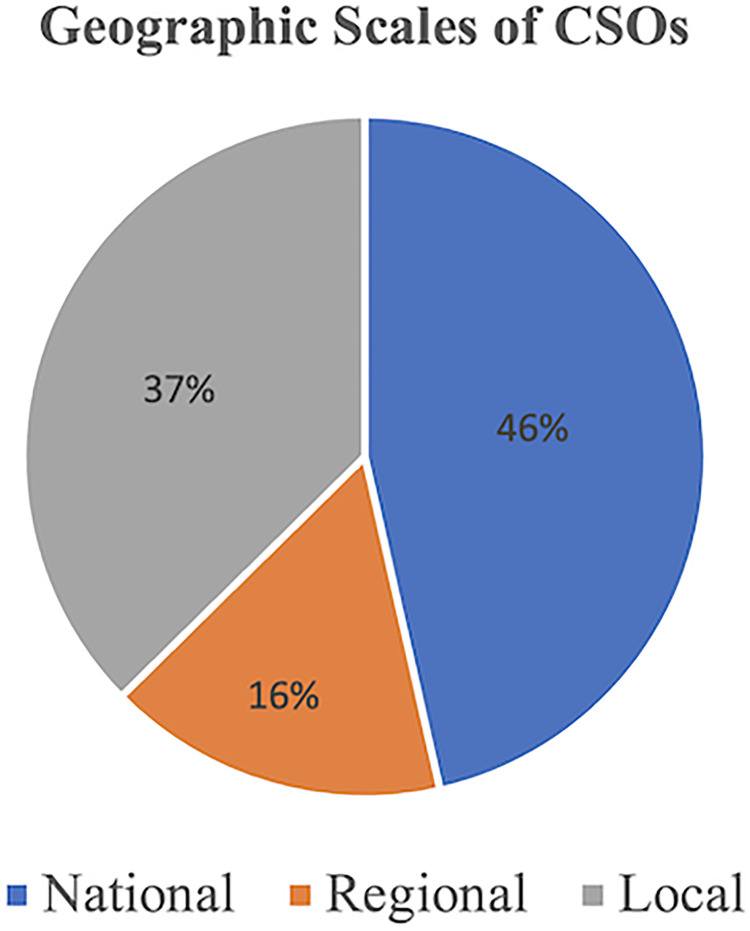
Despite receiving less attention than high-income countries, low- and middle-income countries (LMICs) experienced more than 85% of global excess deaths during the first two years of the COVID-19 pandemic. Due to the unprecedented speed and scale of the COVID-19 pandemic, which placed large demands on government capacity, many LMICs relied on civil society organizations (CSOs) to assist in implementing COVID-19 response programs. Yet few studies have examined the critical role CSOs played in mitigating the effects of the COVID-19 pandemic in low resource settings. This study explored the CSO response to COVID-19 in five of the most heavily impacted LMICs in the Global South. Interviews were conducted from May to August 2021 with a purposive sample of CSO key informants within each of the five countries. A total of 52 CSOs were selected from which 53 key informants were interviewed either via Zoom or by phone. Interviews were coded and analyzed using NVivo or MAXQDA2020. Out of the 52 CSOs selected, 24 were national organizations, 8 were regional, and 20 were local. CSOs fell into six categories: community-based organizations, non-governmental organizations, unions/professional organizations, campaigns/social movements, research organizations/think tanks, and networks/coalitions. CSOs across all five countries adapted their missions, stretched their resources, and performed a wide range of activities that fit into five programmatic areas: food security and livelihood support, public health and medical care, cash transfer programs, risk communication and community education, and needs assessment. This qualitative analysis demonstrates the critical role CSOs played in supplementing government emergency aid response by delivering necessary resources and supporting highly vulnerable populations during the COVID-19 pandemic, as well as the primary challenges they faced in doing so. Given the generally weak state of public capacity in the LMICs studied, this role was vital to responding to the pandemic.
尽管与高收入国家相比受到的关注较少,但在新冠疫情的头两年里,低收入和中等收入国家(LMICs)的全球超额死亡人数超过了85%。由于新冠疫情的速度和规模前所未有的,对政府能力提出了巨大要求,许多低收入和中等收入国家依靠民间社会组织(CSO)协助实施新冠疫情应对计划。然而,很少有研究探讨民间社会组织在资源匮乏地区减轻新冠疫情影响方面所发挥的关键作用。本研究探讨了全球南方五个受影响最严重的低收入和中等收入国家的民间社会组织对新冠疫情的应对措施。2021年5月至8月,对这五个国家中每个国家的民间社会组织关键信息提供者进行了有目的抽样访谈。共挑选了52个民间社会组织,通过Zoom或电话对53名关键信息提供者进行了访谈。访谈使用NVivo或MAXQDA2020进行编码和分析。在所选的52个民间社会组织中,24个是全国性组织,8个是地区性组织,20个是地方性组织。民间社会组织分为六类:社区组织、非政府组织、工会/专业组织、运动/社会运动、研究组织/智库以及网络/联盟。所有五个国家的民间社会组织都调整了其使命,扩展了资源,并开展了广泛的活动,这些活动可归入五个方案领域:粮食安全和生计支持、公共卫生和医疗保健、现金转移计划、风险沟通和社区教育以及需求评估。这项定性分析表明,民间社会组织在新冠疫情期间通过提供必要资源和支持高度脆弱人群来补充政府紧急援助应对措施方面发挥了关键作用,以及它们在这样做时面临的主要挑战。鉴于所研究的低收入和中等收入国家公共能力普遍薄弱,这一作用对于应对疫情至关重要。