Qatar Biomedical Research Institute (QBRI), Hamad Bin Khalifa University, Qatar Foundation, Doha, Qatar.
College of Health and Life Sciences, Hamad Bin Khalifa University, Qatar Foundation, Doha, Qatar.
Cancer Epidemiol Biomarkers Prev. 2023 Dec 1;32(12):1738-1746. doi: 10.1158/1055-9965.EPI-23-0520.
Arab countries are projecting increase in cancer incidence and mortality; however, there are limited studies that compare the epidemiology of cancer in Arab countries compared with other parts of the world.
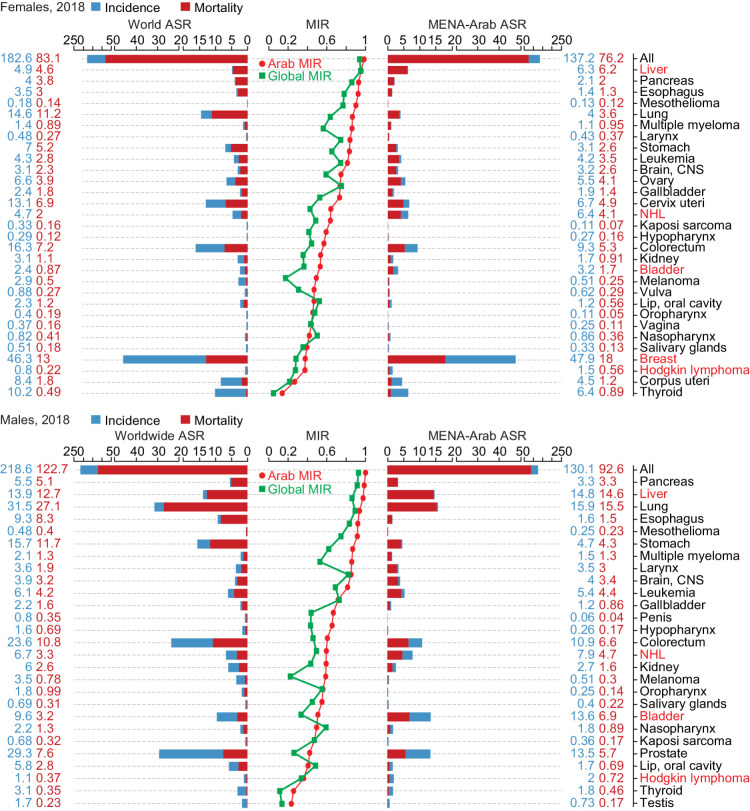
We used the 2018 Global Cancer Observatory data to compare the age-standardized incidence and mortality estimates in Arab-speaking countries to the rest of the world.
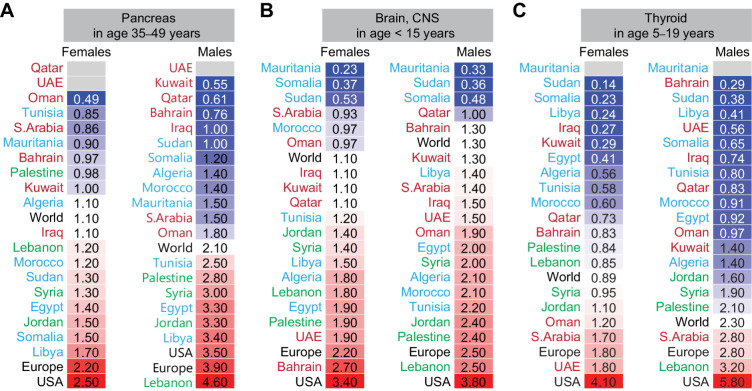
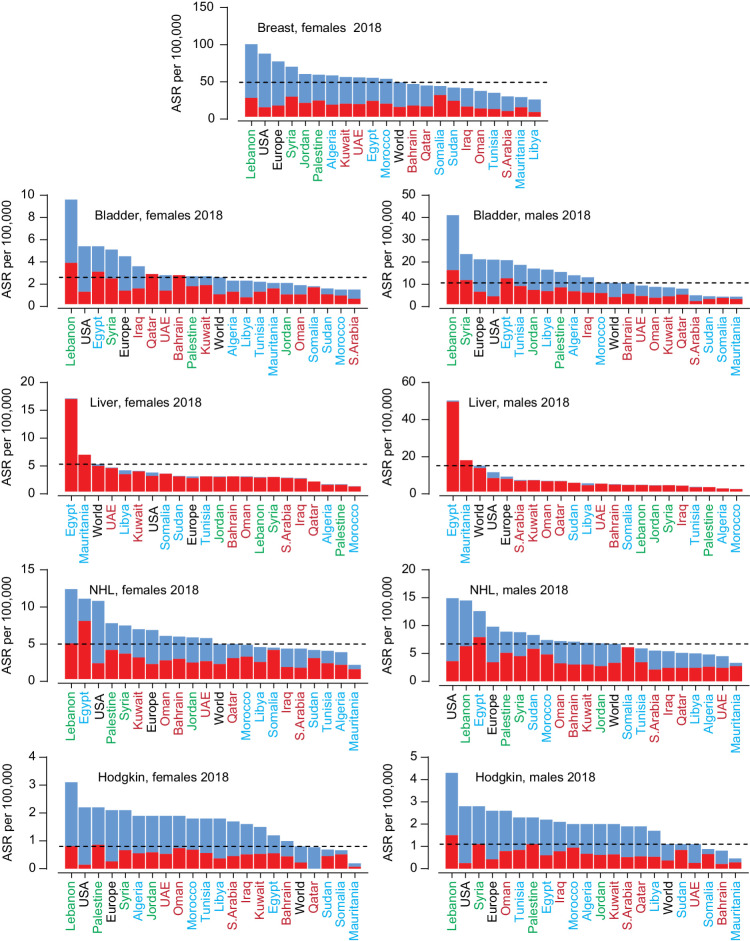
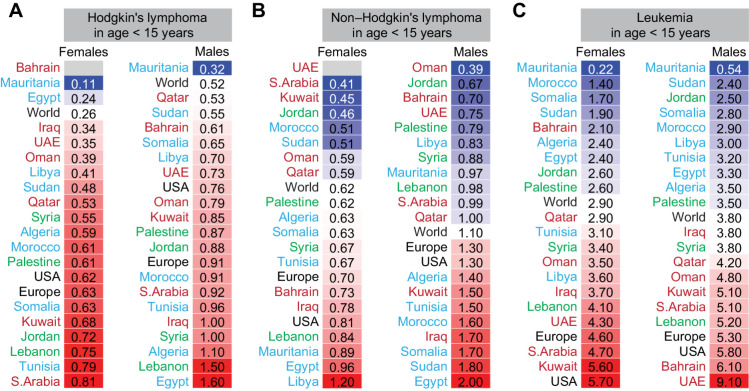
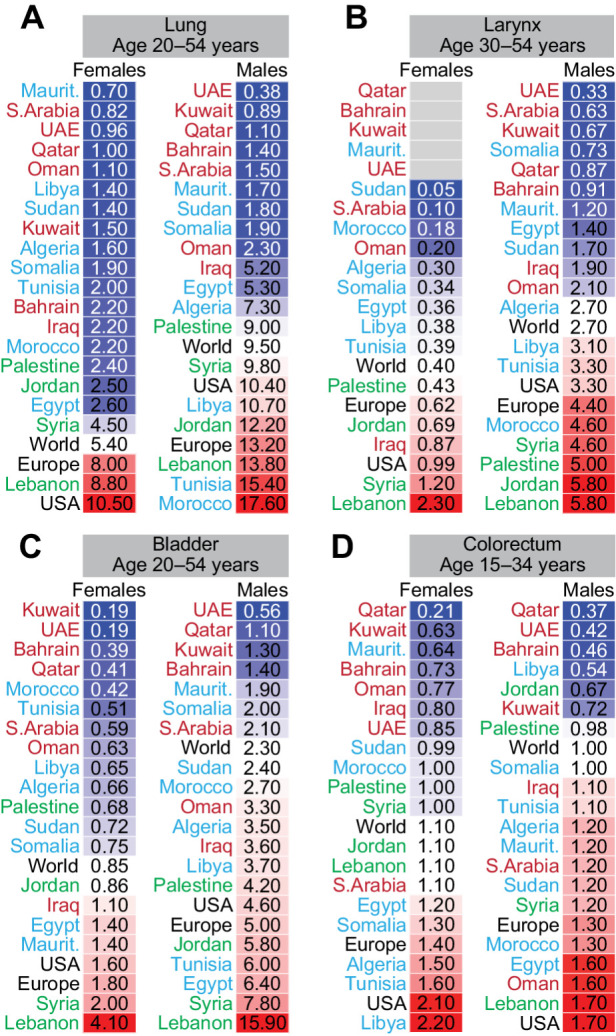
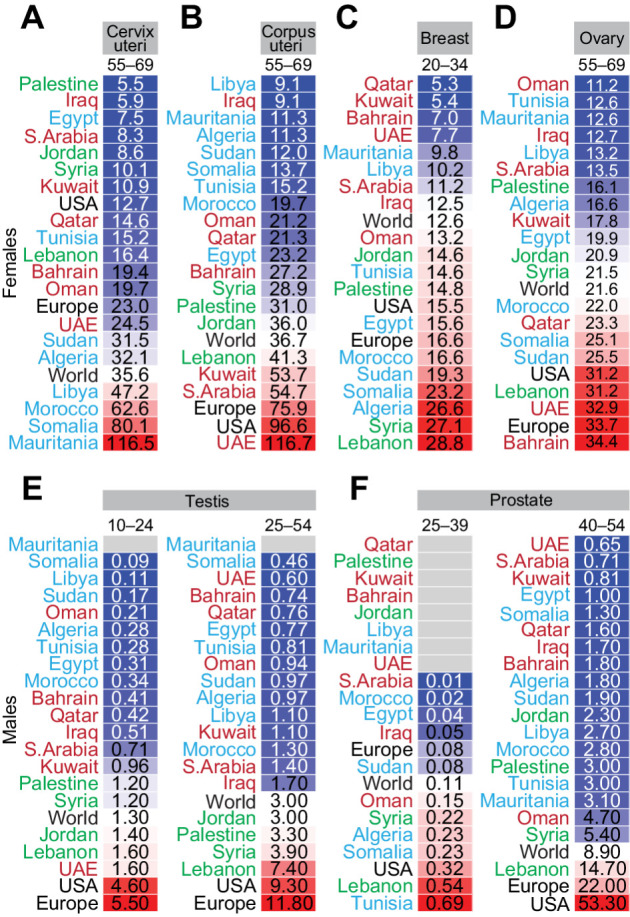
Rates for incidence and mortality for all cancers in Arab countries were lower than the world's rates but the incidence rates of non-Hodgkin and Hodgkin lymphoma, bladder, breast, and liver cancers were higher. Arab countries generally had higher mortality-to-incidence ratio than the world's ratio. Incidence rates, even in age-specific groups, varied between subregions of Arab countries (the Levant, Arabian Gulf, and Arab African subregions), and Iraq and Egypt, suggesting some common and unique environmental factors and possible ethnic or genetic heritages.
There are essential scopes for improvements in Arab countries including better treatments to reduce the high mortality-to-incidence ratio, and supporting vaccination programs and antiviral treatments that would prevent the prevalent viral infection-related cancers. The high incidence of several cancers in younger Arabs suggests genetic factors and underlines the importance of genetic epidemiology studies.
This study is an essential reference to evaluate and monitor the progress of national cancer initiatives in Arab countries for surveillance and prevention programs and improving clinical management. The study also provides a comprehensive snapshot of cancers in a unique region that could shed light on the interplay of environmental, lifestyle, and genetic risk factors.
阿拉伯国家预计癌症发病率和死亡率将会上升;然而,与世界其他地区相比,针对阿拉伯国家癌症流行病学的研究有限。
我们使用了 2018 年全球癌症观察站的数据,比较了阿拉伯国家与世界其他地区的癌症标准化发病率和死亡率的估计值。
阿拉伯国家所有癌症的发病率和死亡率均低于世界平均水平,但非霍奇金淋巴瘤和霍奇金淋巴瘤、膀胱癌、乳腺癌和肝癌的发病率较高。阿拉伯国家的死亡率与发病率之比普遍高于世界平均水平。即使在特定年龄组中,阿拉伯国家各子区域(黎凡特、阿拉伯海湾和阿拉伯非洲子区域)以及伊拉克和埃及的发病率也存在差异,这表明存在一些共同和独特的环境因素以及可能的种族或遗传遗产。
阿拉伯国家有必要进行改进,包括改善治疗方法以降低高死亡率与发病率之比,并支持疫苗接种计划和抗病毒治疗,以预防普遍存在的病毒感染相关癌症。许多阿拉伯年轻人罹患癌症的发病率较高,这表明遗传因素很重要,突显了遗传流行病学研究的重要性。
本研究为评估和监测阿拉伯国家国家癌症计划的进展情况提供了重要参考,以制定监测和预防计划,并改善临床管理。该研究还提供了一个独特地区癌症的全面概况,这可能有助于了解环境、生活方式和遗传风险因素之间的相互作用。