Department of Prosthodontics, Yonsei University College of Dentistry, Yonsei-ro 50-1, Seodaemun-gu, Seoul, 03722, Korea.
Department of Preventive Dentistry and Public Oral Health, Yonsei University College of Dentistry, Seoul, 03722, Korea.
Sci Rep. 2023 Oct 6;13(1):16856. doi: 10.1038/s41598-023-42385-7.
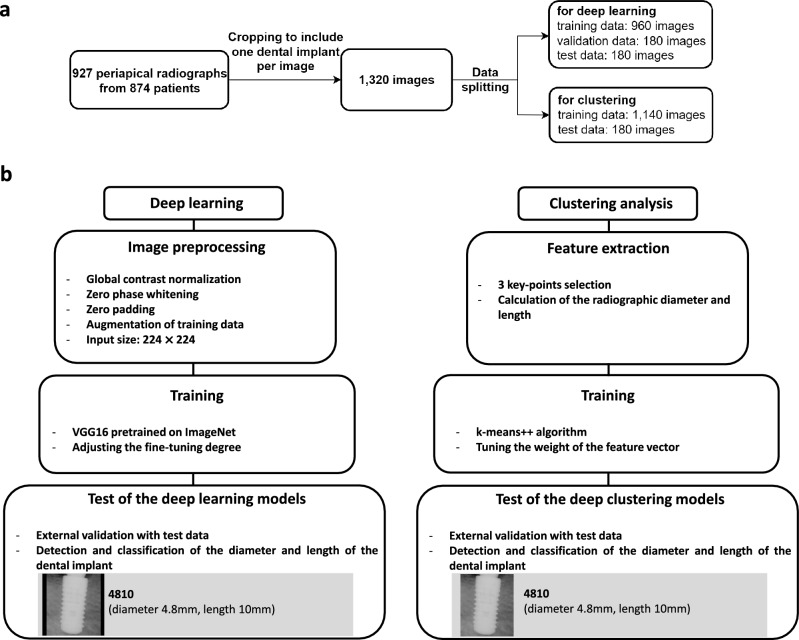
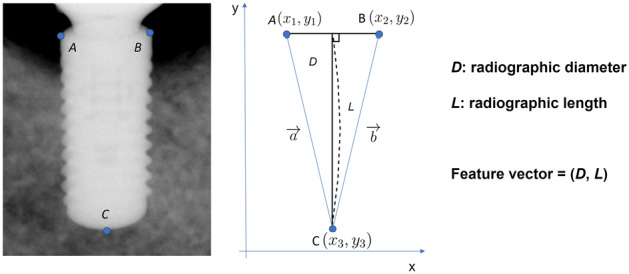
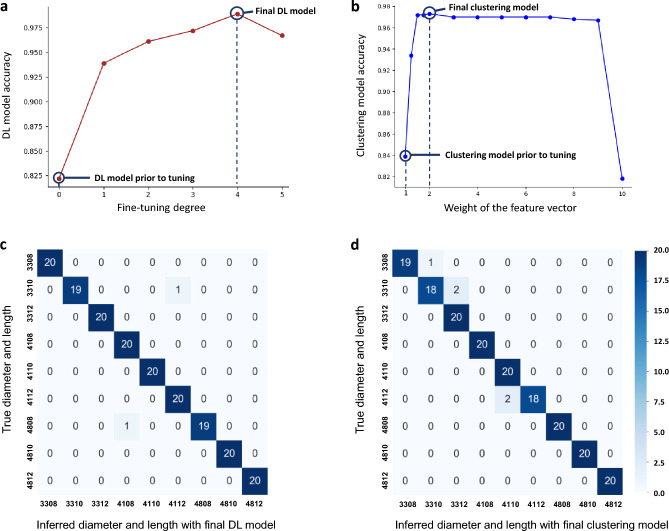
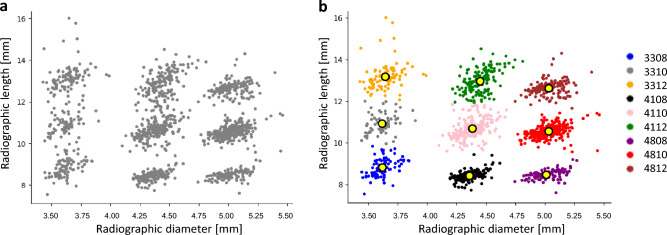
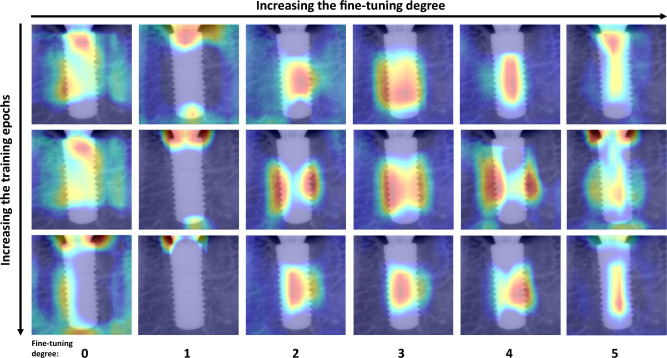
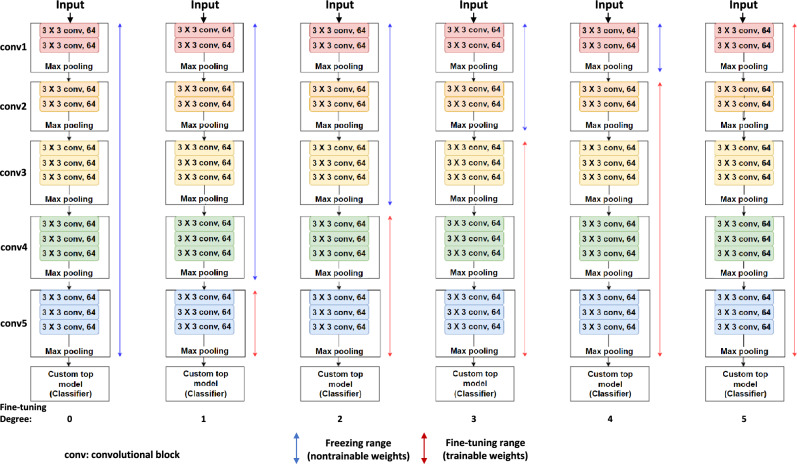
This study investigated two artificial intelligence (AI) methods for automatically classifying dental implant diameter and length based on periapical radiographs. The first method, deep learning (DL), involved utilizing the pre-trained VGG16 model and adjusting the fine-tuning degree to analyze image data obtained from periapical radiographs. The second method, clustering analysis, was accomplished by analyzing the implant-specific feature vector derived from three key points coordinates of the dental implant using the k-means++ algorithm and adjusting the weight of the feature vector. DL and clustering model classified dental implant size into nine groups. The performance metrics of AI models were accuracy, sensitivity, specificity, F1-score, positive predictive value, negative predictive value, and area under the receiver operating characteristic curve (AUC-ROC). The final DL model yielded performances above 0.994, 0.950, 0.994, 0.974, 0.952, 0.994, and 0.975, respectively, and the final clustering model yielded performances above 0.983, 0.900, 0.988, 0.923, 0.909, 0.988, and 0.947, respectively. When comparing the AI model before tuning and the final AI model, statistically significant performance improvements were observed in six out of nine groups for DL models and four out of nine groups for clustering models based on AUC-ROC. Two AI models showed reliable classification performances. For clinical applications, AI models require validation on various multicenter data.
本研究旨在探讨两种人工智能(AI)方法,以自动根据根尖片对牙种植体直径和长度进行分类。第一种方法是深度学习(DL),涉及使用预训练的 VGG16 模型,并调整微调程度来分析从根尖片获得的图像数据。第二种方法是聚类分析,通过使用 k-means++ 算法分析牙种植体三个关键点坐标得到的种植体特征向量,并调整特征向量的权重来完成。DL 和聚类模型将牙种植体尺寸分为九组。AI 模型的性能指标包括准确性、敏感度、特异性、F1 评分、阳性预测值、阴性预测值和接收者操作特征曲线下的面积(AUC-ROC)。最终的 DL 模型的性能分别超过 0.994、0.950、0.994、0.974、0.952、0.994 和 0.975,最终的聚类模型的性能分别超过 0.983、0.900、0.988、0.923、0.909、0.988 和 0.947。在比较调整前和最终的 AI 模型时,DL 模型在六个组中的六个组和聚类模型在九个组中的四个组中,基于 AUC-ROC 的性能均有显著提高。两种 AI 模型都显示出可靠的分类性能。对于临床应用,AI 模型需要在各种多中心数据上进行验证。