Department of Computational Biomedicine, Cedars-Sinai Medical Center, Hollywood, CA, USA.
Biotech Research and Innovation Centre (BRIC), University of Copenhagen, Copenhagen, Denmark.
Mol Syst Biol. 2023 Nov 9;19(11):e11670. doi: 10.15252/msb.202311670. Epub 2023 Oct 10.
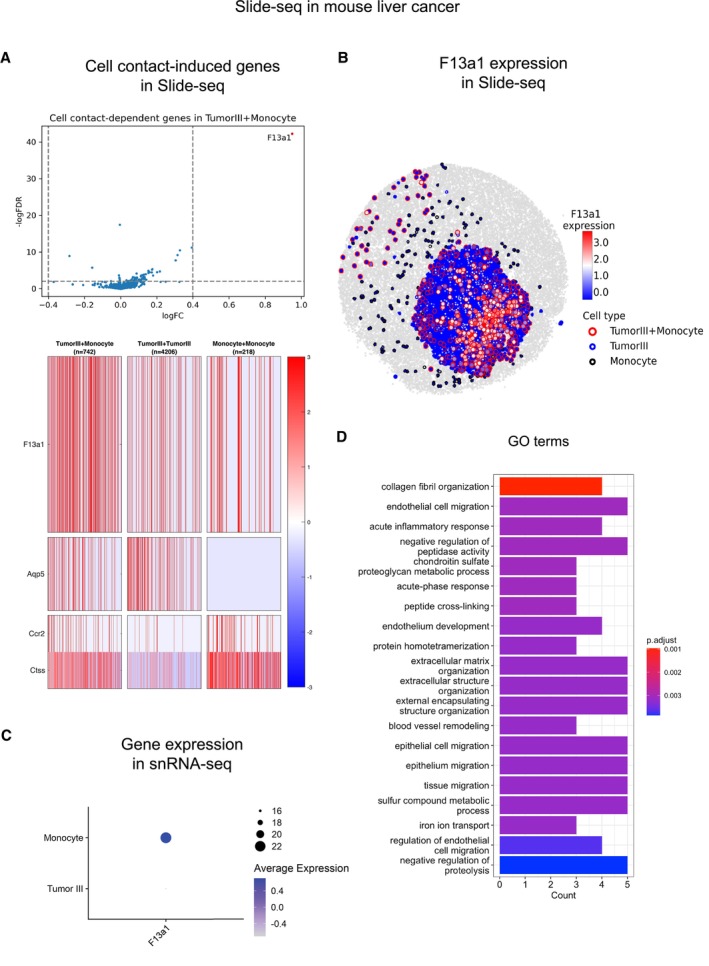
Cells have evolved their communication methods to sense their microenvironments and send biological signals. In addition to communication using ligands and receptors, cells use diverse channels including gap junctions to communicate with their immediate neighbors. Current approaches, however, cannot effectively capture the influence of various microenvironments. Here, we propose a novel approach to investigate cell neighbor-dependent gene expression (CellNeighborEX) in spatial transcriptomics (ST) data. To categorize cells based on their microenvironment, CellNeighborEX uses direct cell location or the mixture of transcriptome from multiple cells depending on ST technologies. For each cell type, CellNeighborEX identifies diverse gene sets associated with partnering cell types, providing further insight. We found that cells express different genes depending on their neighboring cell types in various tissues including mouse embryos, brain, and liver cancer. Those genes are associated with critical biological processes such as development or metastases. We further validated that gene expression is induced by neighboring partners via spatial visualization. The neighbor-dependent gene expression suggests new potential genes involved in cell-cell interactions beyond what ligand-receptor co-expression can discover.
细胞已经进化出它们的通讯方式来感知其微环境并发送生物信号。除了使用配体和受体进行通讯外,细胞还使用多种通道,包括间隙连接,与它们的邻近细胞进行通讯。然而,目前的方法无法有效地捕捉各种微环境的影响。在这里,我们提出了一种新的方法来研究空间转录组学(ST)数据中的细胞邻居依赖性基因表达(CellNeighborEX)。为了根据微环境对细胞进行分类,CellNeighborEX 使用直接的细胞位置或来自多个细胞的转录组混合物,具体取决于 ST 技术。对于每种细胞类型,CellNeighborEX 都会识别与伙伴细胞类型相关的各种基因集,从而提供更深入的见解。我们发现,在包括小鼠胚胎、大脑和肝癌在内的各种组织中,细胞根据其邻近细胞类型表达不同的基因。这些基因与发育或转移等关键的生物学过程有关。我们进一步通过空间可视化验证了基因表达是由邻近的伙伴诱导的。这种邻居依赖性的基因表达表明,除了配体-受体共表达可以发现的之外,细胞间相互作用涉及新的潜在基因。