Chair of Bioseparation Engineering, School of Engineering and Design, Technical University of Munich, Boltzmannstr. 15, 85748 Garching, Germany.
Department of Chemical Sciences, Bernal Institute, University of Limerick, V94 T9PX Castletroy, Ireland.
Int J Mol Sci. 2023 Sep 27;24(19):14649. doi: 10.3390/ijms241914649.
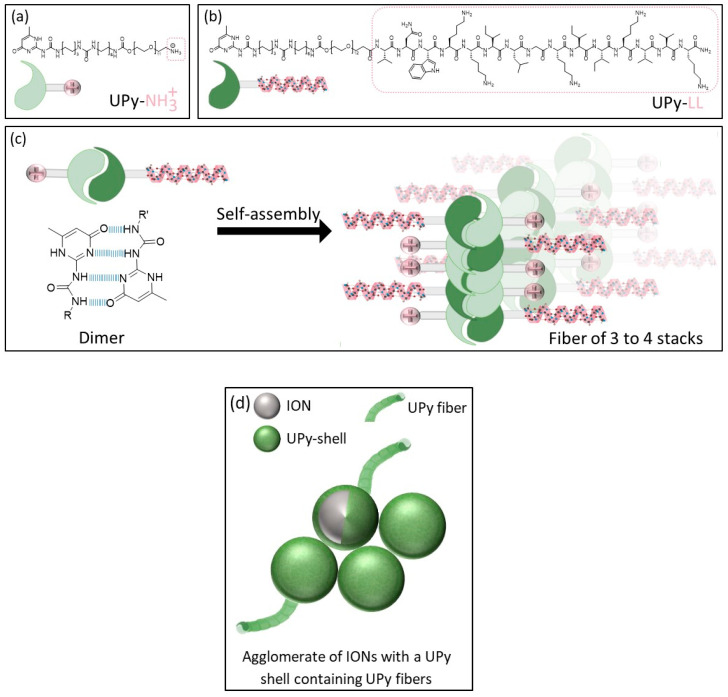
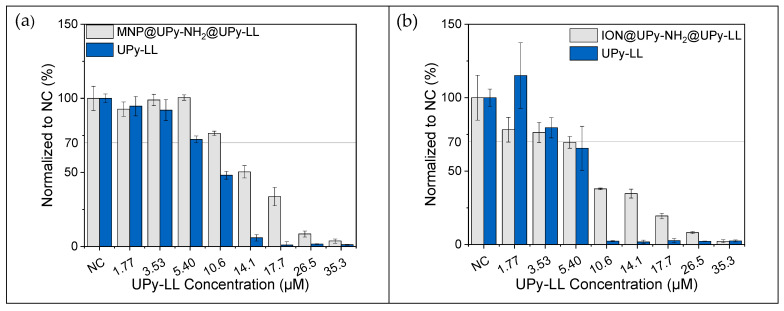
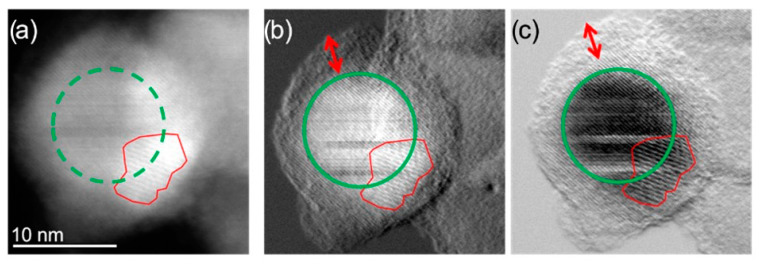
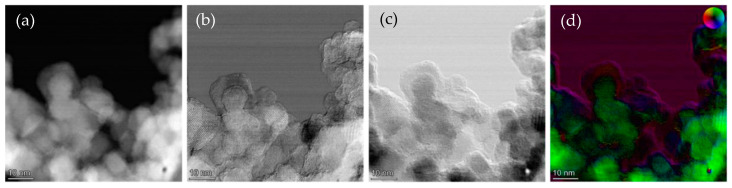
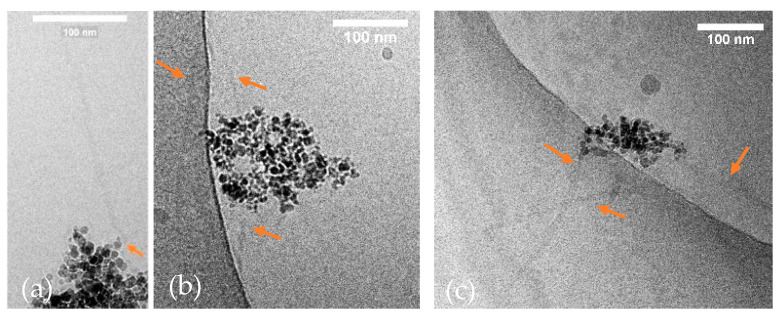
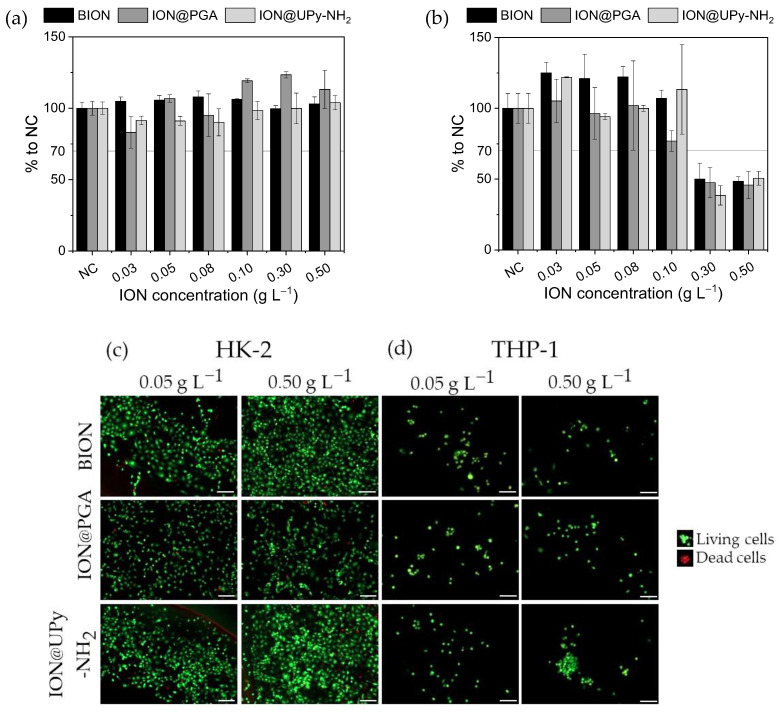
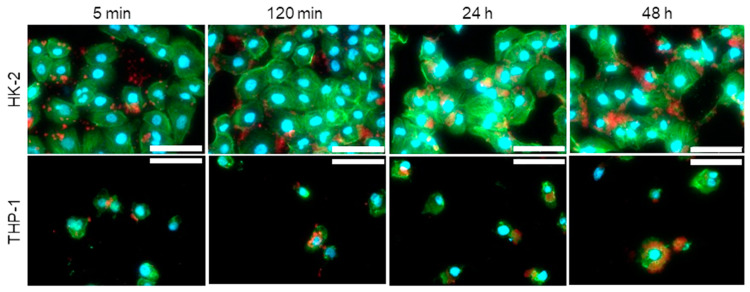
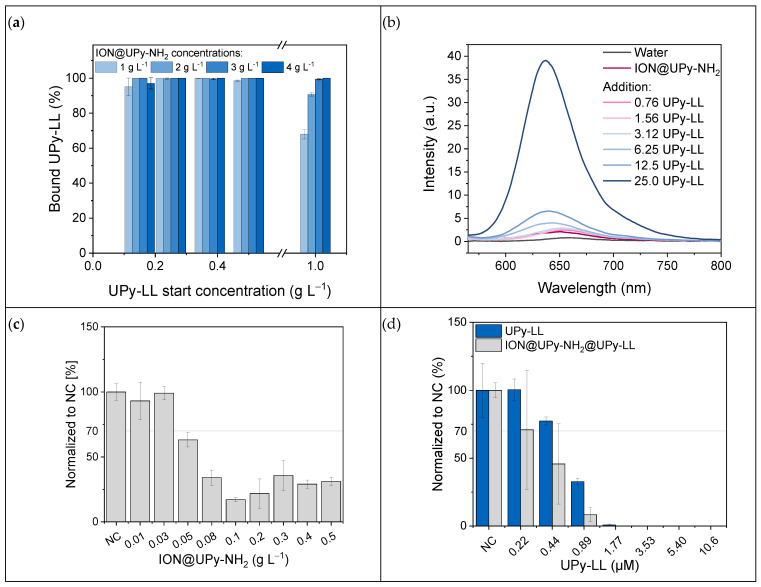
Antimicrobial peptides (AMPs) can kill bacteria by disrupting their cytoplasmic membrane, which reduces the tendency of antibacterial resistance compared to conventional antibiotics. Their possible toxicity to human cells, however, limits their applicability. The combination of magnetically controlled drug delivery and supramolecular engineering can help to reduce the dosage of AMPs, control the delivery, and improve their cytocompatibility. Lasioglossin III (LL) is a natural AMP form bee venom that is highly antimicrobial. Here, superparamagnetic iron oxide nanoparticles (IONs) with a supramolecular ureido-pyrimidinone (UPy) coating were investigated as a drug carrier for LL for a controlled delivery to a specific target. Binding to IONs can improve the antimicrobial activity of the peptide. Different transmission electron microscopy (TEM) techniques showed that the particles have a crystalline iron oxide core with a UPy shell and UPy fibers. Cytocompatibility and internalization experiments were carried out with two different cell types, phagocytic and nonphagocytic cells. The drug carrier system showed good cytocompatibility (>70%) with human kidney cells (HK-2) and concentration-dependent toxicity to macrophagic cells (THP-1). The particles were internalized by both cell types, giving them the potential for effective delivery of AMPs into mammalian cells. By self-assembly, the UPy-coated nanoparticles can bind UPy-functionalized LL (UPy-LL) highly efficiently (99%), leading to a drug loading of 0.68 g g. The binding of UPy-LL on the supramolecular nanoparticle system increased its antimicrobial activity against (MIC 3.53 µM to 1.77 µM) and improved its cytocompatible dosage for HK-2 cells from 5.40 µM to 10.6 µM. The system showed higher cytotoxicity (5.4 µM) to the macrophages. The high drug loading, efficient binding, enhanced antimicrobial behavior, and reduced cytotoxicity makes ION@UPy-NH an interesting drug carrier for AMPs. The combination with superparamagnetic IONs allows potential magnetically controlled drug delivery and reduced drug amount of the system to address intracellular infections or improve cancer treatment.
抗菌肽 (AMPs) 可以通过破坏细胞质膜来杀死细菌,与传统抗生素相比,这降低了抗菌耐药性的倾向。然而,它们对人类细胞的潜在毒性限制了它们的适用性。磁控药物输送和超分子工程的结合可以帮助减少 AMP 的剂量、控制输送并提高其细胞相容性。Lasio 菌素 III (LL) 是一种天然存在于蜂毒液中的 AMP 形式,具有很强的抗菌作用。在这里,研究了具有超分子尿嘧啶嘧啶酮 (UPy) 涂层的超顺磁性氧化铁纳米粒子 (IONs) 作为 LL 的药物载体,以实现对特定靶标的控制输送。与 IONs 的结合可以提高肽的抗菌活性。不同的透射电子显微镜 (TEM) 技术表明,这些粒子具有结晶氧化铁核和 UPy 壳以及 UPy 纤维。用两种不同的细胞类型(吞噬细胞和非吞噬细胞)进行细胞相容性和内化实验。药物载体系统与人肾细胞 (HK-2) 具有良好的细胞相容性 (>70%),并且对巨噬细胞 (THP-1) 具有浓度依赖性毒性。这两种细胞类型都可以内化这些粒子,使它们有可能将 AMP 有效递送到哺乳动物细胞中。通过自组装,UPy 涂层的纳米粒子可以高效地结合 UPy 功能化的 LL (UPy-LL)(高达 99%),从而使药物负载达到 0.68 g g。UPy-LL 在超分子纳米粒子系统上的结合提高了其对 的抗菌活性(MIC 从 3.53 µM 降低到 1.77 µM),并将其对 HK-2 细胞的细胞相容剂量从 5.40 µM 提高到 10.6 µM。该系统对巨噬细胞的细胞毒性更高(5.4 µM)。高药物负载、高效结合、增强的抗菌行为和降低的细胞毒性使 ION@UPy-NH 成为一种有趣的 AMP 药物载体。与超顺磁性 IONs 的结合允许潜在的磁控药物输送和减少系统药物剂量,以解决细胞内感染或改善癌症治疗。