Department of Food Science and Technology, College of Agriculture and Life Sciences, Jeonbuk National University, Jeonju 54896, Republic of Korea.
Department of Agricultural Convergence Technology, College of Agriculture and Life Science, Jeonbuk National University, Jeonju 54896, Republic of Korea.
Int J Mol Sci. 2023 Oct 4;24(19):14897. doi: 10.3390/ijms241914897.
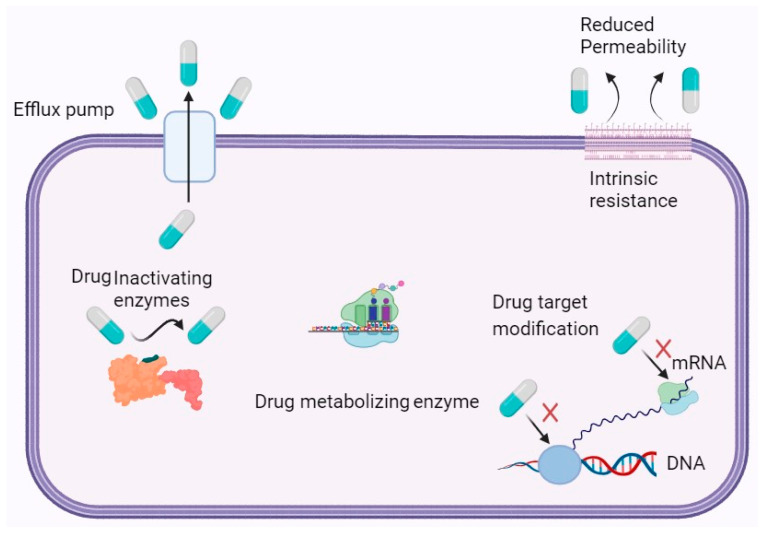
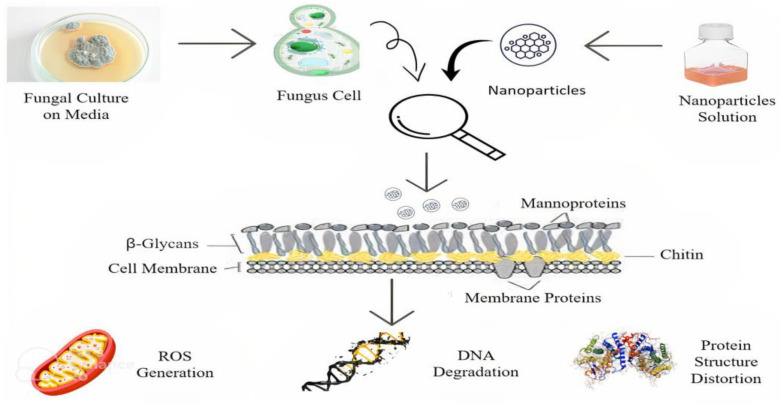
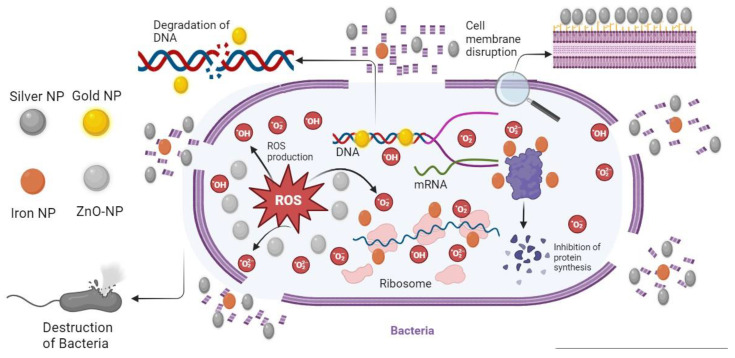
The misuse of antibiotics and antimycotics accelerates the emergence of antimicrobial resistance, prompting the need for novel strategies to combat this global issue. Metallic nanoparticles have emerged as effective tools for combating various resistant microbes. Numerous studies have highlighted their potential in addressing antibiotic-resistant fungi and bacterial strains. Understanding the mechanisms of action of these nanoparticles, including iron-oxide, gold, zinc oxide, and silver is a central focus of research within the life science community. Various hypotheses have been proposed regarding how nanoparticles exert their effects. Some suggest direct targeting of microbial cell membranes, while others emphasize the release of ions from nanoparticles. The most compelling proposed antimicrobial mechanism of nanoparticles involves oxidative damage caused by nanoparticles-generated reactive oxygen species. This review aims to consolidate knowledge, discuss the properties and mechanisms of action of metallic nanoparticles, and underscore their potential as alternatives to enhance the efficacy of existing medications against infections caused by antimicrobial-resistant pathogens.
抗生素和抗真菌药物的滥用加速了抗菌药物耐药性的出现,因此需要新的策略来应对这一全球性问题。金属纳米颗粒已成为对抗各种耐药微生物的有效工具。许多研究都强调了它们在解决抗真菌药物和抗药性细菌菌株方面的潜力。了解这些纳米颗粒(包括氧化铁、金、氧化锌和银)的作用机制是生命科学界的研究重点。关于纳米颗粒如何发挥作用,已经提出了各种假说。一些假说认为纳米颗粒直接靶向微生物细胞膜,而另一些假说则强调纳米颗粒释放的离子。最有说服力的纳米颗粒抗菌作用机制涉及纳米颗粒产生的活性氧引起的氧化损伤。本综述旨在整合知识,讨论金属纳米颗粒的特性和作用机制,并强调它们作为替代品的潜力,以提高现有药物对由抗微生物药物耐药性病原体引起的感染的疗效。