Wang Zixiao, Cui Feichen, Sui Yang, Yan Jiajun
School of Physical Science and Technology, ShanghaiTech University, 393 Middle Huaxia Rd., Shanghai, 201210, China.
Beilstein J Org Chem. 2023 Oct 18;19:1580-1603. doi: 10.3762/bjoc.19.116. eCollection 2023.
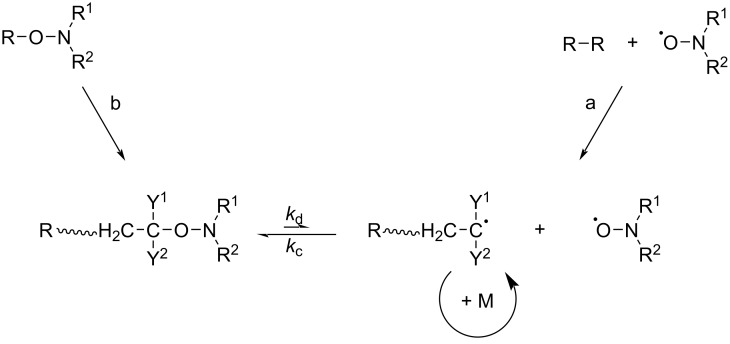
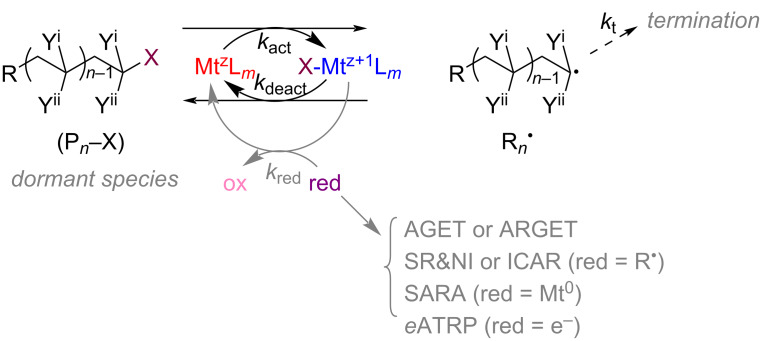
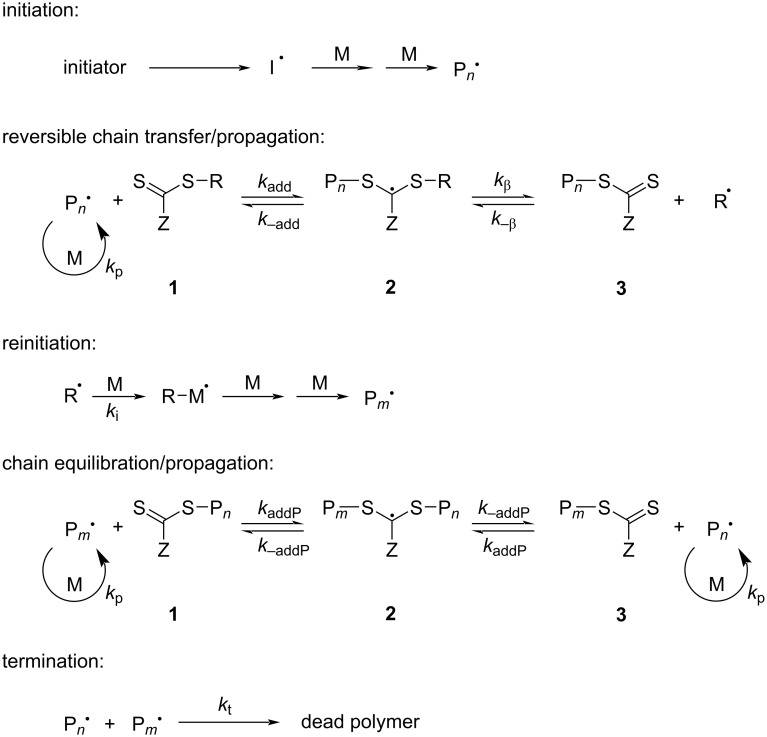
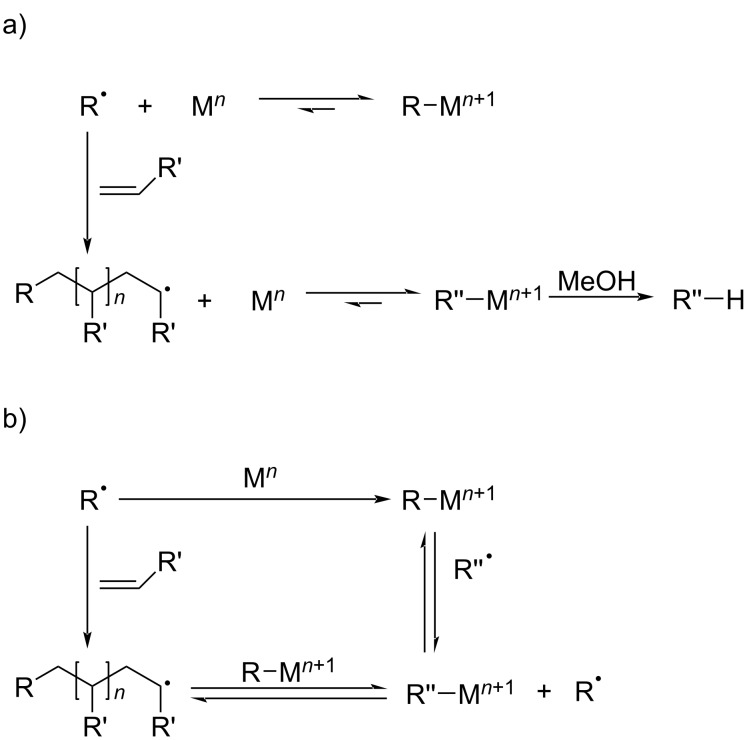
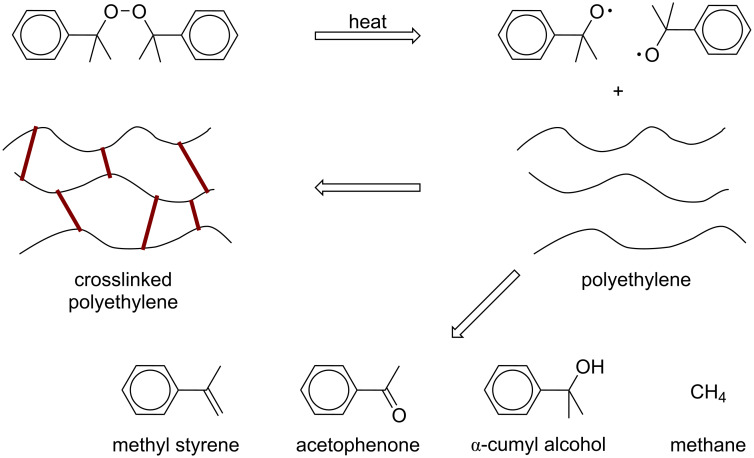
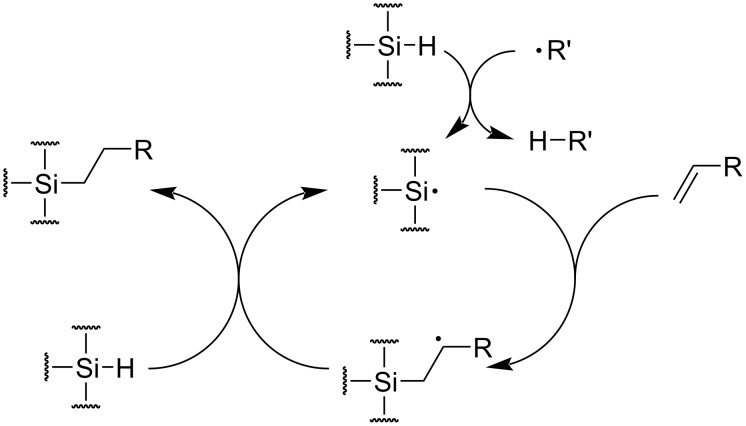
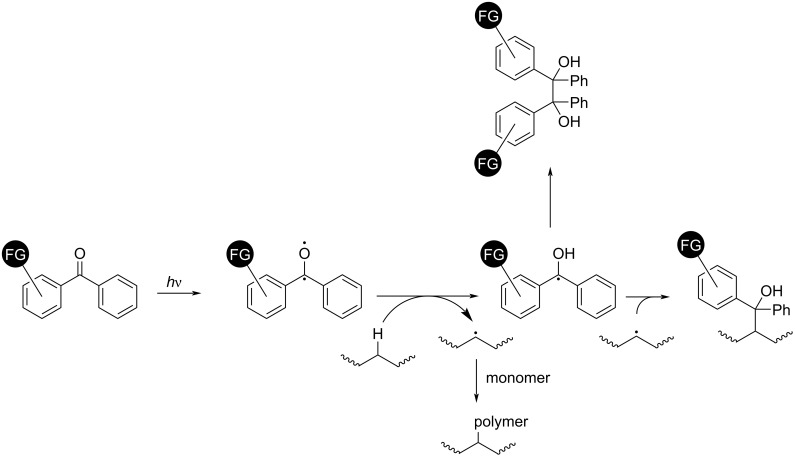
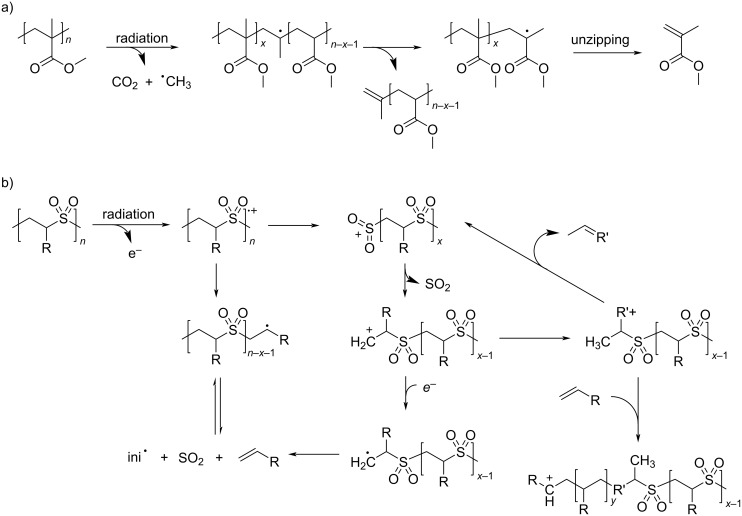
Radical chemistry is one of the most important methods used in modern polymer science and industry. Over the past century, new knowledge on radical chemistry has both promoted and been generated from the emergence of polymer synthesis and modification techniques. In this review, we discuss radical chemistry in polymer science from four interconnected aspects. We begin with radical polymerization, the most employed technique for industrial production of polymeric materials, and other polymer synthesis involving a radical process. Post-polymerization modification, including polymer crosslinking and polymer surface modification, is the key process that introduces functionality and practicality to polymeric materials. Radical depolymerization, an efficient approach to destroy polymers, finds applications in two distinct fields, semiconductor industry and environmental protection. Polymer chemistry has largely diverged from organic chemistry with the fine division of modern science but polymer chemists constantly acquire new inspirations from organic chemists. Dialogues on radical chemistry between the two communities will deepen the understanding of the two fields and benefit the humanity.
自由基化学是现代高分子科学与工业中最重要的方法之一。在过去的一个世纪里,自由基化学的新知识既推动了聚合物合成与改性技术的出现,又从这些技术中产生。在这篇综述中,我们从四个相互关联的方面讨论高分子科学中的自由基化学。我们首先讨论自由基聚合,这是工业生产聚合物材料最常用的技术,以及其他涉及自由基过程的聚合物合成。聚合后改性,包括聚合物交联和聚合物表面改性,是赋予聚合物材料功能性和实用性的关键过程。自由基解聚是一种破坏聚合物的有效方法,在半导体工业和环境保护这两个不同领域有应用。随着现代科学的精细划分,高分子化学在很大程度上已与有机化学分道扬镳,但高分子化学家不断从有机化学家那里获得新的灵感。这两个领域之间关于自由基化学的对话将加深对这两个领域的理解,并造福人类。