Structural and Computational Biology Unit, European Molecular Biology Laboratory (EMBL), Heidelberg, Germany.
Cell Biology and Biophysics Unit, European Molecular Biology Laboratory, Heidelberg, Germany.
Nat Methods. 2023 Dec;20(12):1900-1908. doi: 10.1038/s41592-023-02053-0. Epub 2023 Nov 6.
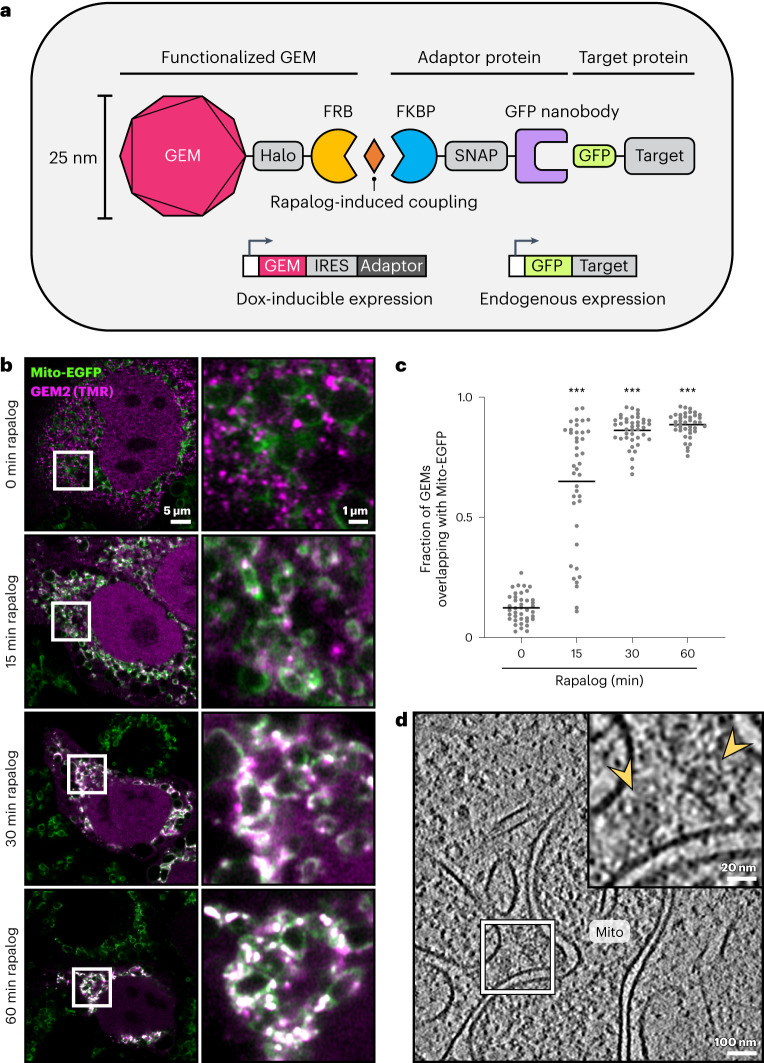
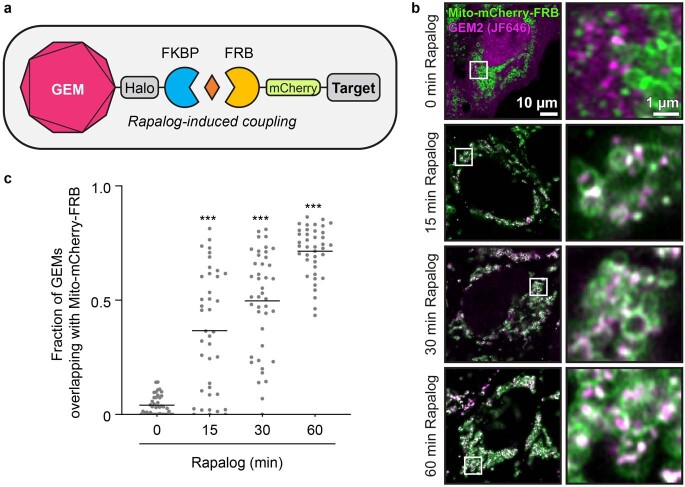
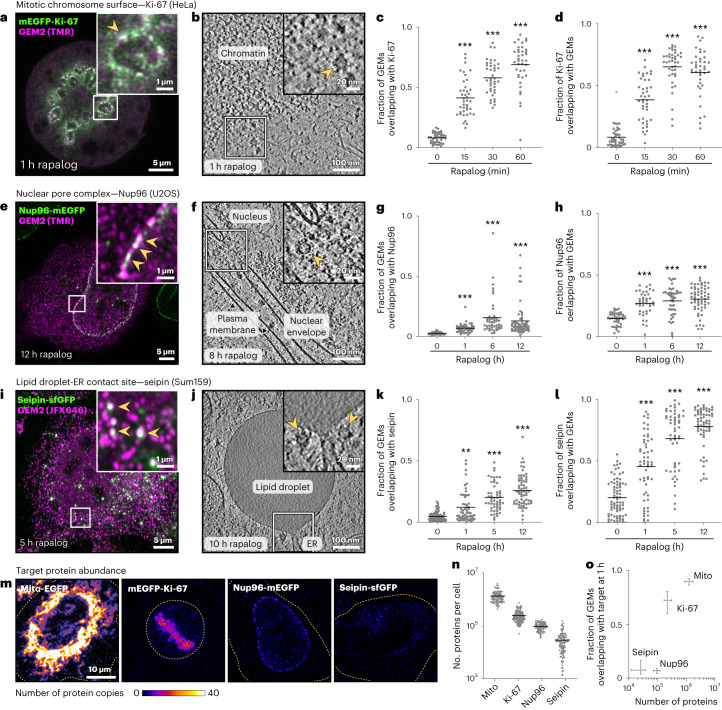
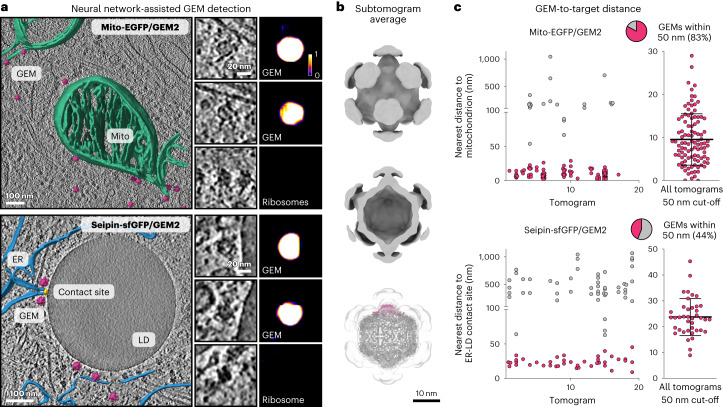
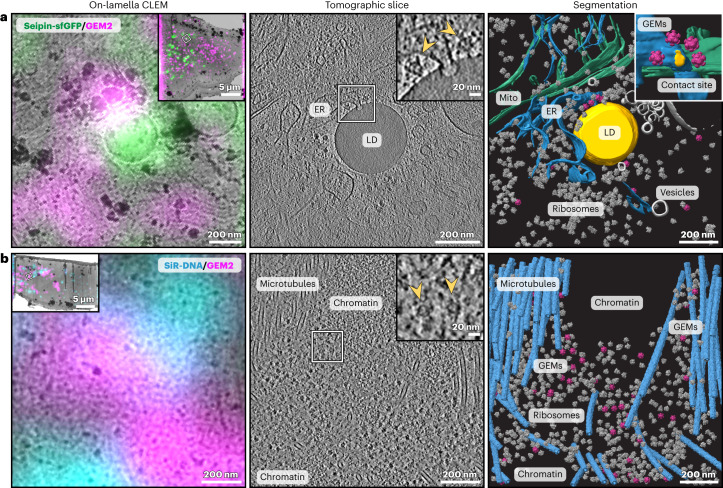
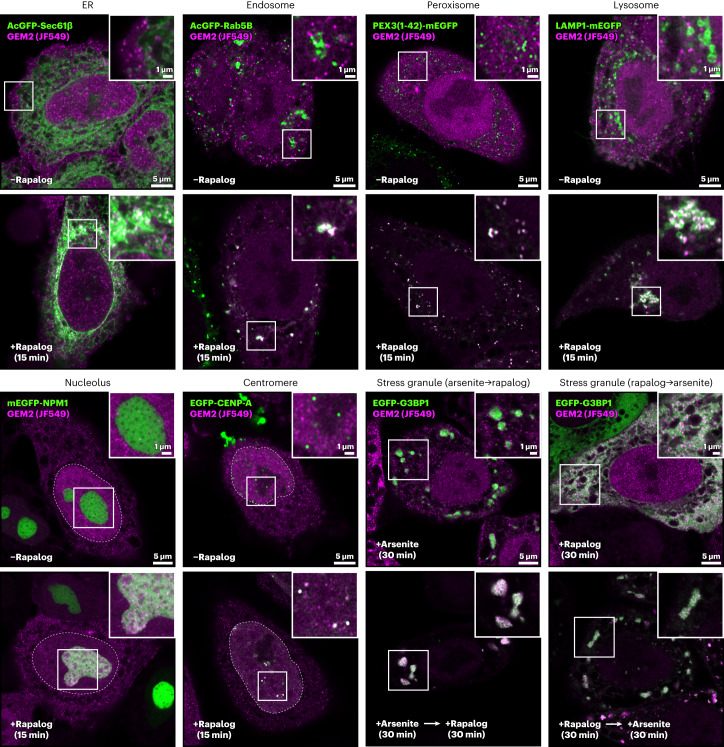
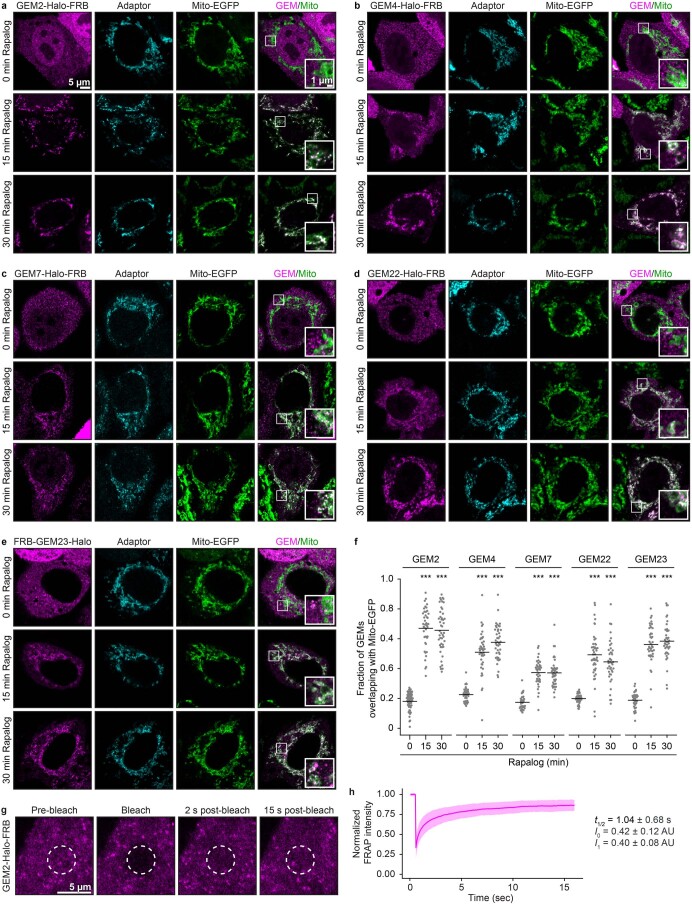
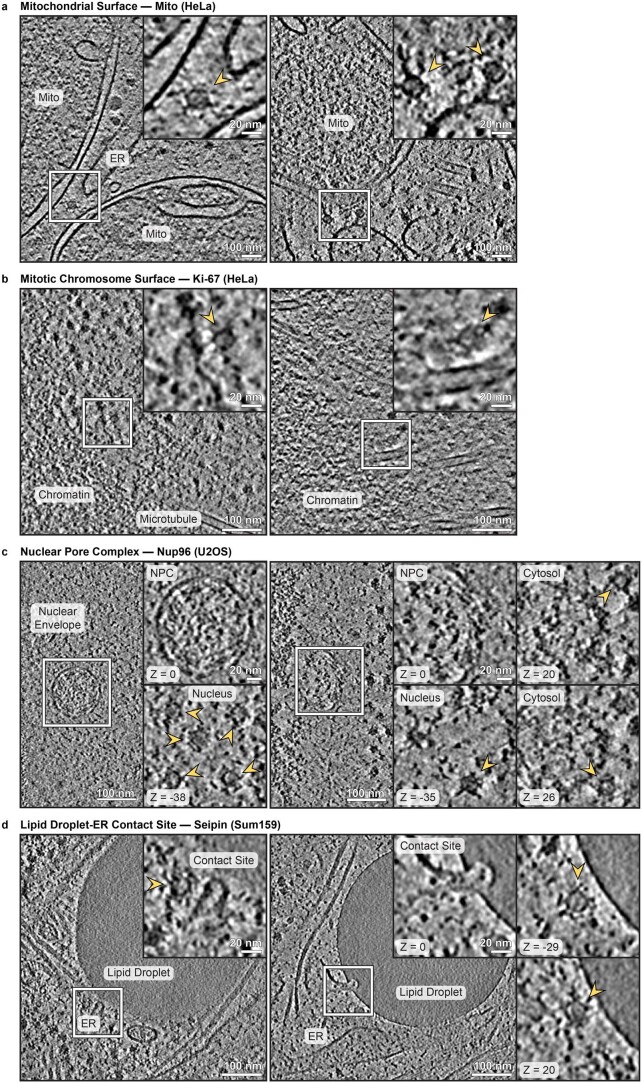
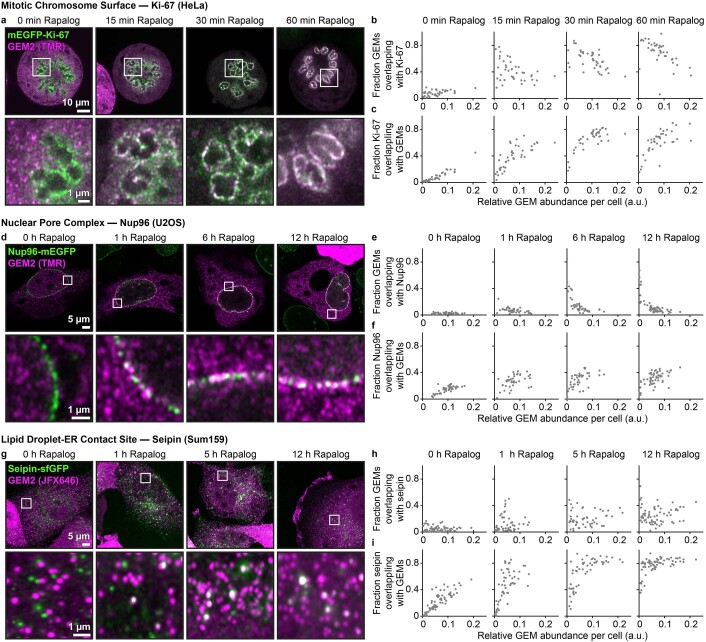
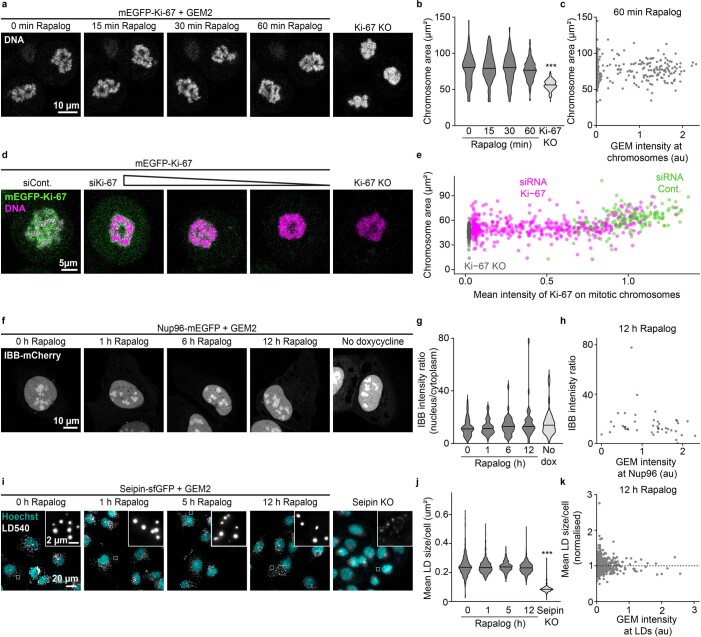
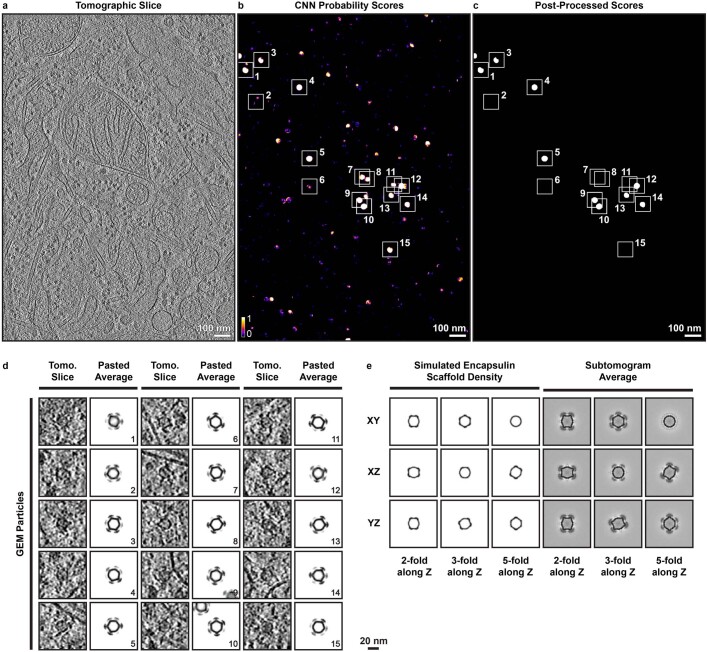
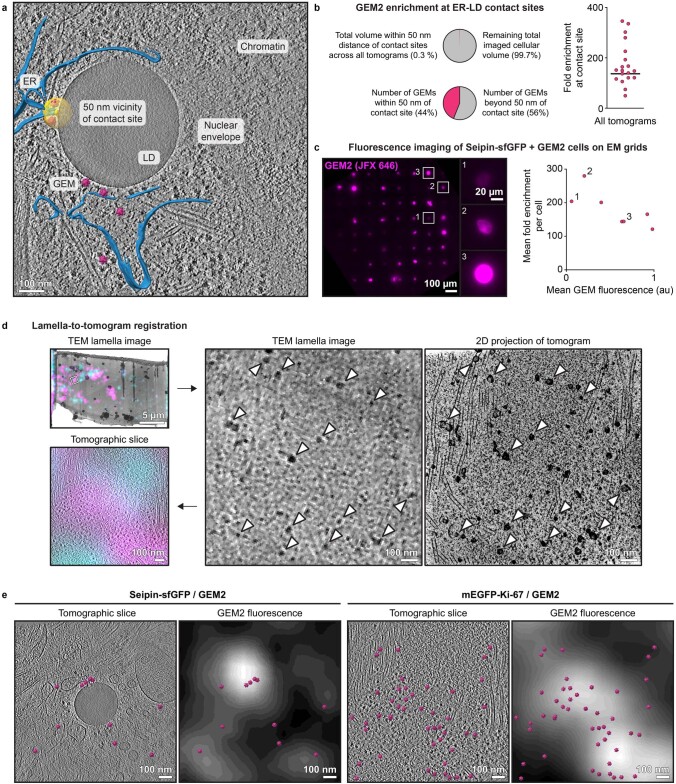
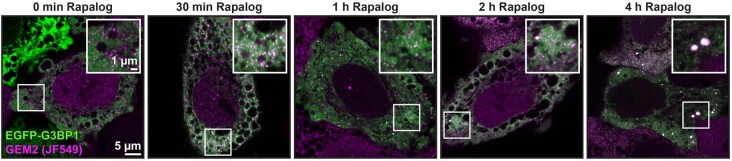
Cryo-electron tomography (cryo-ET) allows for label-free high-resolution imaging of macromolecular assemblies in their native cellular context. However, the localization of macromolecules of interest in tomographic volumes can be challenging. Here we present a ligand-inducible labeling strategy for intracellular proteins based on fluorescent, 25-nm-sized, genetically encoded multimeric particles (GEMs). The particles exhibit recognizable structural signatures, enabling their automated detection in cryo-ET data by convolutional neural networks. The coupling of GEMs to green fluorescent protein-tagged macromolecules of interest is triggered by addition of a small-molecule ligand, allowing for time-controlled labeling to minimize disturbance to native protein function. We demonstrate the applicability of GEMs for subcellular-level localization of endogenous and overexpressed proteins across different organelles in human cells using cryo-correlative fluorescence and cryo-ET imaging. We describe means for quantifying labeling specificity and efficiency, and for systematic optimization for rare and abundant protein targets, with emphasis on assessing the potential effects of labeling on protein function.
冷冻电镜断层扫描(cryo-ET)允许在其天然细胞环境中对大分子组装体进行无标记的高分辨率成像。然而,在断层扫描体积中定位感兴趣的大分子可能具有挑战性。在这里,我们提出了一种基于荧光、25nm 大小的、遗传编码的多聚体颗粒(GEMs)的用于细胞内蛋白质的配体诱导标记策略。这些颗粒表现出可识别的结构特征,使其能够通过卷积神经网络在 cryo-ET 数据中自动检测。通过添加小分子配体触发 GEMs 与绿色荧光蛋白标记的感兴趣的大分子的偶联,允许进行时间控制的标记,以最小化对天然蛋白质功能的干扰。我们使用 cryo-correlative 荧光和 cryo-ET 成像证明了 GEMs 在人类细胞中不同细胞器中用于内源性和过表达蛋白质的亚细胞水平定位的适用性。我们描述了用于量化标记特异性和效率的方法,以及用于稀有和丰富的蛋白质靶标的系统优化方法,重点是评估标记对蛋白质功能的潜在影响。