
高通量解析 3D 类器官动力学的细胞分辨率技术及其在癌症药物研究中的应用
High-throughput deconvolution of 3D organoid dynamics at cellular resolution for cancer pharmacology with Cellos.
机构信息
The Jackson Laboratory for Genomic Medicine, Farmington, CT, USA.
Department of Genetics and Genome Sciences, University of Connecticut Health Center, Farmington, CT, USA.
出版信息
Nat Commun. 2023 Dec 18;14(1):8406. doi: 10.1038/s41467-023-44162-6.
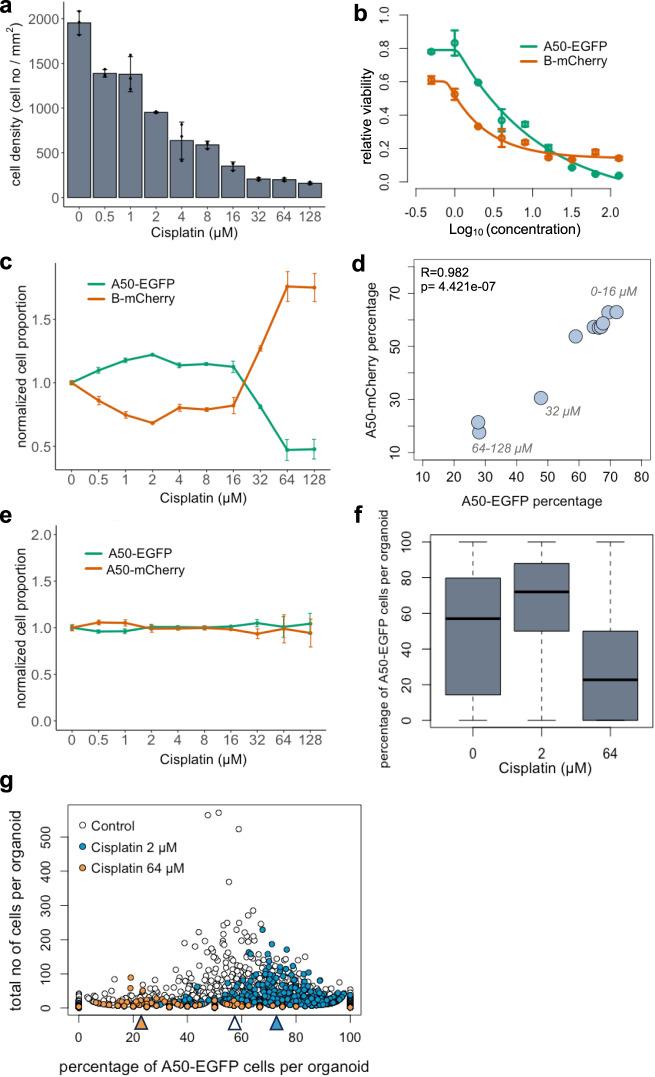
Three-dimensional (3D) organoid cultures are flexible systems to interrogate cellular growth, morphology, multicellular spatial architecture, and cellular interactions in response to treatment. However, computational methods for analysis of 3D organoids with sufficiently high-throughput and cellular resolution are needed. Here we report Cellos, an accurate, high-throughput pipeline for 3D organoid segmentation using classical algorithms and nuclear segmentation using a trained Stardist-3D convolutional neural network. To evaluate Cellos, we analyze ~100,000 organoids with ~2.35 million cells from multiple treatment experiments. Cellos segments dye-stained or fluorescently-labeled nuclei and accurately distinguishes distinct labeled cell populations within organoids. Cellos can recapitulate traditional luminescence-based drug response of cells with complex drug sensitivities, while also quantifying changes in organoid and nuclear morphologies caused by treatment as well as cell-cell spatial relationships that reflect ecological affinity. Cellos provides powerful tools to perform high-throughput analysis for pharmacological testing and biological investigation of organoids based on 3D imaging.
三维(3D)类器官培养物是一种灵活的系统,可以研究细胞生长、形态、多细胞空间结构以及对治疗的细胞相互作用。然而,需要具有足够高通量和细胞分辨率的用于分析 3D 类器官的计算方法。在这里,我们报告了 Cellos,这是一种使用经典算法进行 3D 类器官分割的准确、高通量的流水线,使用经过训练的 Stardist-3D 卷积神经网络进行核分割。为了评估 Cellos,我们分析了来自多个处理实验的约 100,000 个具有约 235 万个细胞的类器官。Cellos 可对染色或荧光标记的核进行分割,并准确地区分类器官内不同的标记细胞群体。Cellos 可以再现具有复杂药物敏感性的细胞的传统基于发光的药物反应,同时还可以量化处理引起的类器官和核形态变化以及反映生态亲和力的细胞-细胞空间关系。Cellos 为基于 3D 成像的类器官的高通量分析提供了强大的工具,可用于药理学测试和生物学研究。



 Zotero 插件