Department of Molecular and Cell Biology, University of California, Berkeley, Berkeley, CA, USA.
The Helen Wills Neuroscience Institute, University of California, Berkeley, Berkeley, CA, USA.
Nat Neurosci. 2024 Jan;27(1):137-147. doi: 10.1038/s41593-023-01510-5. Epub 2024 Jan 3.
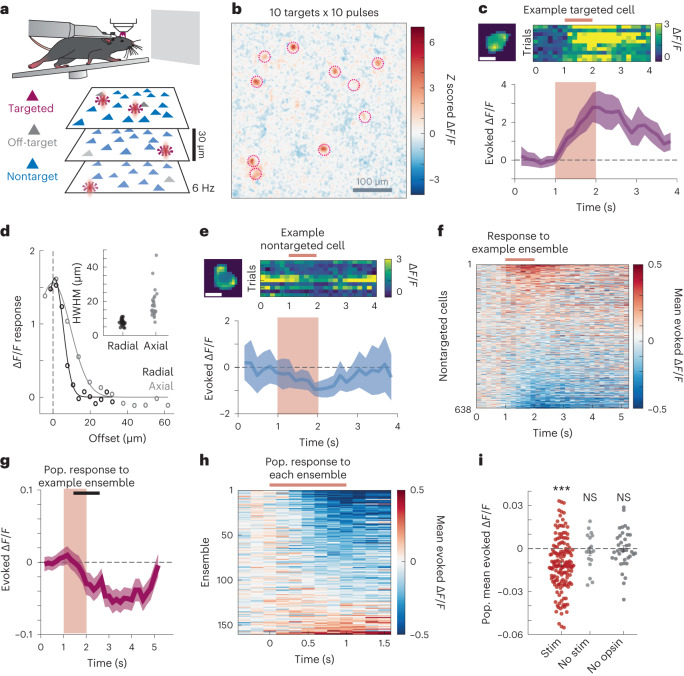
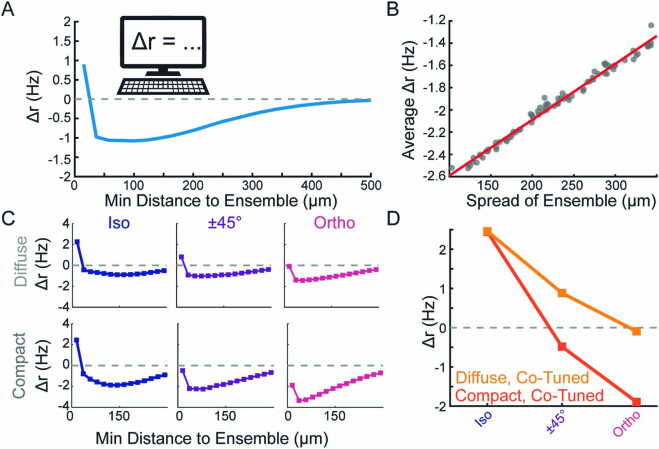
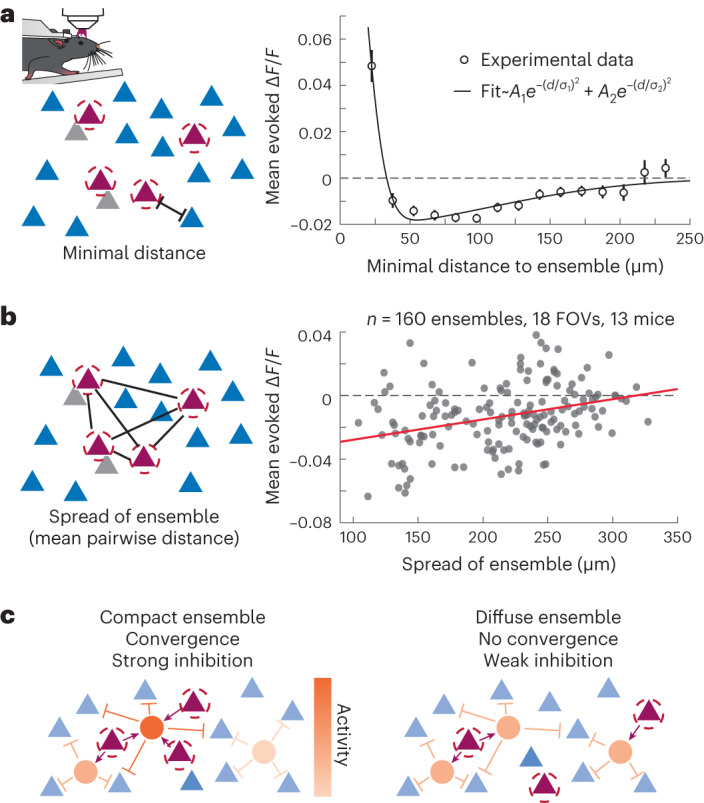
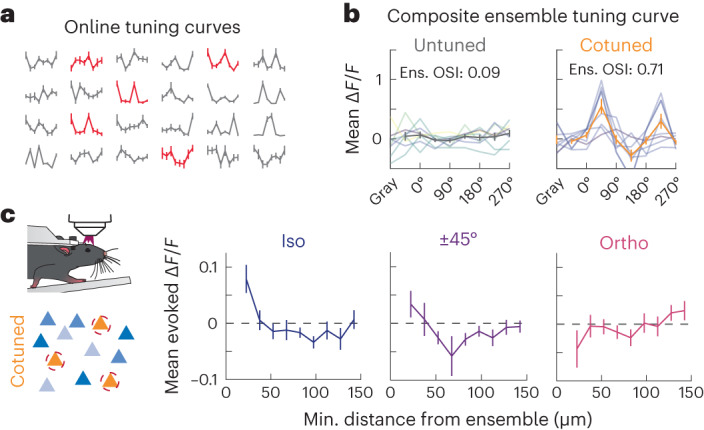
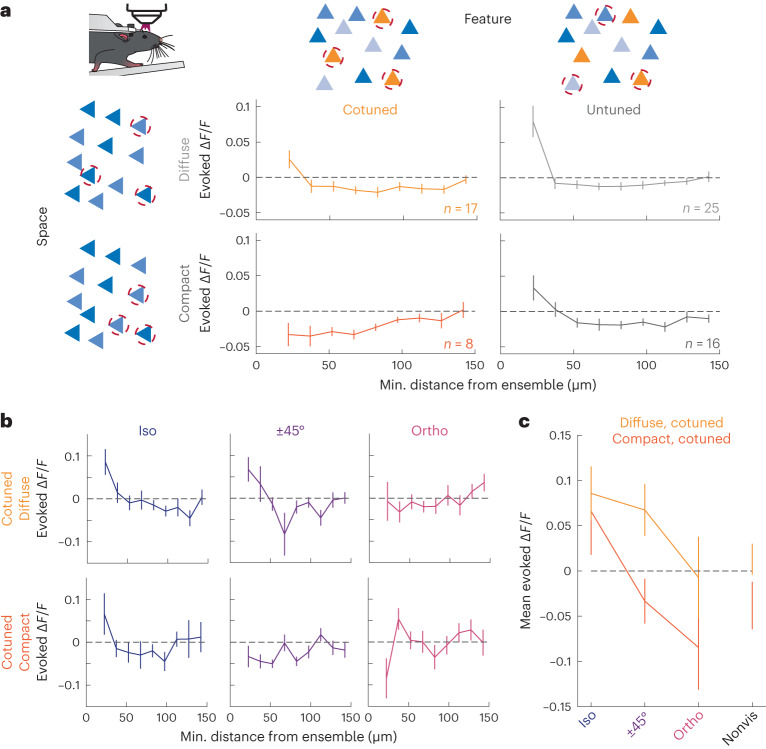
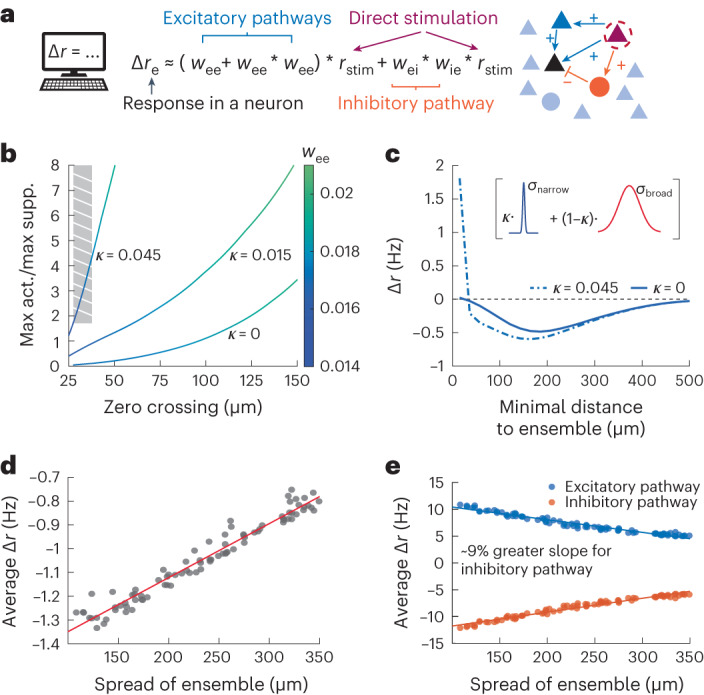
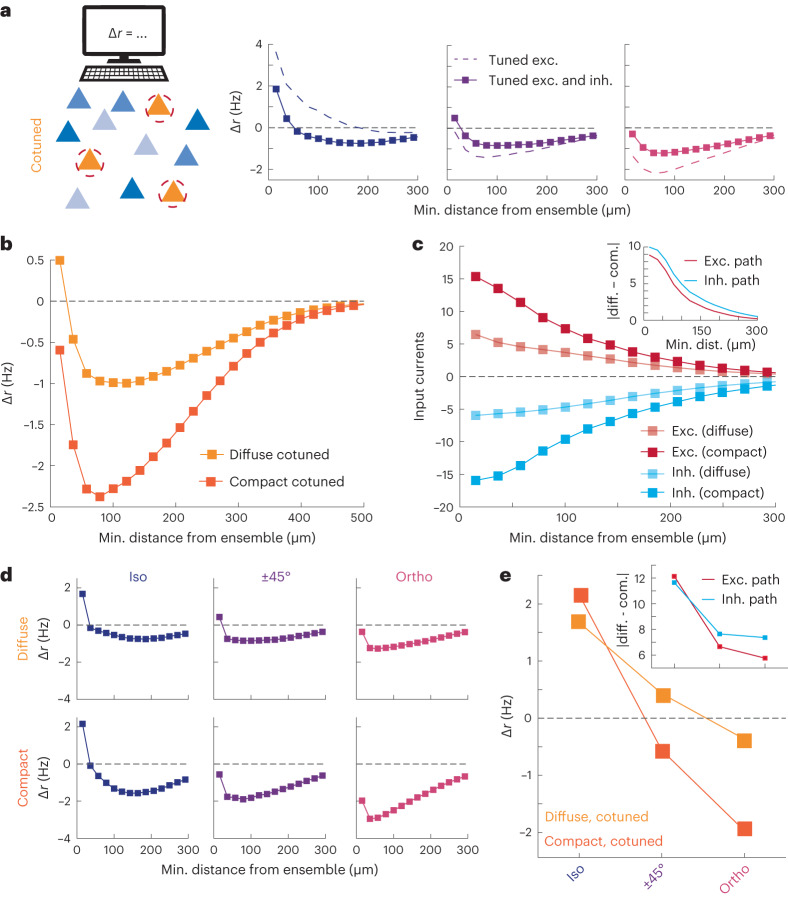
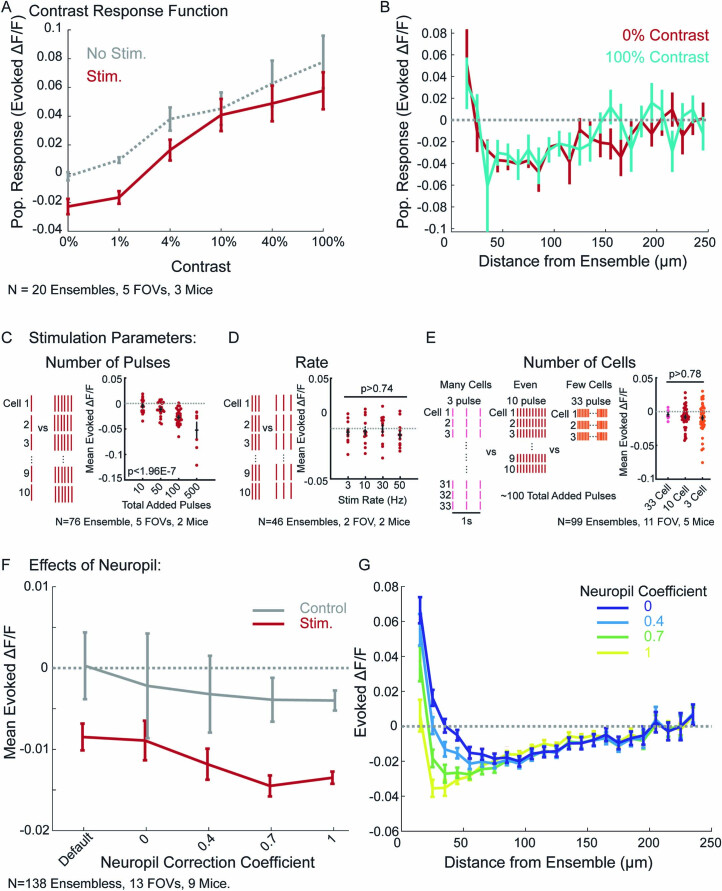
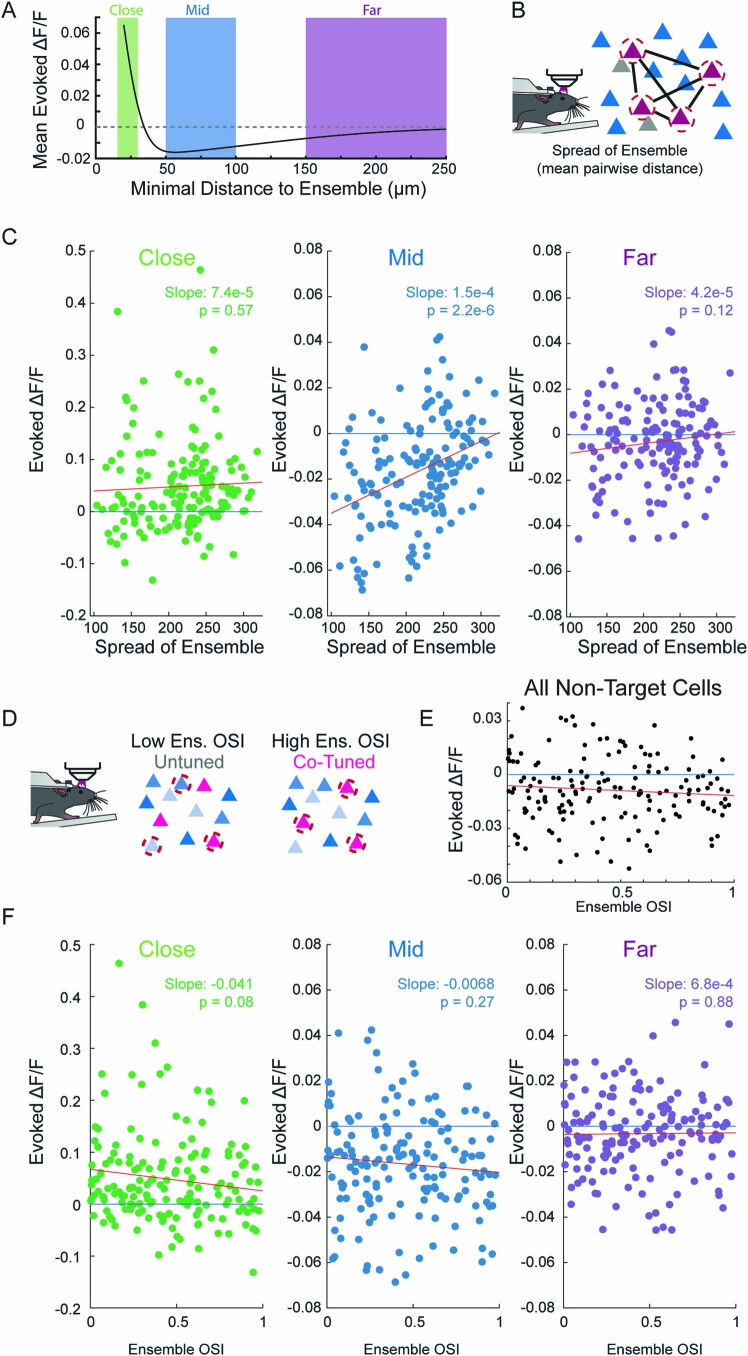
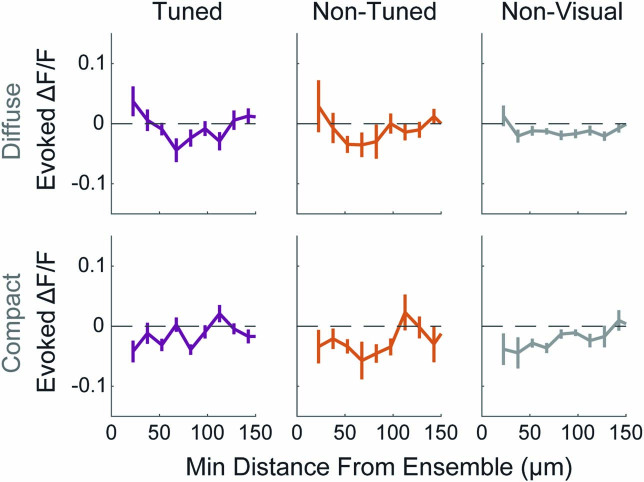
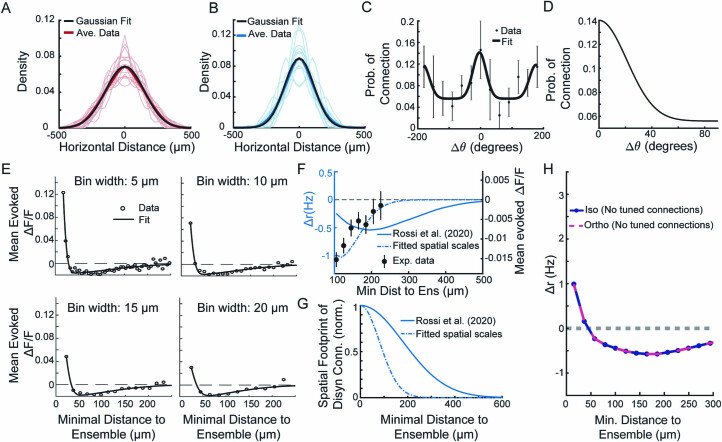
Recurrent cortical activity sculpts visual perception by refining, amplifying or suppressing visual input. However, the rules that govern the influence of recurrent activity remain enigmatic. We used ensemble-specific two-photon optogenetics in the mouse visual cortex to isolate the impact of recurrent activity from external visual input. We found that the spatial arrangement and the visual feature preference of the stimulated ensemble and the neighboring neurons jointly determine the net effect of recurrent activity. Photoactivation of these ensembles drives suppression in all cells beyond 30 µm but uniformly drives activation in closer similarly tuned cells. In nonsimilarly tuned cells, compact, cotuned ensembles drive net suppression, while diffuse, cotuned ensembles drive activation. Computational modeling suggests that highly local recurrent excitatory connectivity and selective convergence onto inhibitory neurons explain these effects. Our findings reveal a straightforward logic in which space and feature preference of cortical ensembles determine their impact on local recurrent activity.
皮层的反复活动通过精炼、放大或抑制视觉输入来塑造视觉感知。然而,支配反复活动影响的规则仍然是个谜。我们在小鼠视觉皮层中使用特定于集合的双光子光遗传学方法,将反复活动的影响与外部视觉输入隔离开来。我们发现,受刺激的集合及其相邻神经元的空间排列和视觉特征偏好共同决定了反复活动的净效应。这些集合的光激活在 30μm 以外的所有细胞中驱动抑制,但在更近的具有相似调谐的细胞中均匀地驱动激活。在不相似调谐的细胞中,紧密、共同调谐的集合驱动净抑制,而弥散、共同调谐的集合驱动激活。计算模型表明,高度局部的兴奋连接和选择性汇聚到抑制神经元可以解释这些影响。我们的发现揭示了一种简单的逻辑,即皮层集合的空间和特征偏好决定了它们对局部反复活动的影响。