Sipowicz Kasper, Pietras Tadeusz, Mosiołek Anna, Sobstyl Michał, Ring Michał, Kamecki Krystian, Stefańczyk Ignacy, Kosmalski Marcin
Department of Interdisciplinary Disability Studies, The Maria Grzegorzewska University in Warsaw, Warsaw, Poland.
The Second Department of Psychiatry, Institute of Psychiatry and Neurology in Warsaw, Warsaw, Poland.
Front Psychiatry. 2023 Dec 21;14:1296385. doi: 10.3389/fpsyt.2023.1296385. eCollection 2023.
The COVID-19 epidemic has provided opportunity to study the impact of a well-defined severe illness on the development of a depressive episode and the associated sense of loneliness and lack of meaning in life.
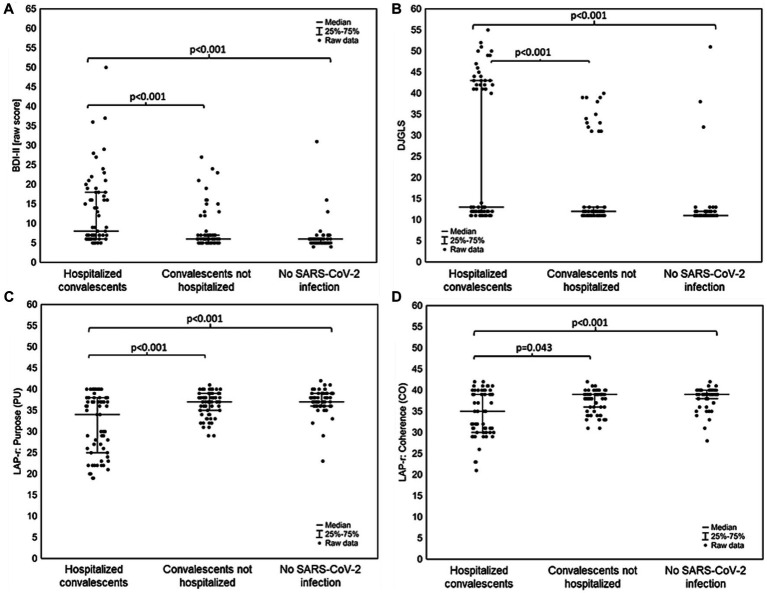
The aim of the study was to assess the occurrence of a reactive depressive episode, the severity of depression, a sense of loneliness and meaning in life in subjects who approximately a year earlier than the date of the study had suffered from a pulmonary form of SARS-CoV-2 infection with radiologically documented interstitial lesions of the lungs, requiring and not requiring hospitalization compared to people who did not develop the disease as a result of infection with that virus. The study included 63 subjects hospitalized for pulmonary lesions, 67 not hospitalized and 60 healthy controls. The severity of depressive symptoms was measured using a Polish-language standardized version of the Beck Depression Inventory, a sense of loneliness using the De Jong Gierveld Loneliness Scale, and a sense of meaning in life using the Life Attitude Profile-Revised.
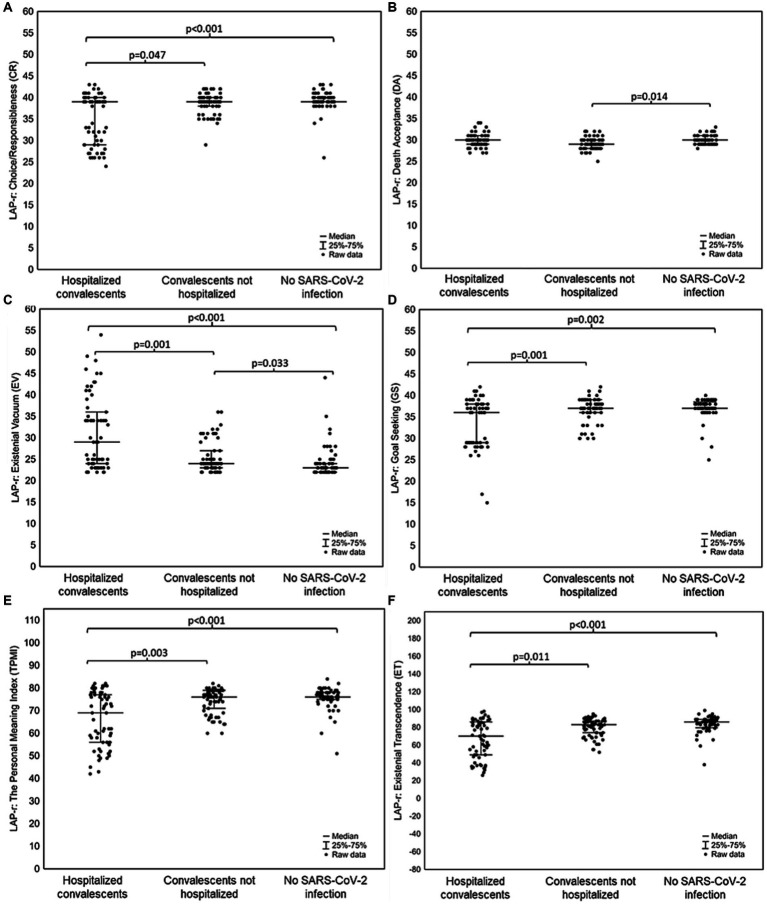
The frequency of depression and its severity were found to be the highest in hospitalized patients compared to those treated at home and healthy people. A significant difference in the frequency of depression and its severity between outpatients and healthy people was also observed. The feeling of loneliness turned out to be greatest in the group of hospitalized people. Also, the severity of loneliness was found to be higher in the outpatient compared to the control group. The sense of meaning in life reached its lowest level among hospitalized patients, was moderately reduced in the outpatient group, and typical of the Polish population in the control group.
Both pulmonary SARS-CoV-2 infection and hospitalization have been shown to be a risk factor for depression, increased feeling of loneliness and a reduced sense of meaning in life. The effect of trauma and the presence of depression can be the explanation for the increased sense of loneliness after the illness and the partial breakdown of the lifeline manifested by a decrease in the sense of meaning in life.
新冠疫情为研究一种明确的严重疾病对抑郁发作的发展以及相关的孤独感和生活意义缺失感的影响提供了契机。
本研究的目的是评估在研究日期约一年前患有肺部形式的SARS-CoV-2感染且有肺部放射性记录的间质性病变、需要和不需要住院治疗的受试者中反应性抑郁发作的发生率、抑郁严重程度、孤独感和生活意义感,与未因该病毒感染而患病的人群进行比较。该研究纳入了63名因肺部病变住院的受试者、67名未住院的受试者和60名健康对照者。使用波兰语标准化版的贝克抑郁量表测量抑郁症状的严重程度,使用德容吉尔维尔德孤独量表测量孤独感,使用修订版生活态度量表测量生活意义感。
与在家治疗的患者和健康人群相比,发现住院患者中抑郁的发生率及其严重程度最高。门诊患者和健康人群之间在抑郁发生率及其严重程度上也观察到显著差异。孤独感在住院人群中最为强烈。此外,与对照组相比,门诊患者的孤独严重程度更高。生活意义感在住院患者中降至最低水平,在门诊患者组中适度降低,在对照组中为波兰人群的典型水平。
肺部SARS-CoV-2感染和住院治疗均已被证明是抑郁、孤独感增加和生活意义感降低的危险因素。创伤的影响和抑郁的存在可以解释患病后孤独感增加以及生活意义感下降所表现出的生命线部分断裂的原因。