Ma Laiji, Zhang Huan, Jia Qingwen, Bai Tianming, Yang Suzhen, Wang Man, Li Yan, Shao Li
School of Perfume and Aroma Technology, Shanghai Institute of Technology, Shanghai, People's Republic of China.
R&D Innovation Center, Shandong Freda Biotech Co., Ltd., Jinan, Shandong, People's Republic of China.
Clin Cosmet Investig Dermatol. 2024 Mar 4;17:513-528. doi: 10.2147/CCID.S447412. eCollection 2024.
Overweight and obesity have become public health problems worldwide. An increasing number of research works are focusing on skin physiology and the manifestations of obesity-associated skin diseases, but little is known about the correlations between body mass index (BMI), facial skin physiological parameters, and the facial skin microbiome in healthy women.
To investigate the correlations between BMI, facial skin physiological parameters and facial bacteria and fungi in 198 women aged 18 to 35 years in Shanghai.
According to the international BMI standard and Chinese reference standard, subjects were divided into three groups, "lean" B1, "normal" B2 and "overweight" B3, and the physiological parameters of facial skin were measured by non-invasive instrumental methods, and the skin microbiota was analyzed by 16S rRNA and ITS high-throughput sequencing.
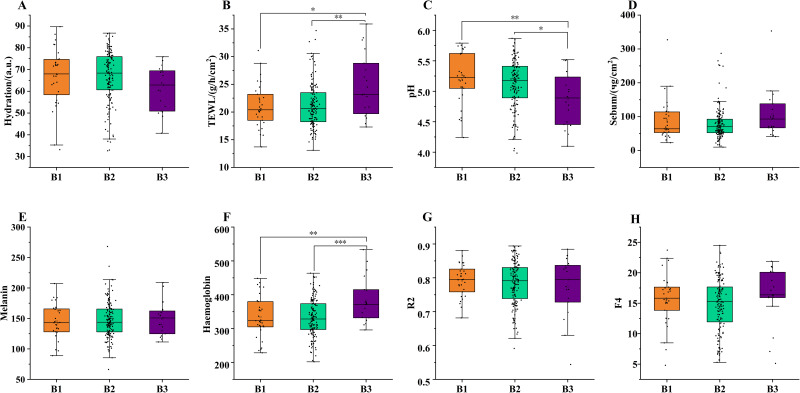
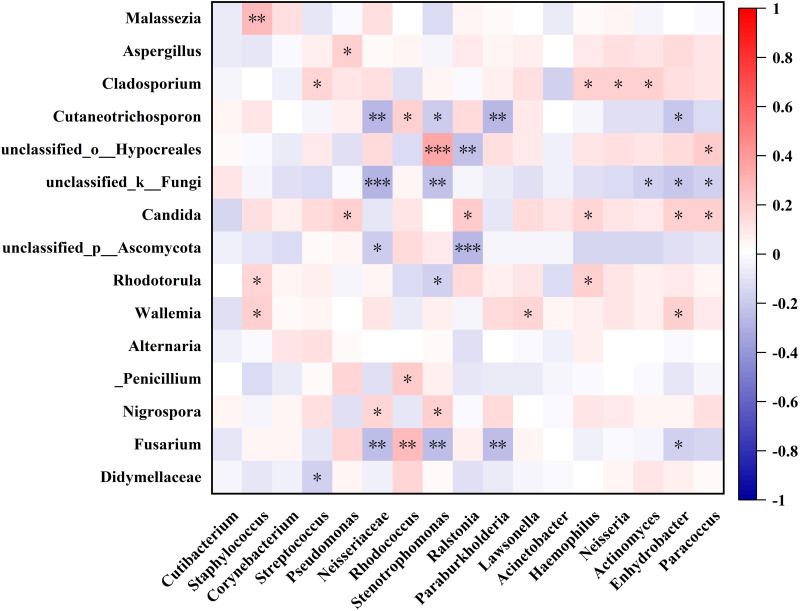
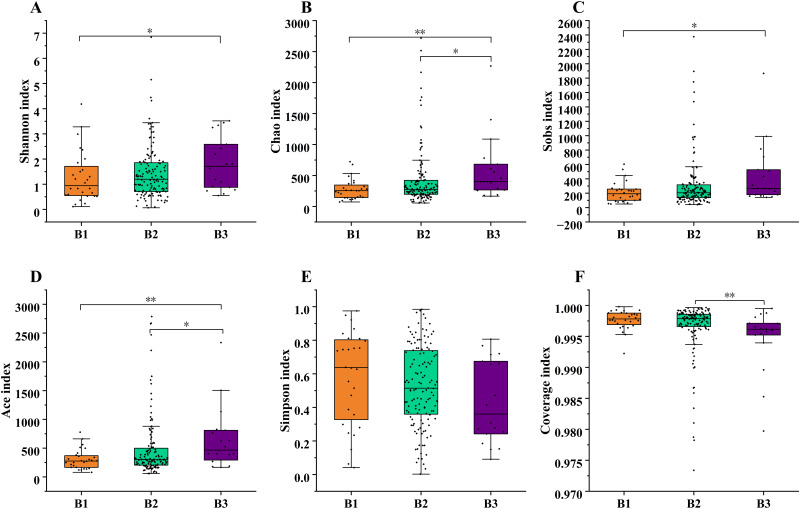
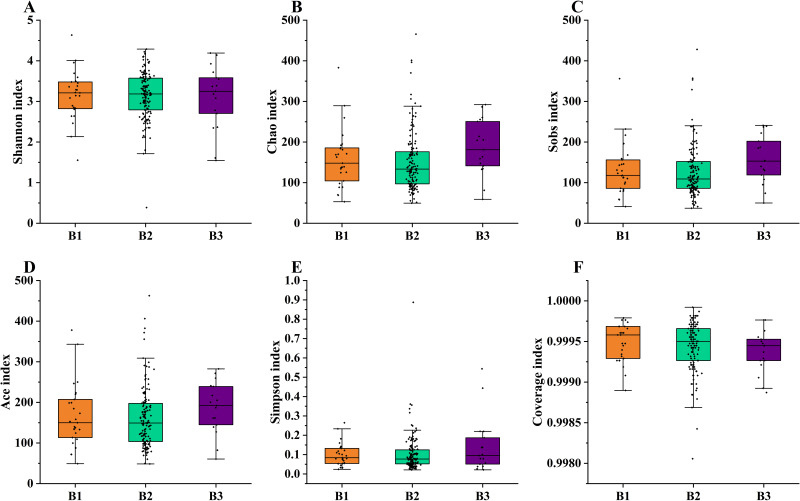
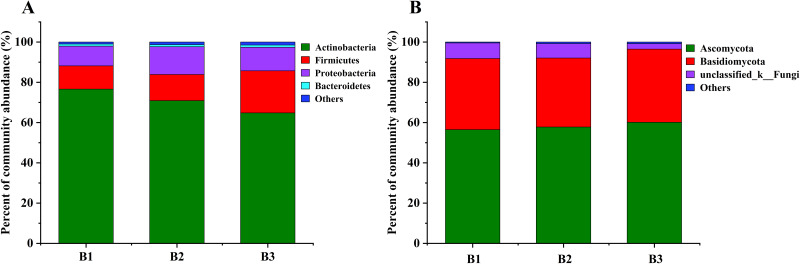
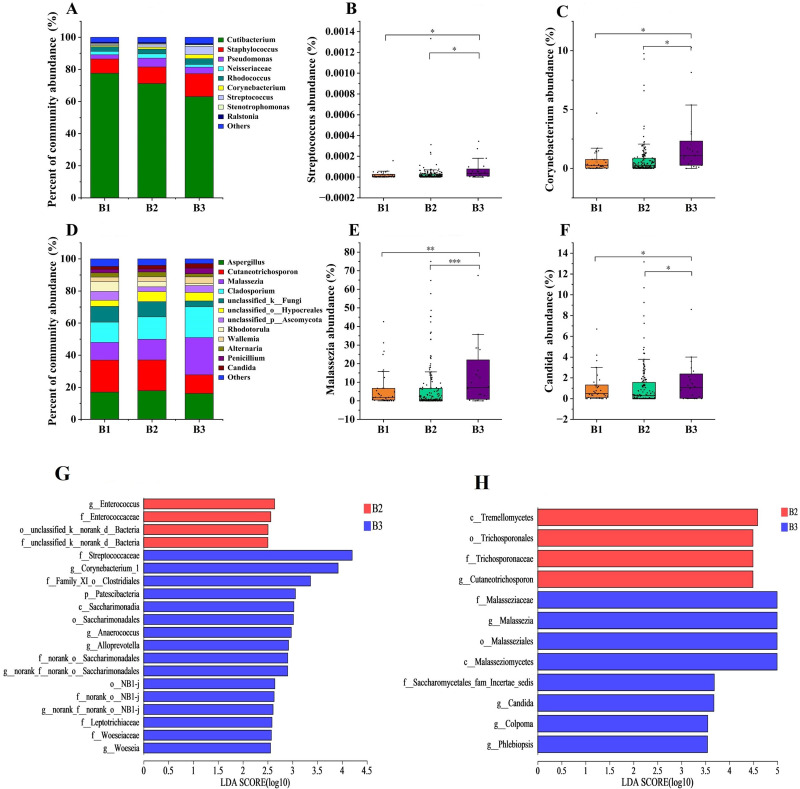
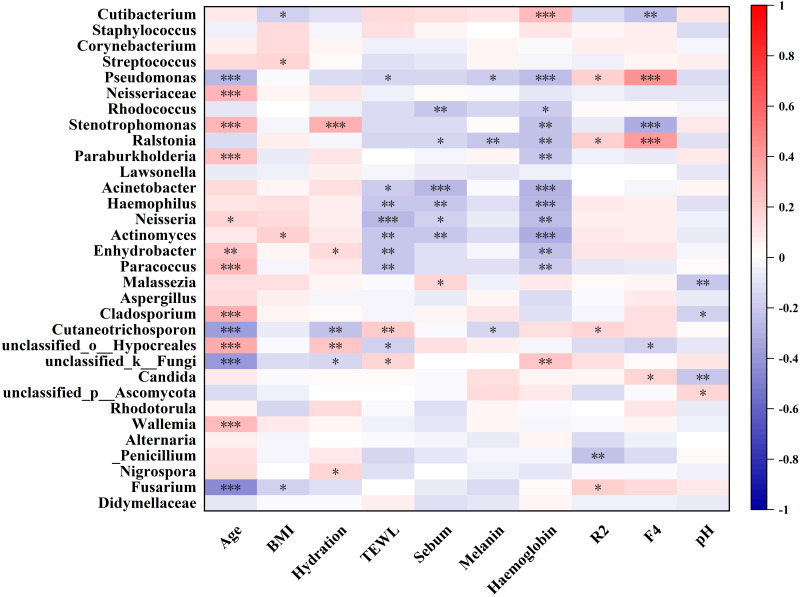
Compared with the skin physiological parameters of the normal group, those of the overweight group exhibited a significant increase in trans-epidermal water loss (TEWL), which indicated that the skin barrier was impaired. The skin haemoglobin content was significantly increased, and skin surface pH was significant decreased in those with a high BMI. Furthermore, α-diversity, analysed using the Shannon, Chao, Sobs, and Ace indexes, was increased in the overweight group, suggesting that the diversity and species abundance of facial bacterial and fungal microbiota were also increased. Moreover, the overweight group had higher abundances of , and . Notably, skin surface pH was significantly and negatively correlated with the relative abundances of , and . Besides, the abundance of was positively associated with the abundances of and .
These results indicate that BMI is associated with differences in the biophysical properties and microbiome of the facial skin. A high BMI affects the integrity of skin barrier and changes the skin flora diversity and species composition.
超重和肥胖已成为全球性的公共卫生问题。越来越多的研究致力于皮肤生理学以及肥胖相关皮肤疾病的表现,但对于健康女性的体重指数(BMI)、面部皮肤生理参数和面部皮肤微生物群之间的相关性却知之甚少。
研究上海198名18至35岁女性的BMI、面部皮肤生理参数与面部细菌和真菌之间的相关性。
根据国际BMI标准和中国参考标准,将受试者分为三组,即“瘦”组B1、“正常”组B2和“超重”组B3,采用非侵入性仪器方法测量面部皮肤的生理参数,并通过16S rRNA和ITS高通量测序分析皮肤微生物群。
与正常组的皮肤生理参数相比,超重组的经表皮水分流失(TEWL)显著增加,这表明皮肤屏障受损。高BMI者的皮肤血红蛋白含量显著增加,皮肤表面pH值显著降低。此外,使用香农、 Chao、Sobs和Ace指数分析的α多样性在超重组中增加,这表明面部细菌和真菌微生物群的多样性和物种丰度也增加。此外,超重组中 、 和 的丰度较高。值得注意的是,皮肤表面pH值与 、 和 的相对丰度显著负相关。此外, 的丰度与 和 的丰度呈正相关。
这些结果表明BMI与面部皮肤的生物物理特性和微生物群差异有关。高BMI会影响皮肤屏障的完整性,并改变皮肤菌群的多样性和物种组成。