Institute of Chemistry, University of Opole, 48 Oleska Str., 45-052 Opole, Poland.
Department of Cosmetology and Aromology, National University of Pharmacy, 53 Pushkinska Str., 61002 Kharkiv, Ukraine.
Molecules. 2024 Feb 29;29(5):1095. doi: 10.3390/molecules29051095.
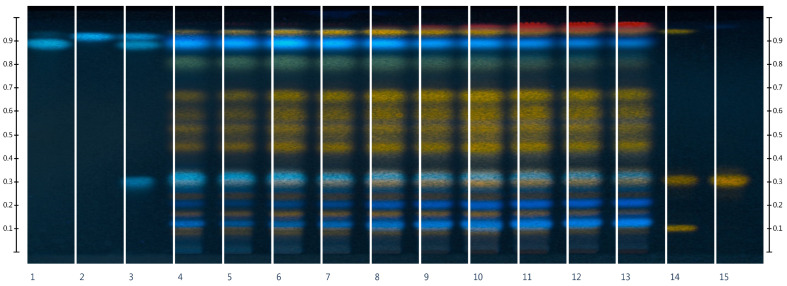
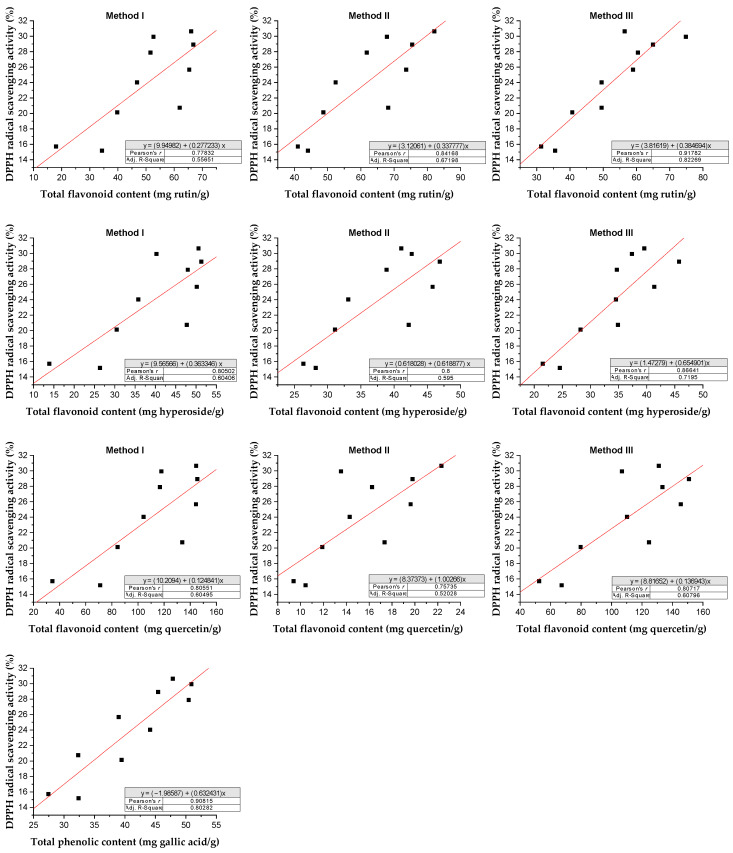
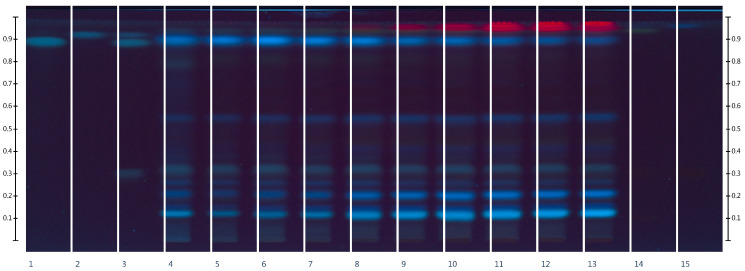
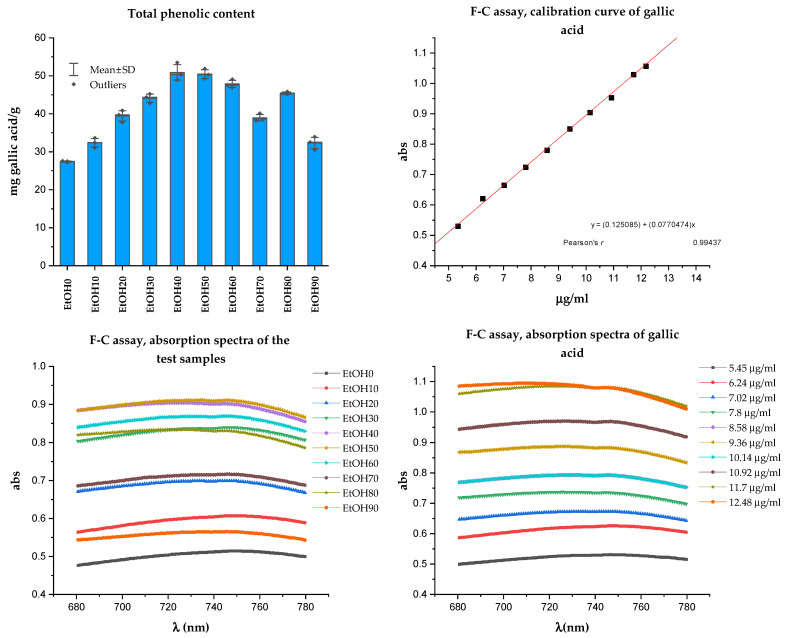
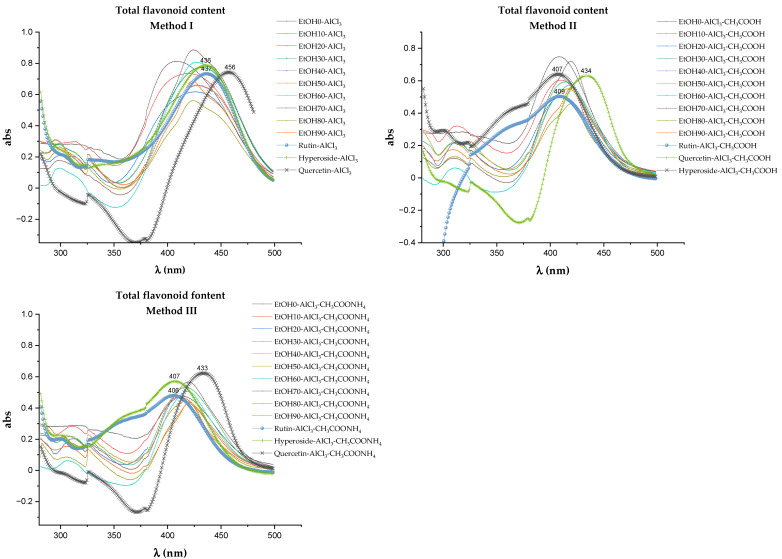
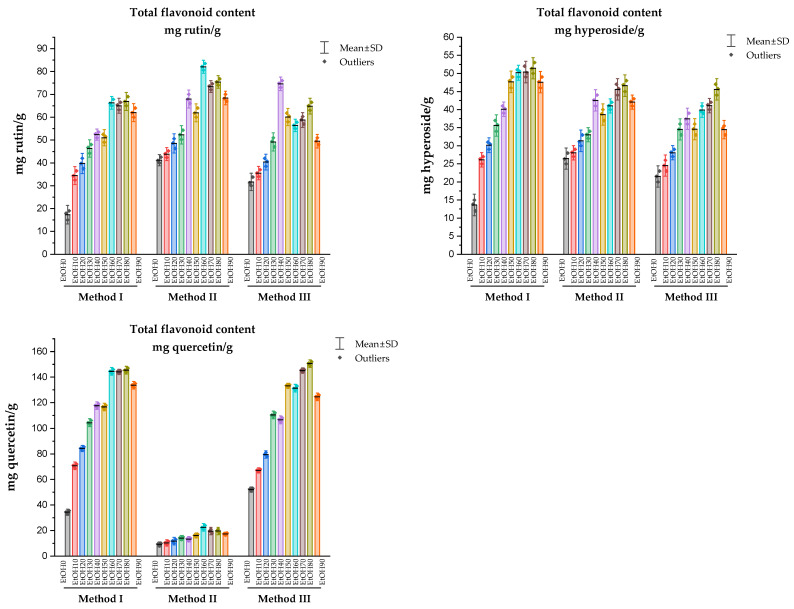
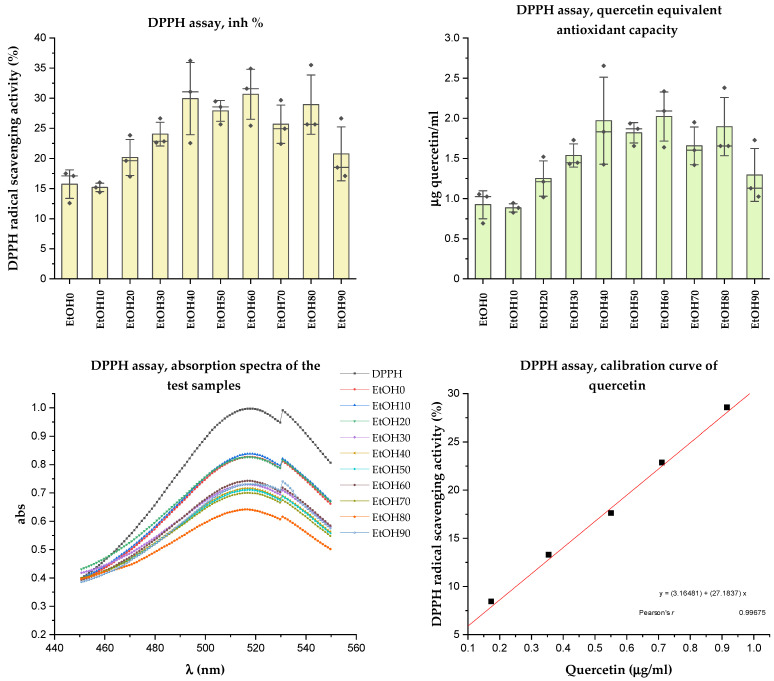
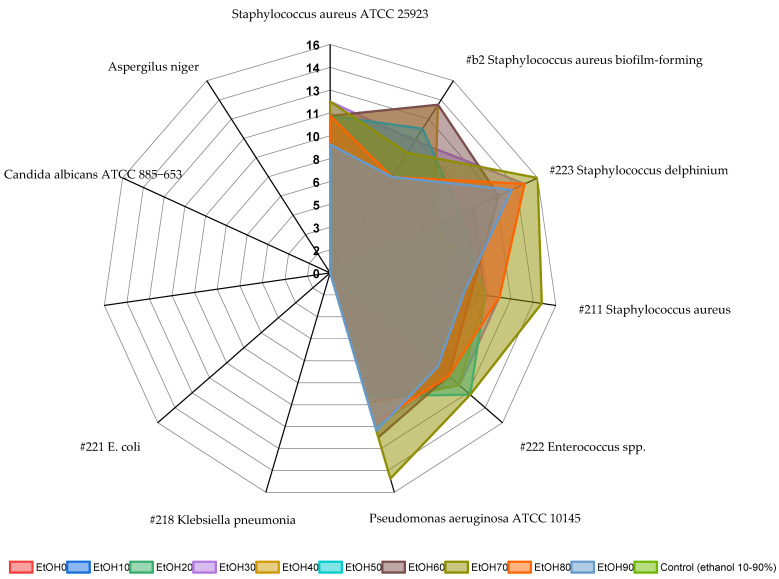
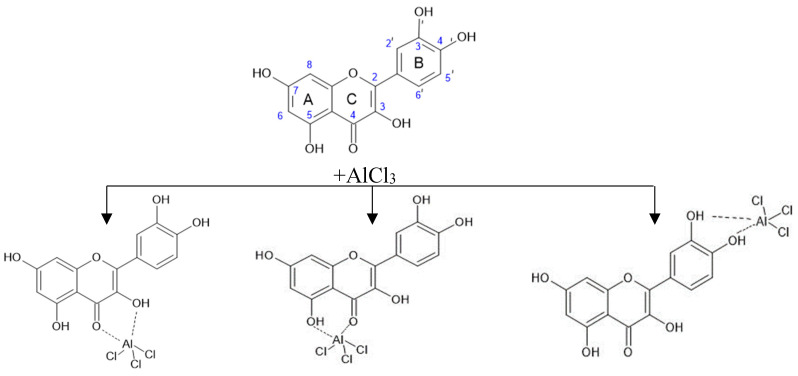
In the literature, the chemical composition of is mainly represented by the study of isoprenoid compounds of essential oil. In contrast, the study of the content of flavonoids will contribute to the expansion of pharmacological action and the use of the medicinal plant for medical purposes. The paper deals with the technology of extracts from shoots using ethanol of various concentrations and purified water as an extractant. Extracts from were obtained by a modified method that combined the effects of ultrasound and temperature to maximize the extraction of biologically active substances from the raw material. Using the method of high-performance thin-layer chromatography in a system with solvents ethyl acetate/formic acid/water (15:1:1), the following substances have been separated and identified in all the extracts obtained: rutin, hyperoside, quercetin, and chlorogenic acid. The total polyphenol content (TPC) and total flavonoid content (TFC) were estimated using spectrophotometric methods involving the Folin-Ciocalteu (F-C) reagent and the complexation reaction with aluminum chloride, respectively. A correlation analysis was conducted between antioxidant activity and the polyphenolic substance content. Following the DPPH assay, regression analysis shows that phenolic compounds contribute to about 80% ( = 0.8028, < 0.05) of radical scavenging properties in the extract of . The extract of obtained by ethanol 30% inhibits the growth of test cultures of microorganisms in 1:1 and 1:2 dilutions of the clinical strains #211 and #222 spp. and the reference strain ATCC 10145.
在文献中,[植物名称]的化学成分主要以挥发油的类异戊二烯化合物的研究为代表。相比之下,研究类黄酮的含量将有助于扩大药理作用,并将药用植物用于医疗目的。本文涉及使用不同浓度的乙醇和纯净水作为提取剂从[植物名称]嫩枝中提取提取物的技术。通过结合超声和温度的效果来最大程度地从原料中提取生物活性物质的改良方法获得了[植物名称]的提取物。使用高效薄层层析法,在乙酸乙酯/甲酸/水(15:1:1)的溶剂系统中,已从所有获得的提取物中分离和鉴定出以下物质:芦丁、金丝桃苷、槲皮素和绿原酸。使用 involving theFolin-Ciocalteu(F-C)试剂和与氯化铝络合反应的分光光度法分别估计总多酚含量(TPC)和总黄酮含量(TFC)。进行了抗氧化活性与多酚物质含量之间的相关性分析。通过 DPPH 测定法,回归分析表明,酚类化合物对[植物名称]提取物的自由基清除特性约有 80%( = 0.8028, < 0.05)的贡献。用 30%乙醇获得的[植物名称]提取物在临床菌株#211 和#222 spp.和参考菌株 ATCC 10145 的 1:1 和 1:2 稀释度下抑制测试培养物中微生物的生长。