Student Research Committee, School of Medicine, Shahroud University of Medical Sciences, Shahroud, Iran.
Department of Tissue Engineering, School of Medicine, Shahroud University of Medical Sciences, Shahroud, Iran.
J Nanobiotechnology. 2024 Apr 20;22(1):194. doi: 10.1186/s12951-024-02475-8.
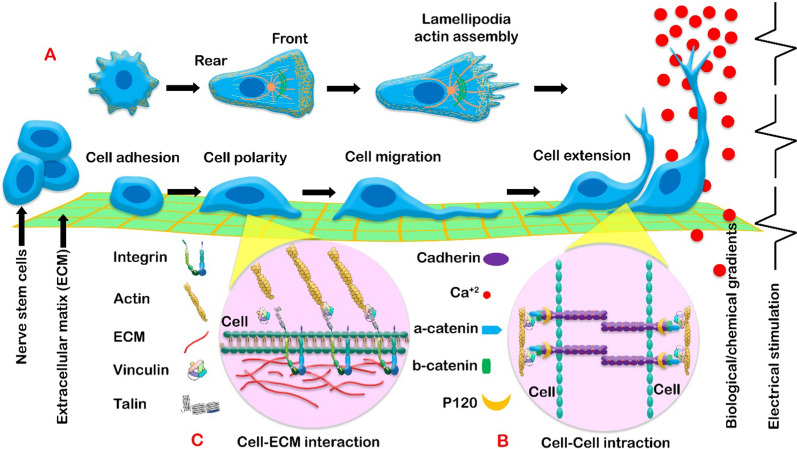
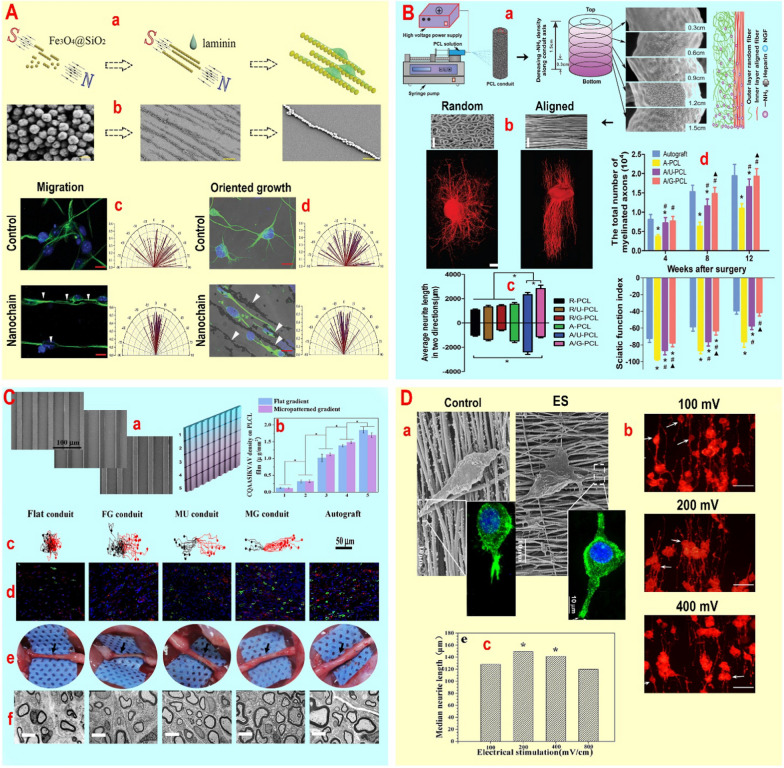
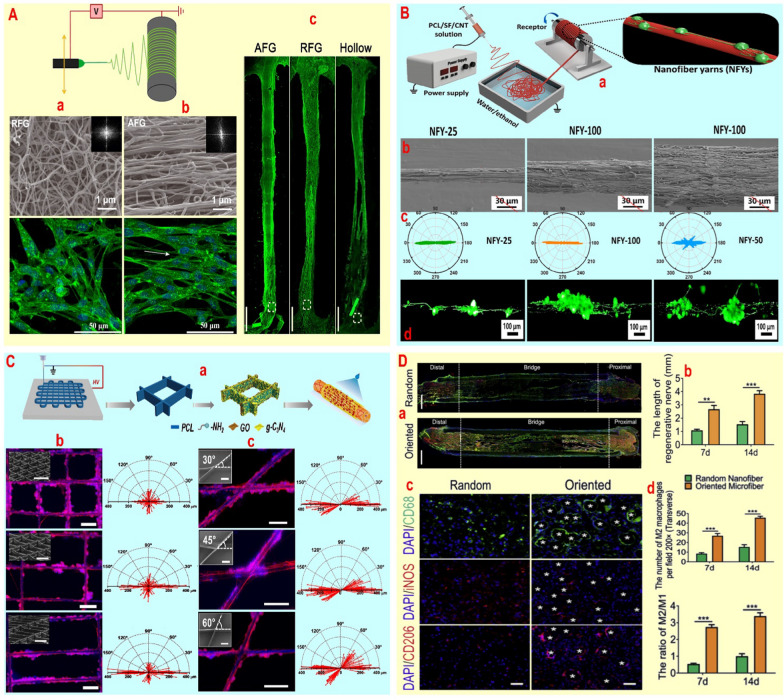
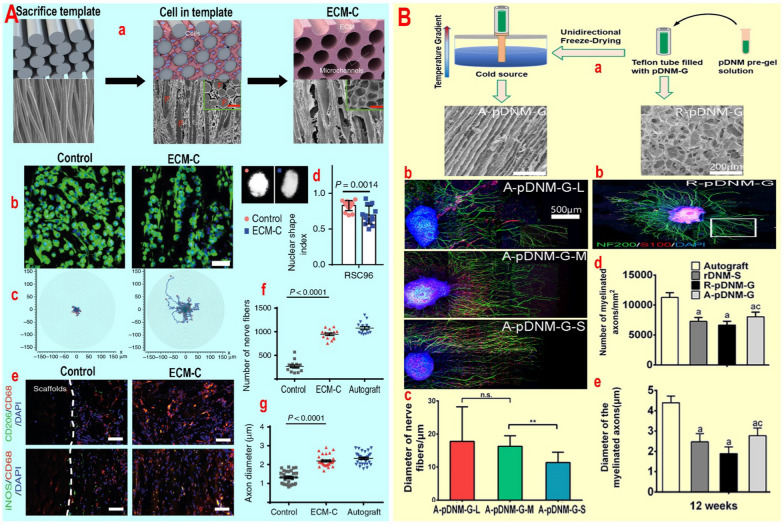
Several studies suggest that topographical patterns influence nerve cell fate. Efforts have been made to improve nerve cell functionality through this approach, focusing on therapeutic strategies that enhance nerve cell function and support structures. However, inadequate nerve cell orientation can impede long-term efficiency, affecting nerve tissue repair. Therefore, enhancing neurites/axons directional growth and cell orientation is crucial for better therapeutic outcomes, reducing nerve coiling, and ensuring accurate nerve fiber connections. Conflicting results exist regarding the effects of micro- or nano-patterns on nerve cell migration, directional growth, immunogenic response, and angiogenesis, complicating their clinical use. Nevertheless, advances in lithography, electrospinning, casting, and molding techniques to intentionally control the fate and neuronal cells orientation are being explored to rapidly and sustainably improve nerve tissue efficiency. It appears that this can be accomplished by combining micro- and nano-patterns with nanomaterials, biological gradients, and electrical stimulation. Despite promising outcomes, the unclear mechanism of action, the presence of growth cones in various directions, and the restriction of outcomes to morphological and functional nerve cell markers have presented challenges in utilizing this method. This review seeks to clarify how micro- or nano-patterns affect nerve cell morphology and function, highlighting the potential benefits of cell orientation, especially in combined approaches.
一些研究表明,地形模式会影响神经细胞的命运。人们已经努力通过这种方法来提高神经细胞的功能,专注于增强神经细胞功能和支持结构的治疗策略。然而,神经细胞的定向不足会阻碍长期效率,影响神经组织的修复。因此,增强突起/轴突的定向生长和细胞定向对于更好的治疗效果至关重要,可以减少神经卷曲,并确保准确的神经纤维连接。关于微纳图案对神经细胞迁移、定向生长、免疫原性反应和血管生成的影响存在相互矛盾的结果,这使得它们的临床应用变得复杂。尽管如此,人们仍在探索光刻、静电纺丝、浇铸和成型技术方面的进展,以有意控制神经细胞的命运和取向,从而快速而持续地提高神经组织的效率。似乎可以通过将微纳图案与纳米材料、生物梯度和电刺激相结合来实现这一目标。尽管结果很有前景,但作用机制不明确、生长锥向各个方向出现以及结果仅限于形态和功能神经细胞标志物等问题,限制了该方法的应用。本综述旨在阐明微纳图案如何影响神经细胞的形态和功能,强调细胞定向的潜在益处,特别是在联合方法中。