Institute for Diabetes and Cancer (IDC), Helmholtz Munich, Neuherberg, Germany.
Joint Heidelberg-IDC Translational Diabetes Program, Heidelberg University Hospital, Heidelberg, Germany.
Nat Methods. 2024 Jul;21(7):1306-1315. doi: 10.1038/s41592-024-02245-2. Epub 2024 Apr 22.
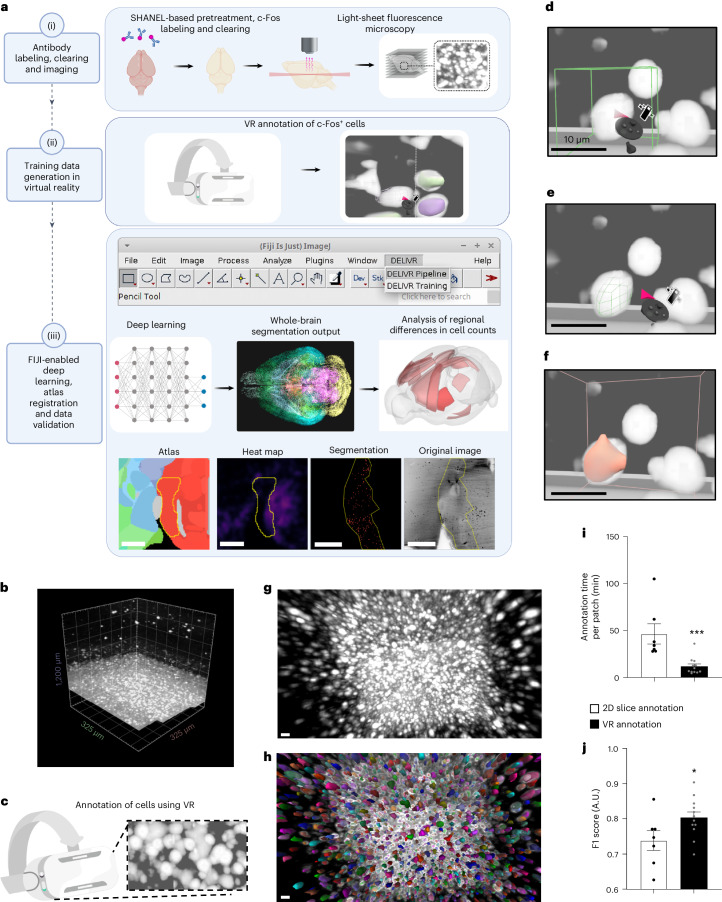
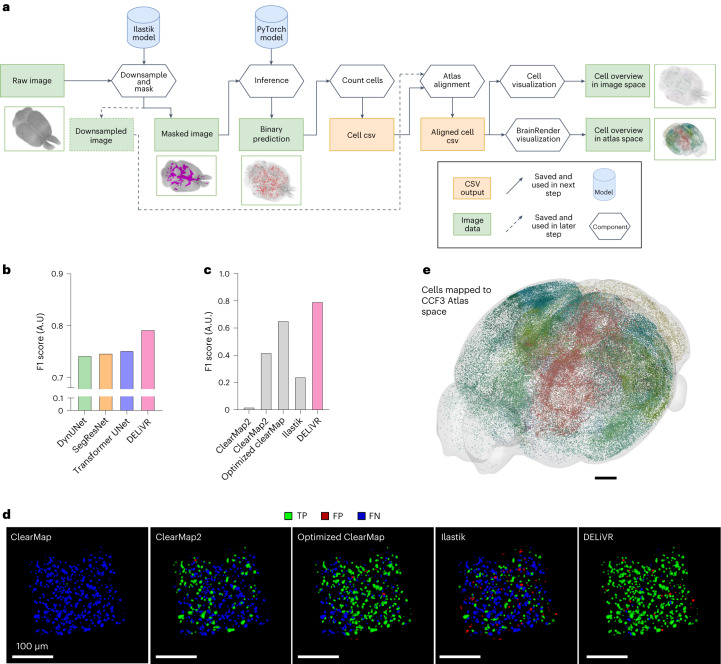
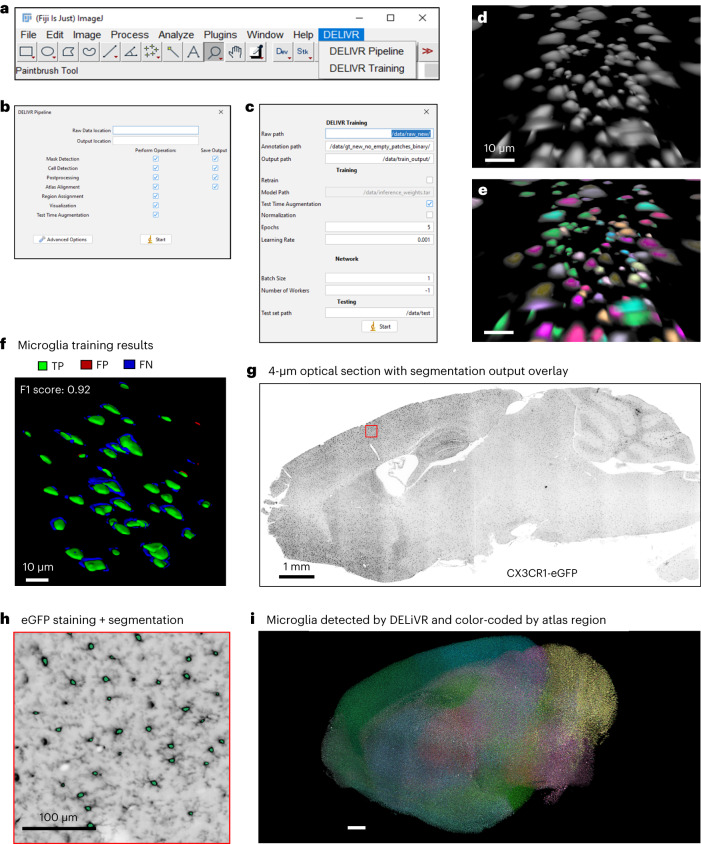
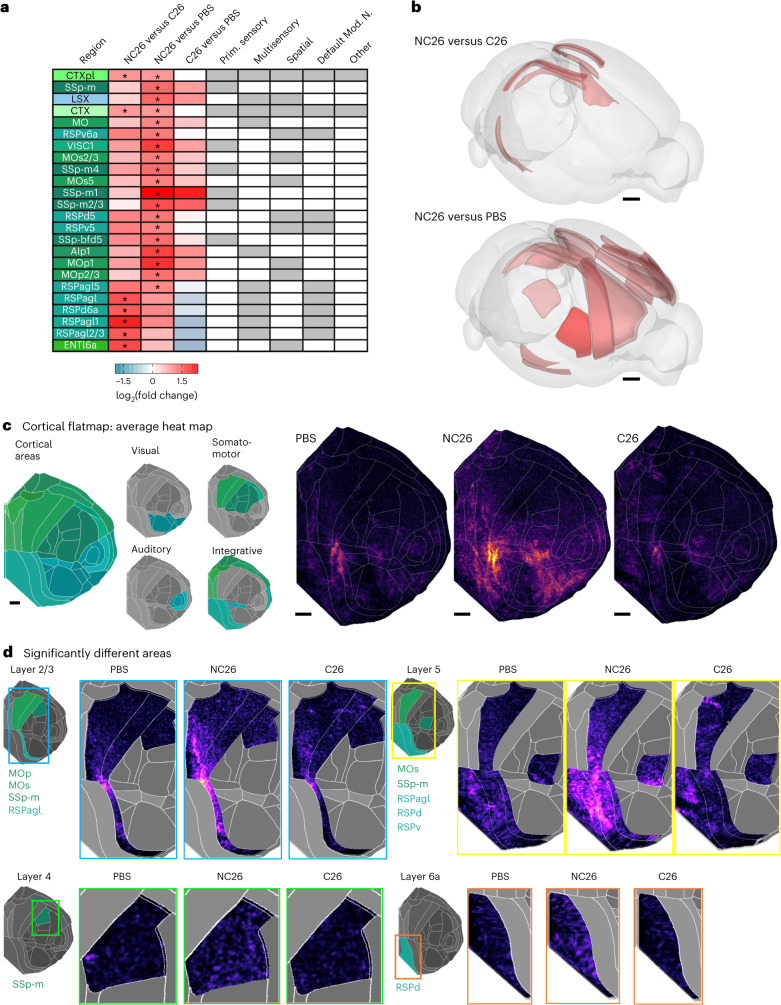
Automated detection of specific cells in three-dimensional datasets such as whole-brain light-sheet image stacks is challenging. Here, we present DELiVR, a virtual reality-trained deep-learning pipeline for detecting c-Fos cells as markers for neuronal activity in cleared mouse brains. Virtual reality annotation substantially accelerated training data generation, enabling DELiVR to outperform state-of-the-art cell-segmenting approaches. Our pipeline is available in a user-friendly Docker container that runs with a standalone Fiji plugin. DELiVR features a comprehensive toolkit for data visualization and can be customized to other cell types of interest, as we did here for microglia somata, using Fiji for dataset-specific training. We applied DELiVR to investigate cancer-related brain activity, unveiling an activation pattern that distinguishes weight-stable cancer from cancers associated with weight loss. Overall, DELiVR is a robust deep-learning tool that does not require advanced coding skills to analyze whole-brain imaging data in health and disease.
在三维数据集(如全脑光片图像堆栈)中自动检测特定细胞具有挑战性。在这里,我们提出了 DELiVR,这是一个经过虚拟现实训练的深度学习管道,用于检测 c-Fos 细胞作为清除小鼠大脑中神经元活动的标志物。虚拟现实注释极大地加速了训练数据的生成,使 DELiVR 能够优于最先进的细胞分割方法。我们的管道提供了一个用户友好的 Docker 容器,可与独立的 Fiji 插件一起运行。DELiVR 具有用于数据可视化的综合工具包,并且可以针对其他感兴趣的细胞类型进行定制,就像我们在这里针对小胶质细胞体所做的那样,使用 Fiji 进行特定于数据集的训练。我们应用 DELiVR 来研究与癌症相关的大脑活动,揭示了一种可区分体重稳定的癌症与与体重减轻相关的癌症的激活模式。总的来说,DELiVR 是一个强大的深度学习工具,不需要高级编码技能即可分析健康和疾病中的全脑成像数据。