Animal Nutrition and Swine Institute, Yunnan Academy of Animal Husbandry and Veterinary Sciences, Kunming, 650224, China.
BMC Genomics. 2024 Jun 12;25(1):588. doi: 10.1186/s12864-024-10508-7.
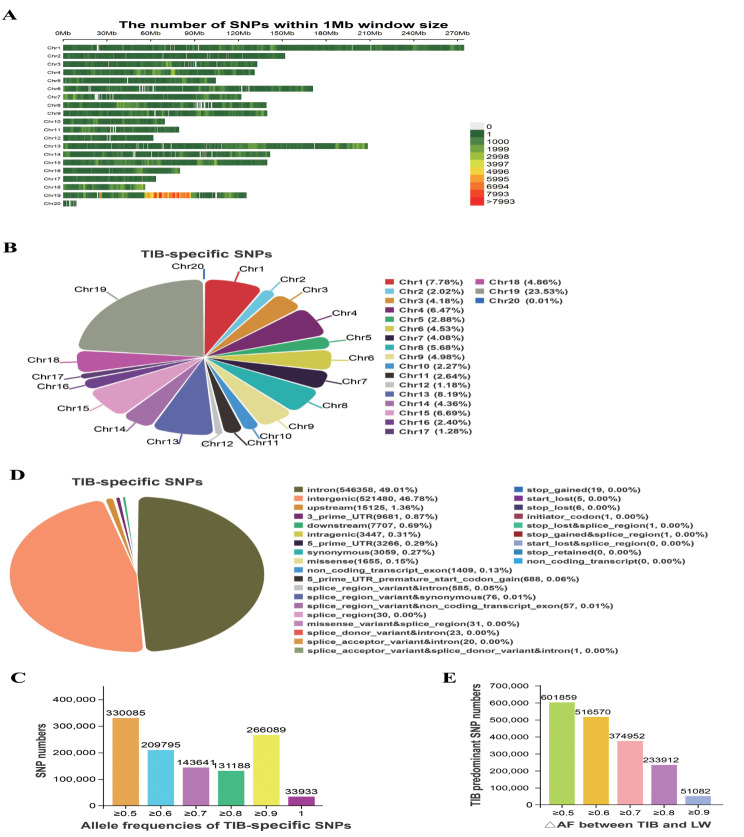
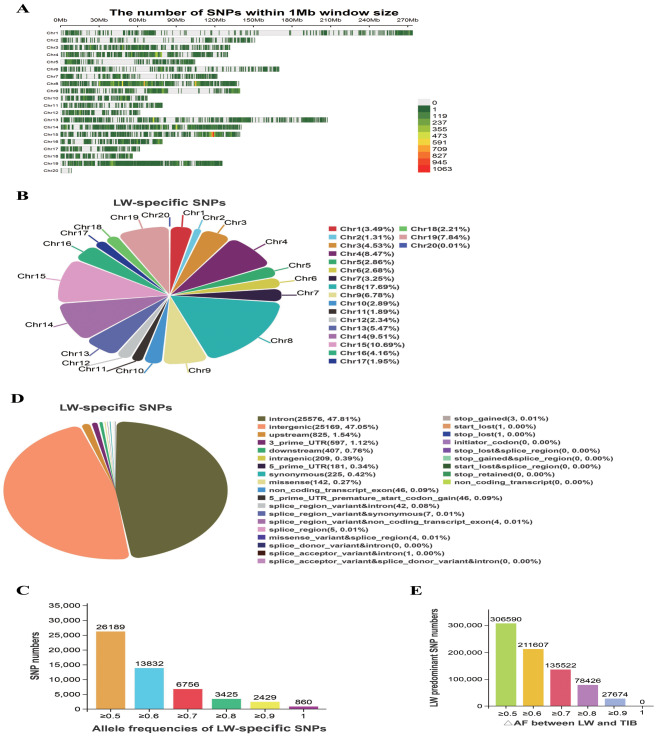
The skeletal muscle growth rate and body size of Tibetan pigs (TIB) are lower than Large white pigs (LW). However, the underlying genetic basis attributing to these differences remains uncertain. To address this knowledge gap, the present study employed whole-genome sequencing of TIB (slow growth) and LW (fast growth) individuals, and integrated with existing NCBI sequencing datasets of TIB and LW individuals, enabling the identification of a comprehensive set of genetic variations for each breed. The specific and predominant SNPs in the TIB and LW populations were detected by using a cutoff value of 0.50 for SNP allele frequency and absolute allele frequency differences (△AF) between the TIB and LW populations.
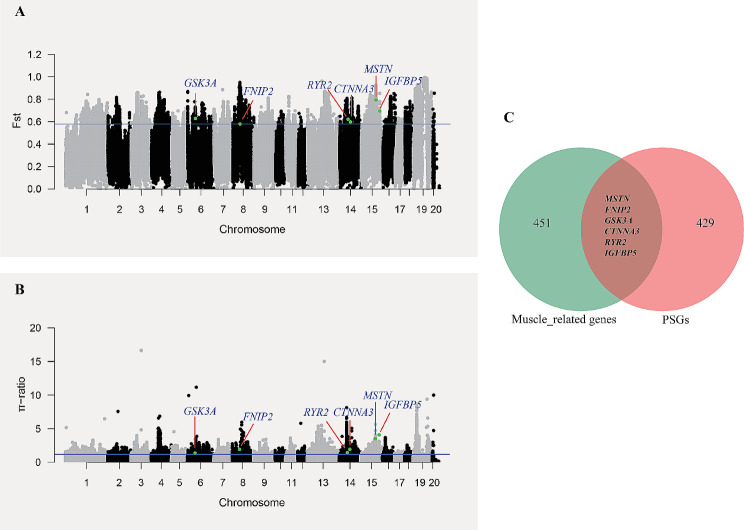
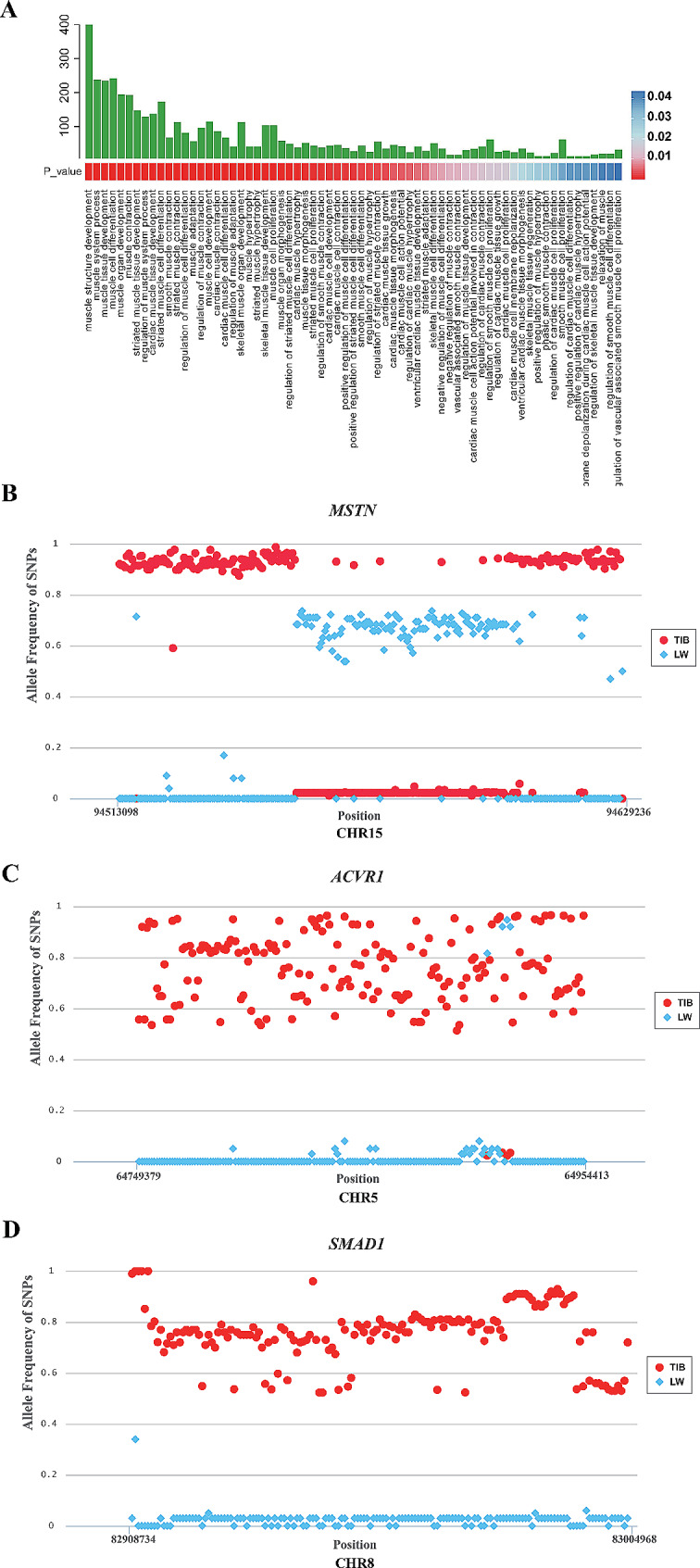
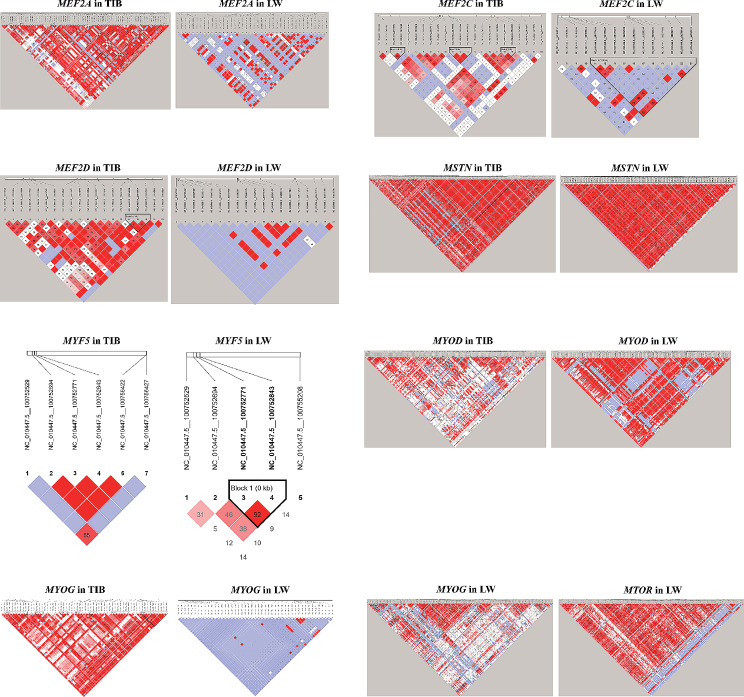
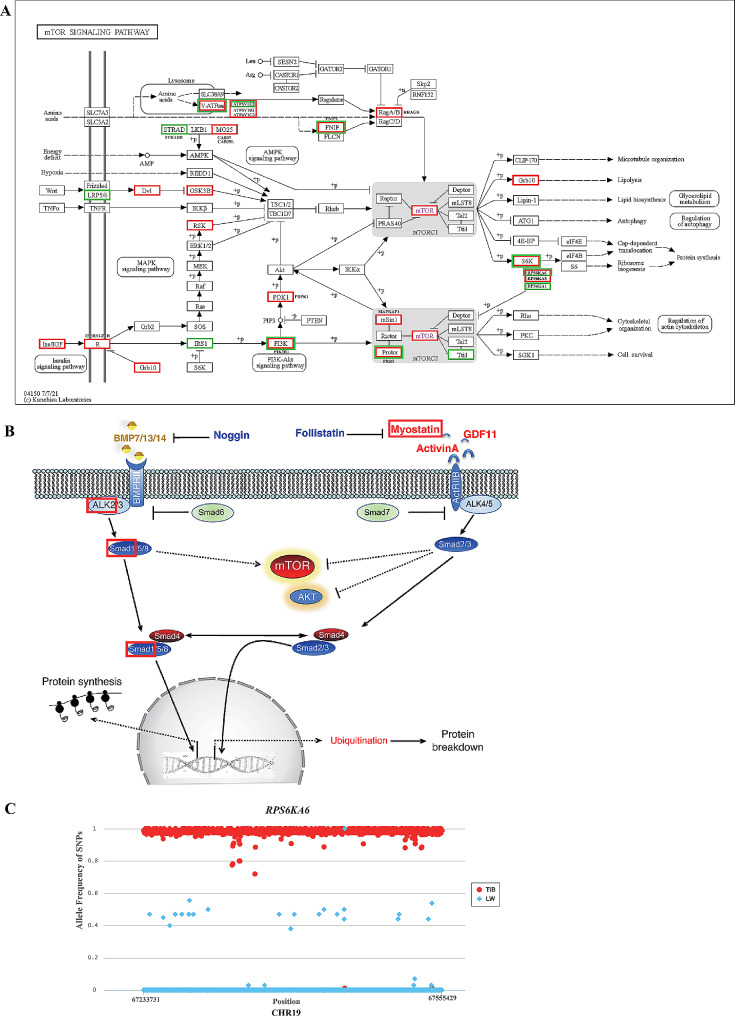
A total of 21,767,938 SNPs were retrieved from 44 TIB and 29 LW genomes. The analysis detected 2,893,106 (13.29%) and 813,310 (3.74%) specific and predominant SNPs in the TIB and LW populations, and annotated to 24,560 genes. Further GO analysis revealed 291 genes involved in biological processes related to striated and/or skeletal muscle differentiation, proliferation, hypertrophy, regulation of striated muscle cell differentiation and proliferation, and myoblast differentiation and fusion. These 291 genes included crucial regulators of muscle cell determination, proliferation, differentiation, and hypertrophy, such as members of the Myogenic regulatory factors (MRF) (MYOD, MYF5, MYOG, MYF6) and Myocyte enhancer factor 2 (MEF2) (MEF2A, MEF2C, MEF2D) families, as well as muscle growth inhibitors (MSTN, ACVR1, and SMAD1); KEGG pathway analysis revealed 106 and 20 genes were found in muscle growth related positive and negative regulatory signaling pathways. Notably, genes critical for protein synthesis, such as MTOR, IGF1, IGF1R, IRS1, INSR, and RPS6KA6, were implicated in these pathways.
This study employed an effective methodology to rigorously identify the potential genes associated with skeletal muscle development. A substantial number of SNPs and genes that potentially play roles in the divergence observed in skeletal muscle growth between the TIB and LW breeds were identified. These findings offer valuable insights into the genetic underpinnings of skeletal muscle development and present opportunities for enhancing meat production through pig breeding.
藏猪(TIB)的骨骼肌生长速度和体型均小于长白猪(LW)。然而,导致这些差异的潜在遗传基础尚不清楚。为了填补这一知识空白,本研究对 TIB(生长缓慢)和 LW(生长迅速)个体进行了全基因组测序,并整合了现有的 TIB 和 LW 个体的 NCBI 测序数据集,从而为每个品种鉴定了一套全面的遗传变异。通过设定 SNP 等位基因频率的截断值为 0.50 和 TIB 与 LW 群体之间的绝对等位基因频率差异(△AF),检测到 TIB 和 LW 群体中的特定和主要 SNP。
从 44 个 TIB 和 29 个 LW 基因组中检索到 21767938 个 SNP。分析检测到 TIB 和 LW 群体中分别有 2893106(13.29%)和 813310(3.74%)个特异性和主要 SNP,并注释到 24560 个基因。进一步的 GO 分析显示,有 291 个基因参与与横纹肌和/或骨骼肌分化、增殖、肥大、横纹肌细胞分化和增殖的调节以及成肌细胞分化和融合相关的生物学过程。这些 291 个基因包括肌肉细胞决定、增殖、分化和肥大的关键调节因子,如肌生成调节因子(MRF)(MYOD、MYF5、MYOG、MYF6)和肌细胞增强因子 2(MEF2)(MEF2A、MEF2C、MEF2D)家族的成员,以及肌肉生长抑制剂(MSTN、ACVR1 和 SMAD1);KEGG 途径分析显示,在肌肉生长相关的正、负调节信号通路中分别发现了 106 个和 20 个基因。值得注意的是,这些途径中涉及到蛋白质合成的关键基因,如 MTOR、IGF1、IGF1R、IRS1、INSR 和 RPS6KA6。
本研究采用了一种有效的方法来严格鉴定与骨骼肌发育相关的潜在基因。发现了大量可能在 TIB 和 LW 品种之间骨骼肌生长差异中发挥作用的 SNP 和基因。这些发现为骨骼肌发育的遗传基础提供了有价值的见解,并为通过猪的育种来提高肉类产量提供了机会。