Park Jongchan, Gao Liang
Department of Bioengineering, University of California, Los Angeles, CA 90025, USA.
Curr Opin Solid State Mater Sci. 2024 Jun;30. doi: 10.1016/j.cossms.2024.101147. Epub 2024 Mar 18.
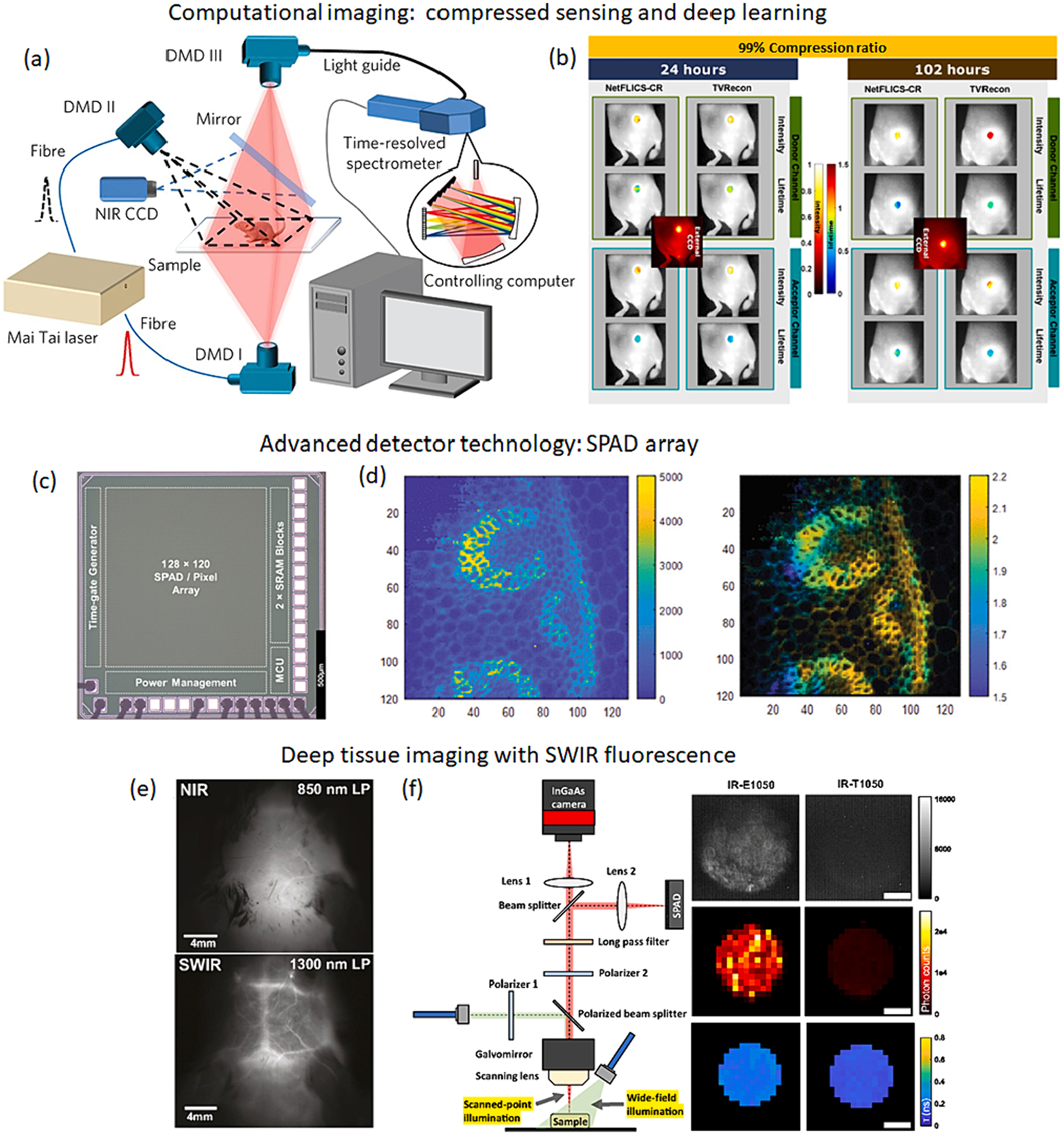
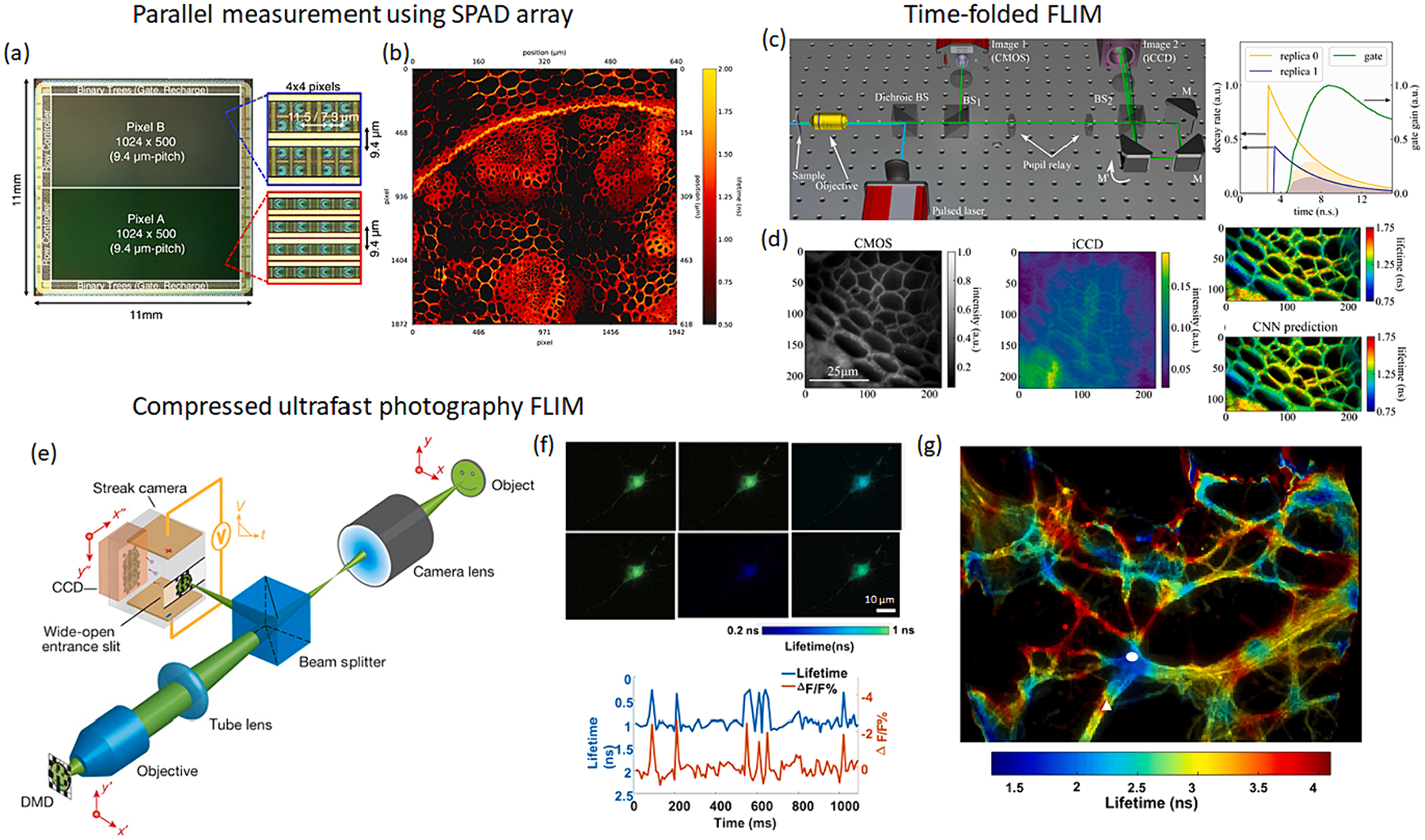
Fluorescence lifetime imaging microscopy (FLIM) is a powerful imaging tool offering molecular specific insights into samples through the measurement of fluorescence decay time, with promising applications in diverse research fields. However, to acquire two-dimensional lifetime images, conventional FLIM relies on extensive scanning in both the spatial and temporal domain, resulting in much slower acquisition rates compared to intensity-based approaches. This problem is further magnified in three-dimensional imaging, as it necessitates additional scanning along the depth axis. Recent advancements have aimed to enhance the speed and three-dimensional imaging capabilities of FLIM. This review explores the progress made in addressing these challenges and discusses potential directions for future developments in FLIM instrumentation.
荧光寿命成像显微镜(FLIM)是一种强大的成像工具,通过测量荧光衰减时间,能够对样品进行分子特异性的深入观察,在多个研究领域有着广阔的应用前景。然而,为了获取二维寿命图像,传统的FLIM依赖于在空间和时间域进行大量扫描,与基于强度的方法相比,采集速度要慢得多。在三维成像中,这个问题会进一步放大,因为需要沿着深度轴进行额外的扫描。最近的进展旨在提高FLIM的速度和三维成像能力。本文综述探讨了在应对这些挑战方面取得的进展,并讨论了FLIM仪器未来发展的潜在方向。