Department of Computer Science and Engineering, Sathyabama Institute of Science and Technology, Chennai, India.
School of Computer Science and Engineering, Vellore Institute of Technology, Vellore, Tamil Nadu, India.
PLoS One. 2024 Aug 27;19(8):e0306493. doi: 10.1371/journal.pone.0306493. eCollection 2024.
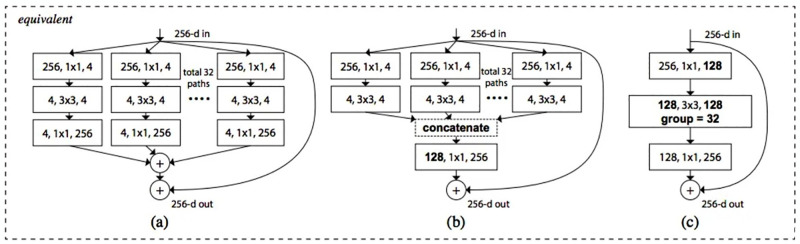
Brain tumors, characterized by the uncontrolled growth of abnormal cells, pose a significant threat to human health. Early detection is crucial for successful treatment and improved patient outcomes. Magnetic Resonance Imaging (MRI) is the primary diagnostic tool for brain tumors, providing detailed visualizations of the brain's intricate structures. However, the complexity and variability of tumor shapes and locations often challenge physicians in achieving accurate tumor segmentation on MRI images. Precise tumor segmentation is essential for effective treatment planning and prognosis. To address this challenge, we propose a novel hybrid deep learning technique, Convolutional Neural Network and ResNeXt101 (ConvNet-ResNeXt101), for automated tumor segmentation and classification. Our approach commences with data acquisition from the BRATS 2020 dataset, a benchmark collection of MRI images with corresponding tumor segmentations. Next, we employ batch normalization to smooth and enhance the collected data, followed by feature extraction using the AlexNet model. This involves extracting features based on tumor shape, position, shape, and surface characteristics. To select the most informative features for effective segmentation, we utilize an advanced meta-heuristics algorithm called Advanced Whale Optimization (AWO). AWO mimics the hunting behavior of humpback whales to iteratively search for the optimal feature subset. With the selected features, we perform image segmentation using the ConvNet-ResNeXt101 model. This deep learning architecture combines the strengths of ConvNet and ResNeXt101, a type of ConvNet with aggregated residual connections. Finally, we apply the same ConvNet-ResNeXt101 model for tumor classification, categorizing the segmented tumor into distinct types. Our experiments demonstrate the superior performance of our proposed ConvNet-ResNeXt101 model compared to existing approaches, achieving an accuracy of 99.27% for the tumor core class with a minimum learning elapsed time of 0.53 s.
脑肿瘤是由异常细胞不受控制的生长引起的,对人类健康构成重大威胁。早期发现对于成功治疗和改善患者预后至关重要。磁共振成像(MRI)是脑肿瘤的主要诊断工具,可提供大脑复杂结构的详细可视化图像。然而,肿瘤形状和位置的复杂性和可变性常常给医生在 MRI 图像上进行准确的肿瘤分割带来挑战。精确的肿瘤分割对于有效的治疗计划和预后至关重要。为了解决这个挑战,我们提出了一种新的混合深度学习技术,卷积神经网络和 ResNeXt101(ConvNet-ResNeXt101),用于自动肿瘤分割和分类。我们的方法从 BRATS 2020 数据集获取数据开始,该数据集是一个包含 MRI 图像和相应肿瘤分割的基准集合。接下来,我们使用批量归一化来平滑和增强所收集的数据,然后使用 AlexNet 模型提取特征。这包括基于肿瘤形状、位置、形状和表面特征提取特征。为了选择最有效的分割特征,我们使用一种称为高级鲸鱼优化(AWO)的高级元启发式算法。AWO 模仿座头鲸的狩猎行为,迭代搜索最佳特征子集。使用选定的特征,我们使用 ConvNet-ResNeXt101 模型进行图像分割。这个深度学习架构结合了卷积神经网络和 ResNeXt101 的优势,ResNeXt101 是一种具有聚合残差连接的卷积神经网络。最后,我们使用相同的 ConvNet-ResNeXt101 模型进行肿瘤分类,将分割的肿瘤分为不同的类型。我们的实验表明,与现有方法相比,我们提出的 ConvNet-ResNeXt101 模型具有优越的性能,对于肿瘤核心类的准确率达到 99.27%,最小学习耗时为 0.53 秒。