Fournier Zachary, Alonso Leandro M, Marder Eve
Volen Center and Biology Department, Brandeis University, Waltham, MA, 02454, USA.
bioRxiv. 2025 Feb 5:2024.09.03.611139. doi: 10.1101/2024.09.03.611139.
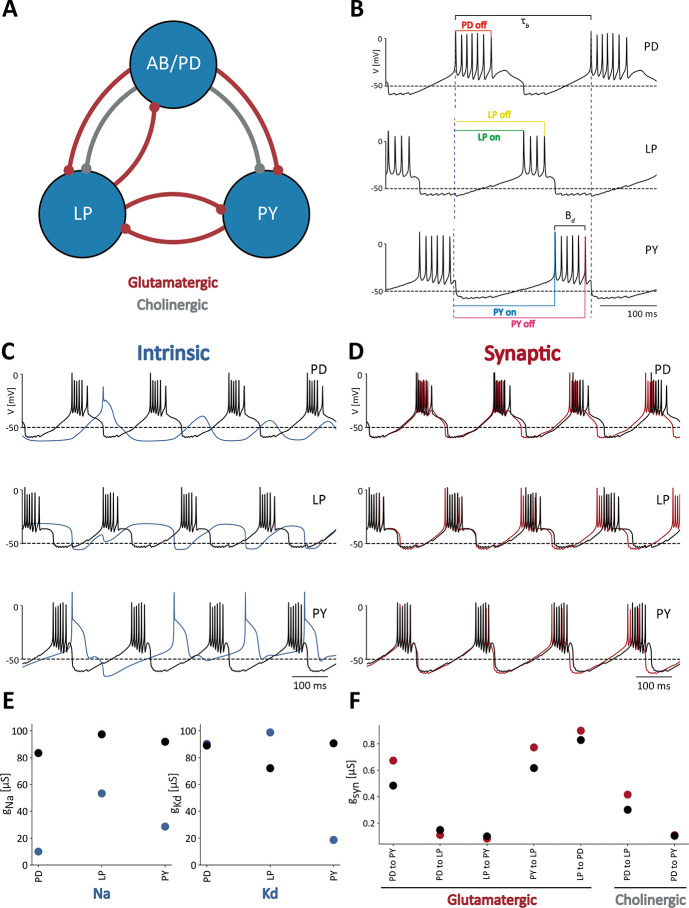
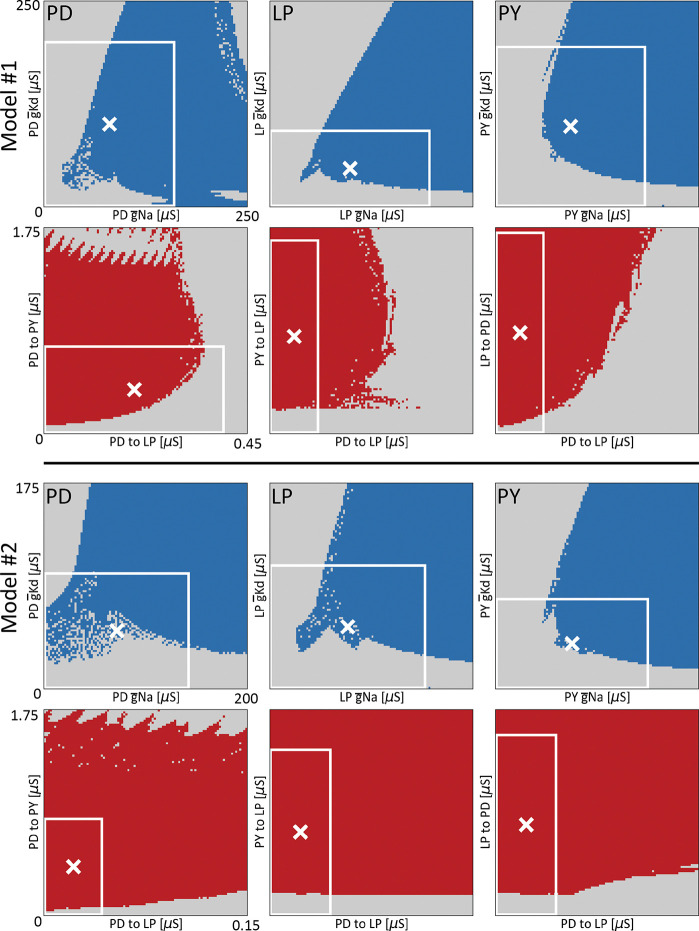
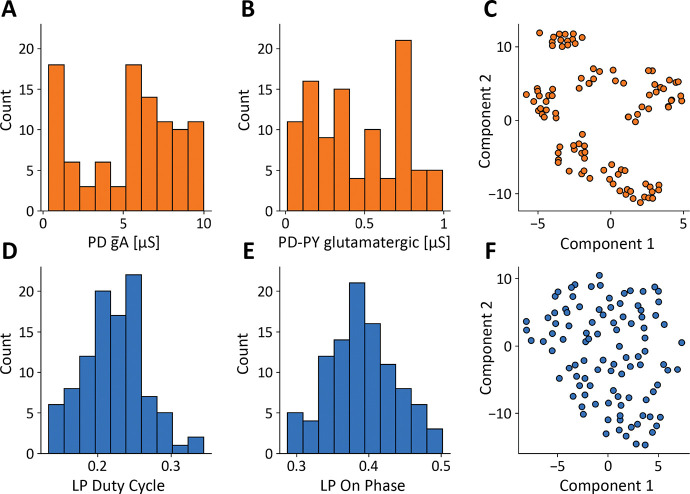
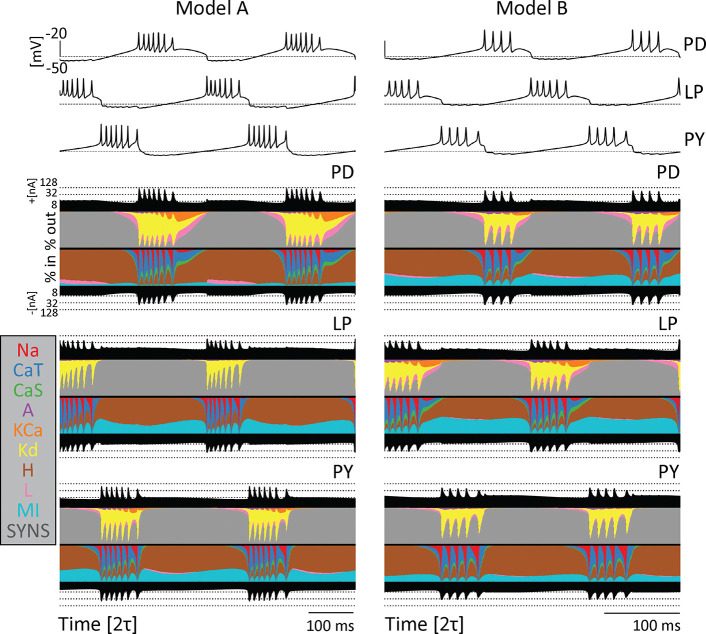
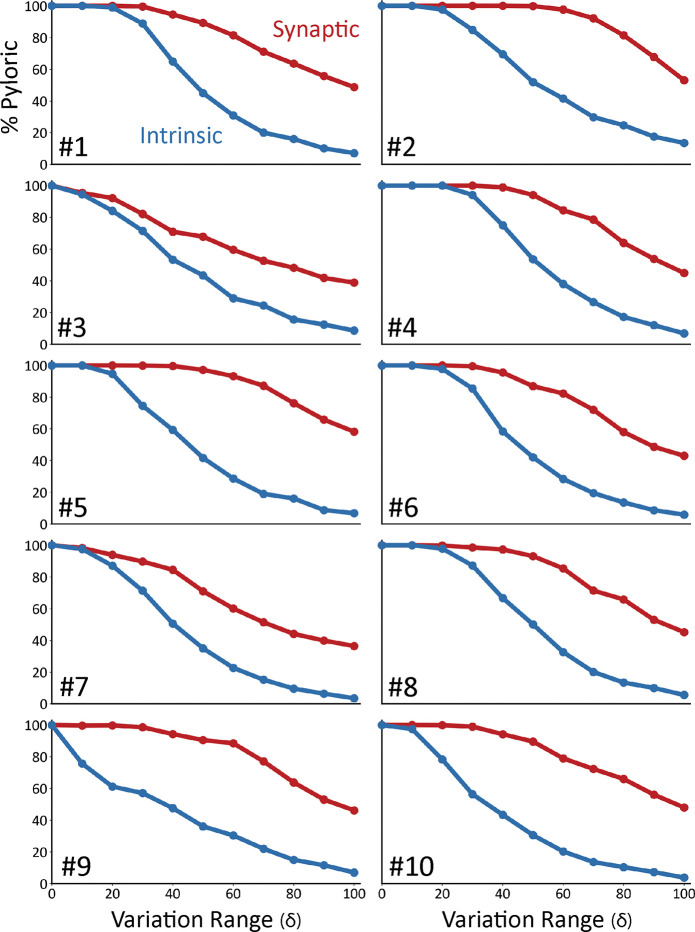
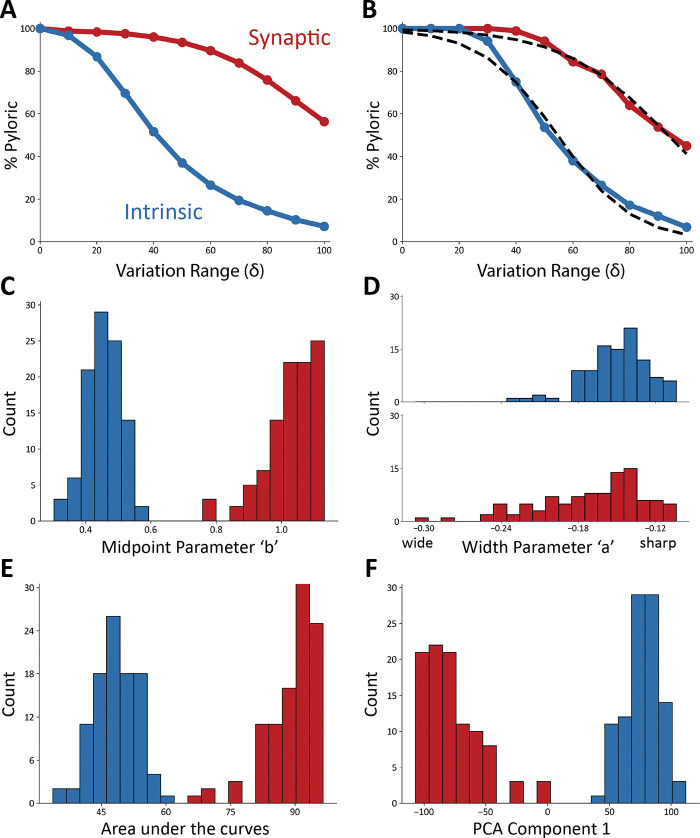
Circuit function results from both intrinsic conductances of network neurons and the synaptic conductances that connect them. In models of neural circuits, different combinations of maximal conductances can give rise to similar activity. We compared the robustness of a neural circuit to changes in their intrinsic versus synaptic conductances. To address this, we performed a sensitivity analysis on a population of conductance-based models of the pyloric network from the crustacean stomatogastric ganglion (STG). The model network consists of three neurons with nine currents: a sodium current (Na), three potassium currents (Kd, KCa, A-type), two calcium currents (CaS and CaT), a hyperpolarization-activated current (H), a non-voltage-gated leak current (leak), and a neuromodulatory current (MI). The model cells are connected by seven synapses of two types, glutamatergic and cholinergic. We produced one hundred models of the pyloric network that displayed similar activities with values of maximal conductances distributed over wide ranges. We evaluated the robustness of each model to changes in their maximal conductances. We found that individual models have different sensitivities to changes in their maximal conductances, both in their intrinsic and synaptic conductances. As expected the models become less robust as the extent of the changes increase. Despite quantitative differences in their robustness, we found that in all cases, the model networks are more sensitive to the perturbation of their intrinsic conductances than their synaptic conductances.
神经回路功能源于网络神经元的内在电导以及连接它们的突触电导。在神经回路模型中,最大电导的不同组合可产生相似的活动。我们比较了神经回路对其内在电导与突触电导变化的鲁棒性。为解决此问题,我们对来自甲壳类动物口胃神经节(STG)幽门网络的基于电导的模型群体进行了敏感性分析。该模型网络由三个神经元和九种电流组成:一种钠电流(Na)、三种钾电流(Kd、KCa、A 型)、两种钙电流(CaS 和 CaT)、一种超极化激活电流(H)、一种非电压门控泄漏电流(leak)和一种神经调节电流(MI)。模型细胞通过谷氨酸能和胆碱能两种类型的七个突触相连。我们生成了一百个幽门网络模型,这些模型表现出相似的活动,其最大电导值分布在很宽的范围内。我们评估了每个模型对其最大电导变化的鲁棒性。我们发现各个模型对其最大电导变化的敏感性不同,无论是内在电导还是突触电导方面。正如预期的那样,随着变化程度的增加,模型的鲁棒性会降低。尽管它们在鲁棒性方面存在定量差异,但我们发现在所有情况下,模型网络对其内在电导扰动的敏感性都高于对突触电导的敏感性。