Volen Center and Biology Department, Brandeis University, Waltham, United States.
Elife. 2020 Jun 2;9:e55470. doi: 10.7554/eLife.55470.
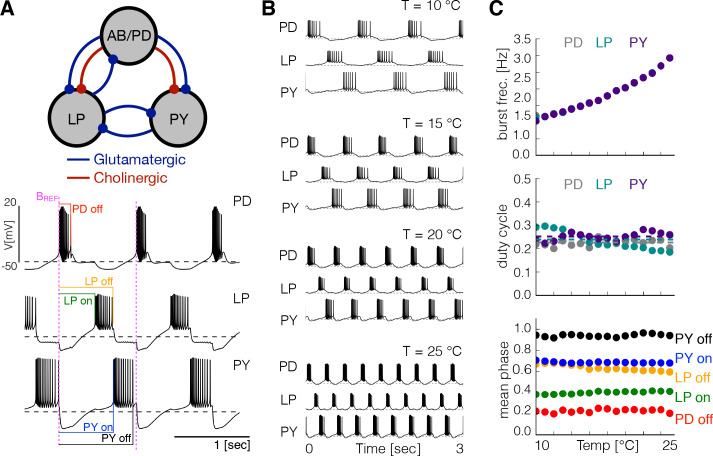
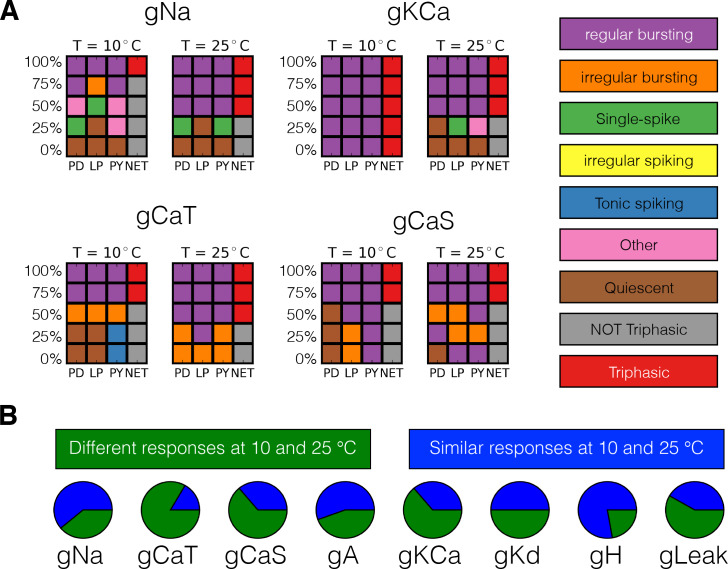
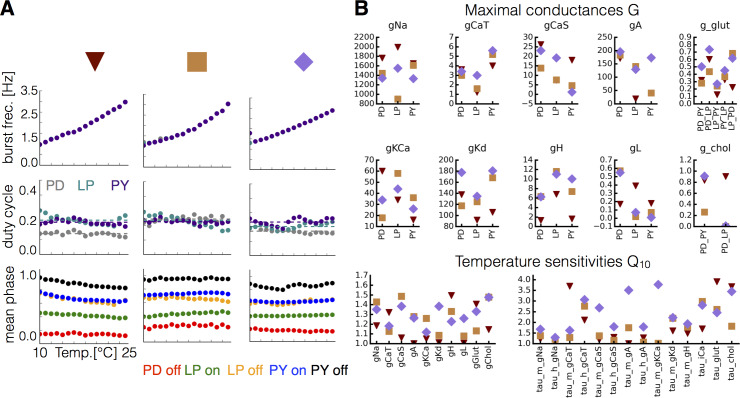
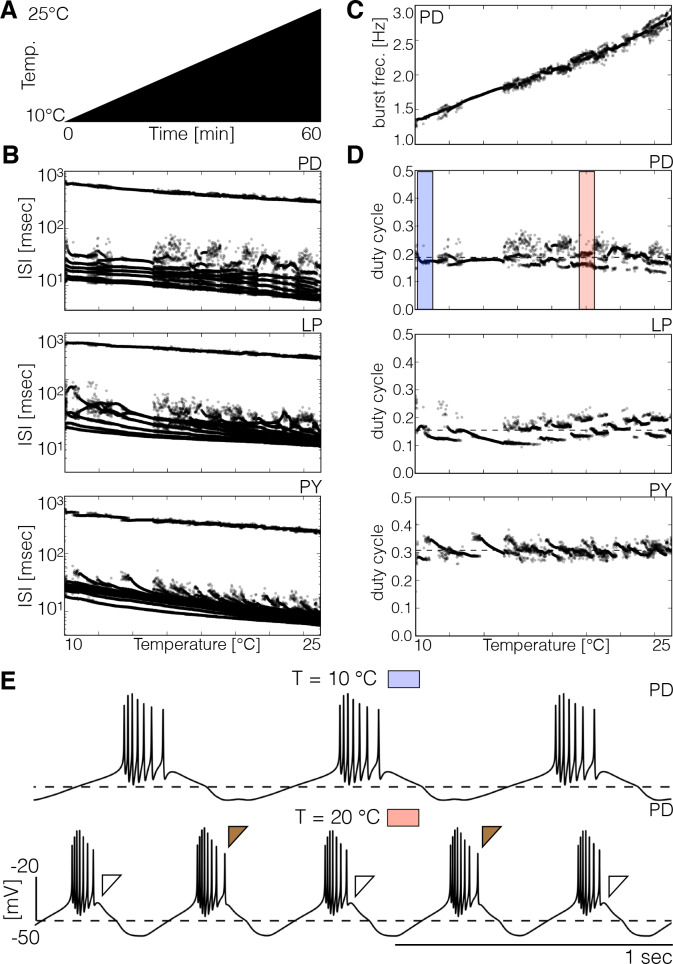
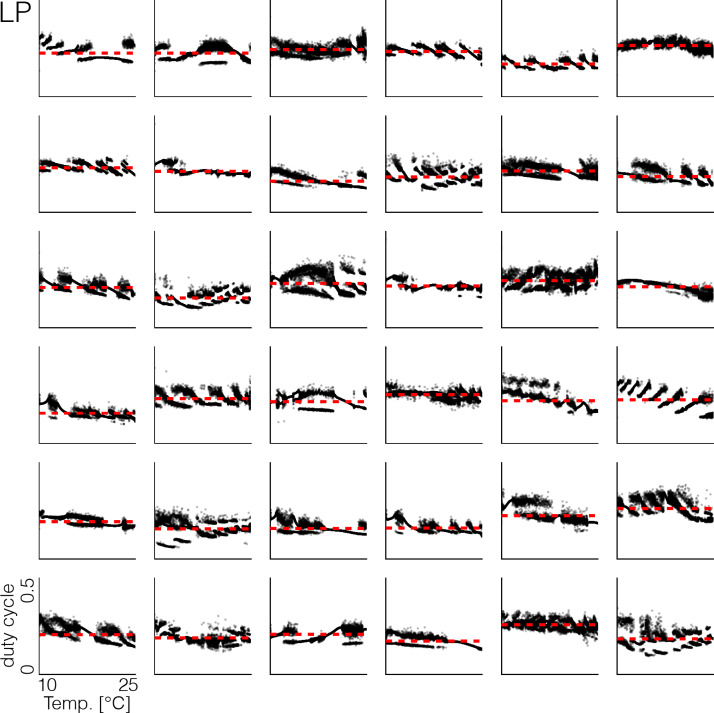
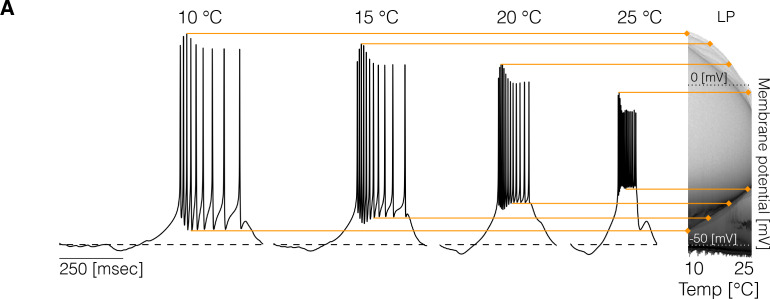
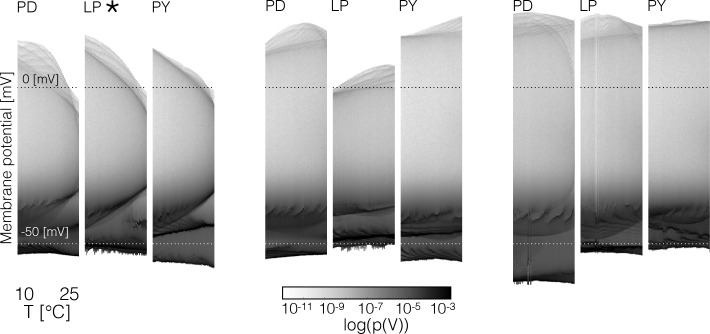
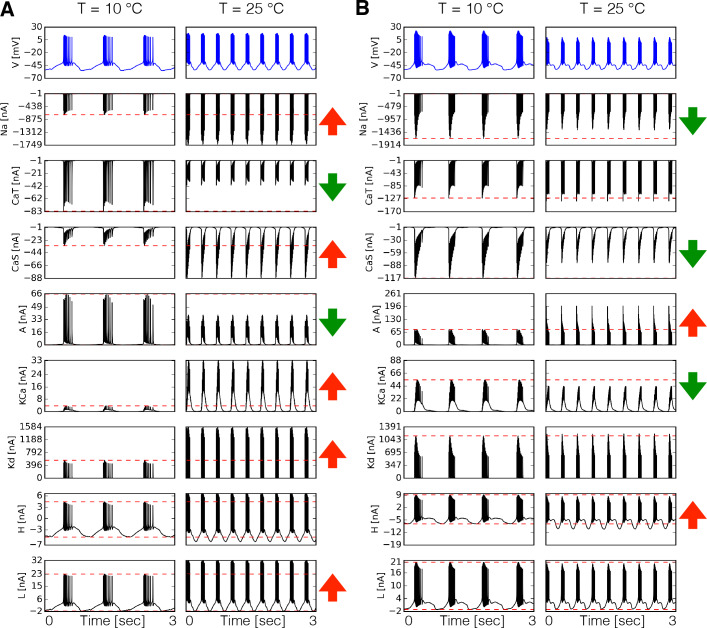
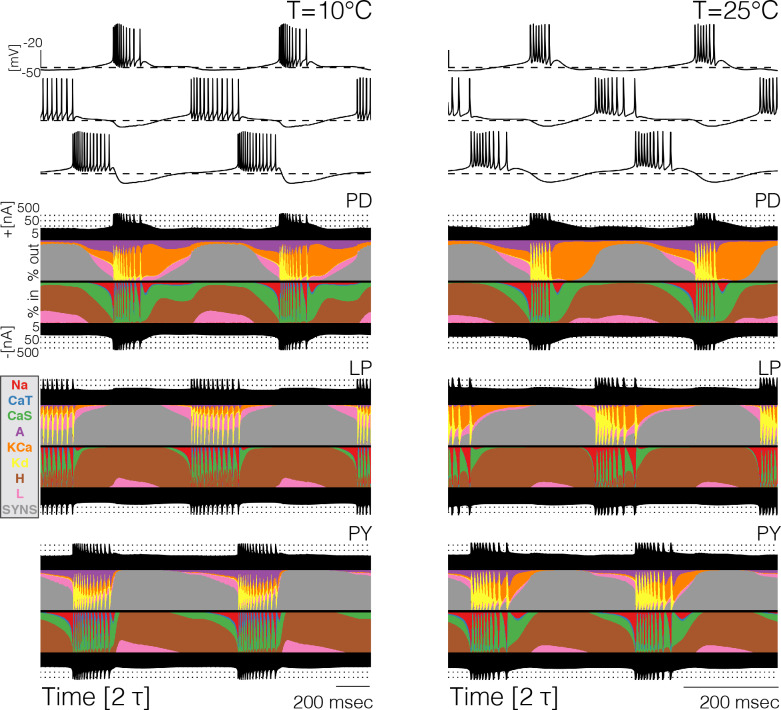
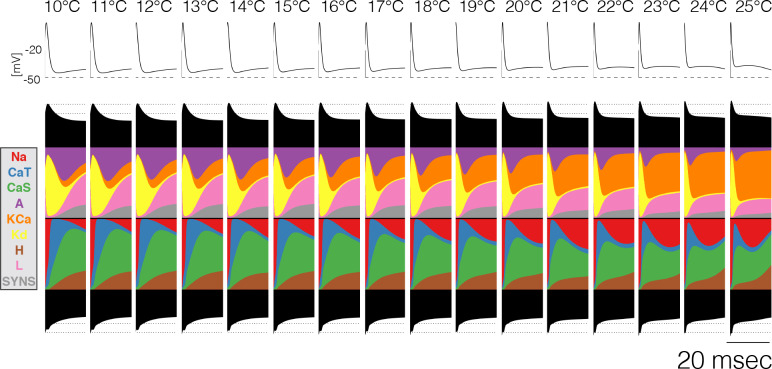
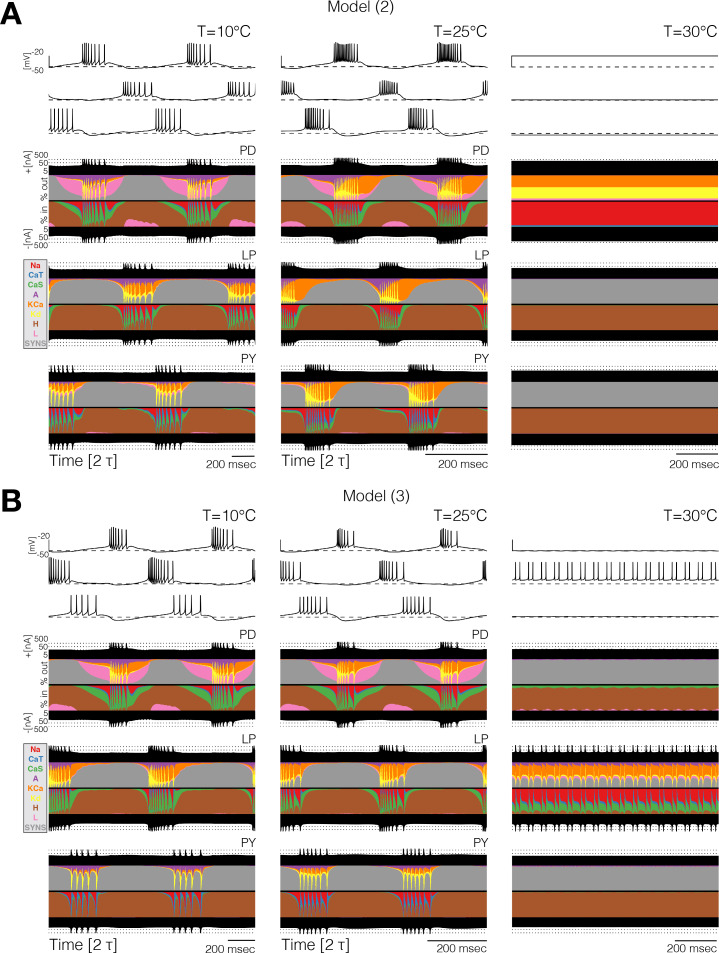
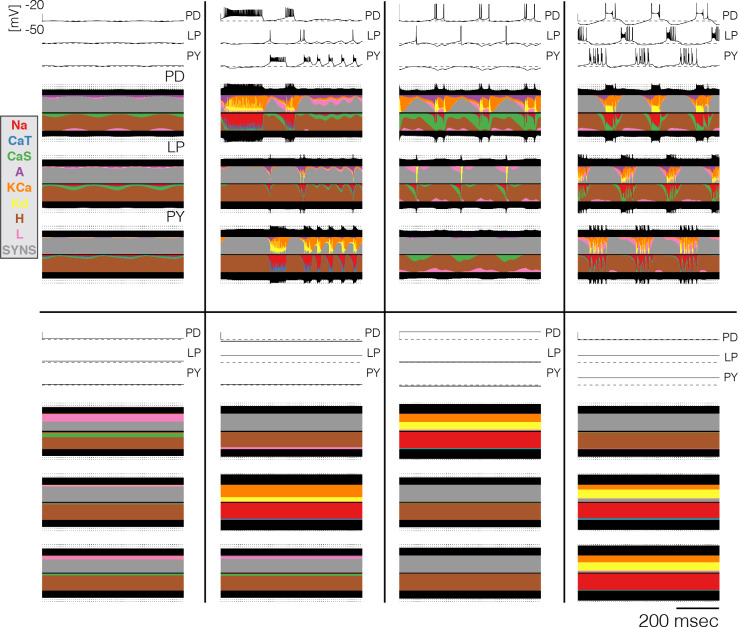
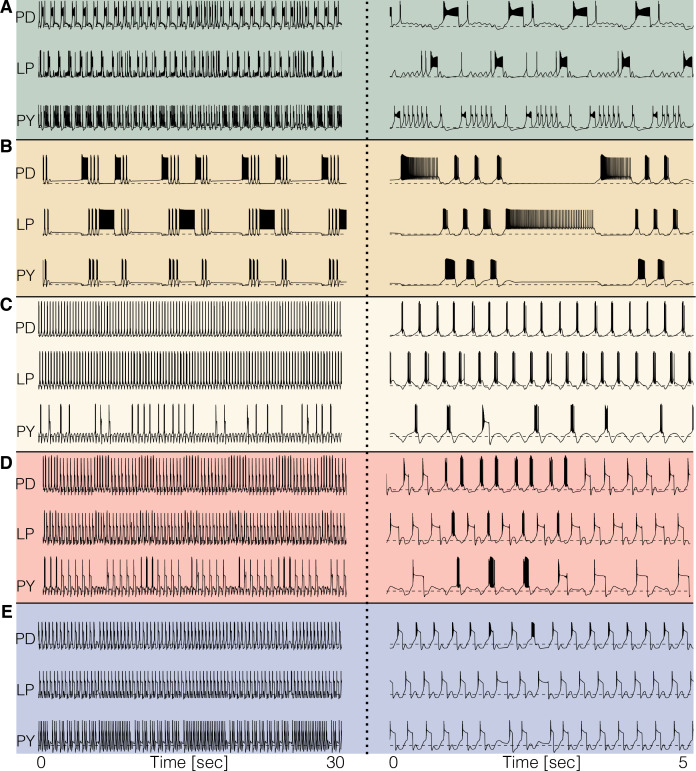
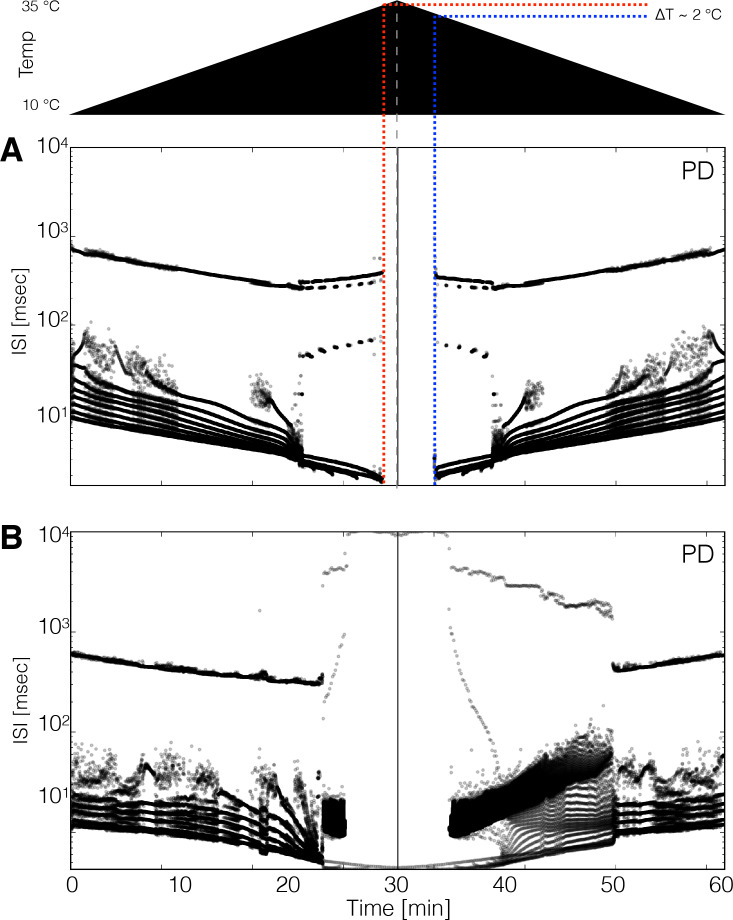
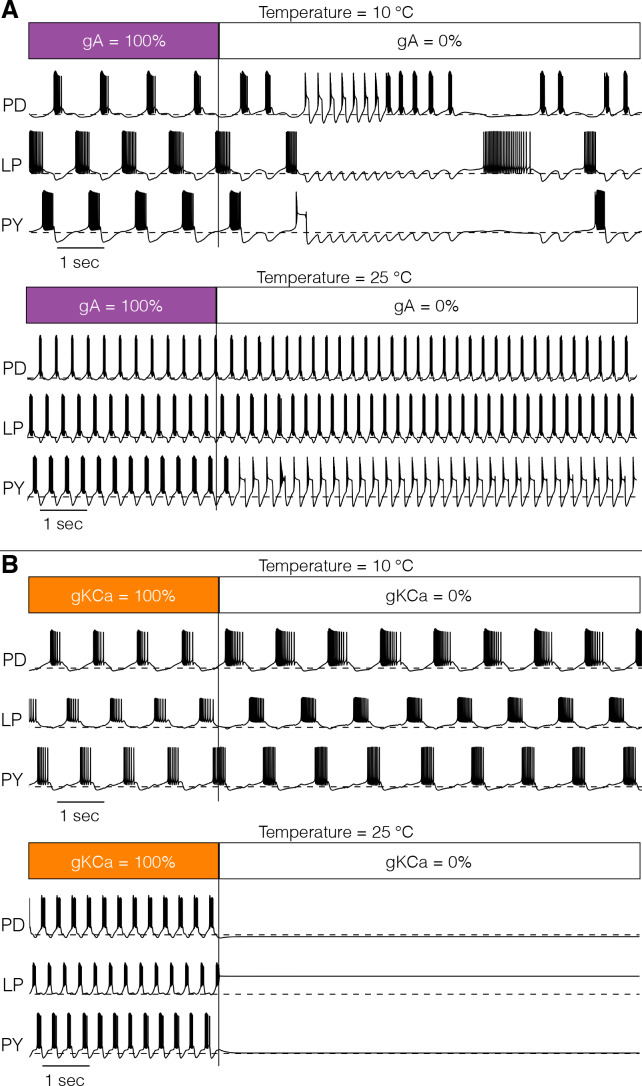
Temperature affects the conductances and kinetics of the ionic channels that underlie neuronal activity. Each membrane conductance has a different characteristic temperature sensitivity, which raises the question of how neurons and neuronal circuits can operate robustly over wide temperature ranges. To address this, we employed computational models of the pyloric network of crabs and lobsters. We produced multiple different models that exhibit a triphasic pyloric rhythm over a range of temperatures and explored the dynamics of their currents and how they change with temperature. Temperature can produce smooth changes in the relative contributions of the currents to neural activity so that neurons and networks undergo graceful transitions in the mechanisms that give rise to their activity patterns. Moreover, responses of the models to deletions of a current can be different at high and low temperatures, indicating that even a well-defined genetic or pharmacological manipulation may produce qualitatively distinct effects depending on the temperature.
温度会影响构成神经元活动基础的离子通道的电导和动力学。每种膜电导都有不同的特征温度敏感性,这就提出了一个问题,即神经元和神经元回路如何能够在很宽的温度范围内稳健地工作。为了解决这个问题,我们采用了螃蟹和龙虾的幽门网络的计算模型。我们制作了多个不同的模型,这些模型在不同温度下表现出三相幽门节律,并探索了它们的电流动态及其随温度的变化。温度可以使电流对神经活动的相对贡献发生平稳变化,从而使神经元和网络在产生其活动模式的机制中进行优雅的转变。此外,模型对电流缺失的反应在高温和低温下可能不同,这表明即使是明确的遗传或药理学操作也可能根据温度产生定性上不同的效果。