Munoz Juan Matheus, Pileggi Giovana Fontanella, Nucci Mariana Penteado, Alves Arielly da Hora, Pedrini Flavia, Valle Nicole Mastandrea Ennes do, Mamani Javier Bustamante, Oliveira Fernando Anselmo de, Lopes Alexandre Tavares, Carreño Marcelo Nelson Páez, Gamarra Lionel Fernel
Hospital Israelita Albert Einstein, São Paulo 05652-000, Brazil.
LIM44-Hospital das Clínicas da Faculdade Medicina, Universidade de São Paulo, São Paulo 05403-000, Brazil.
Pharmaceutics. 2024 Aug 31;16(9):1156. doi: 10.3390/pharmaceutics16091156.
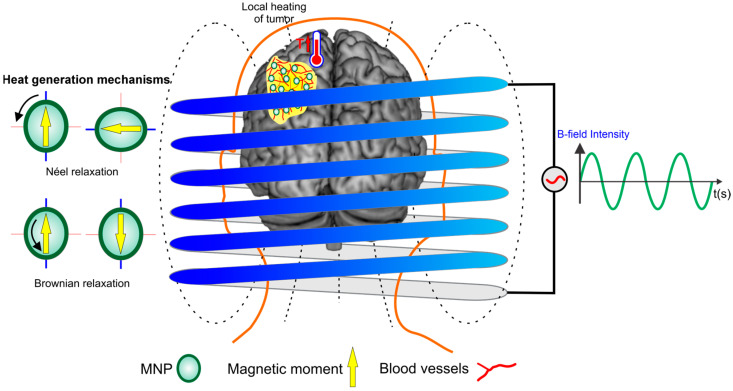
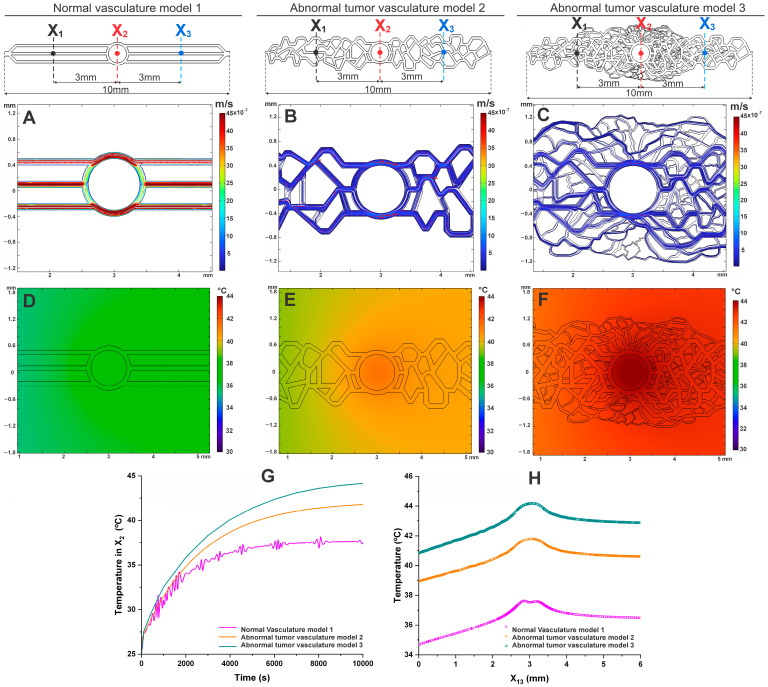
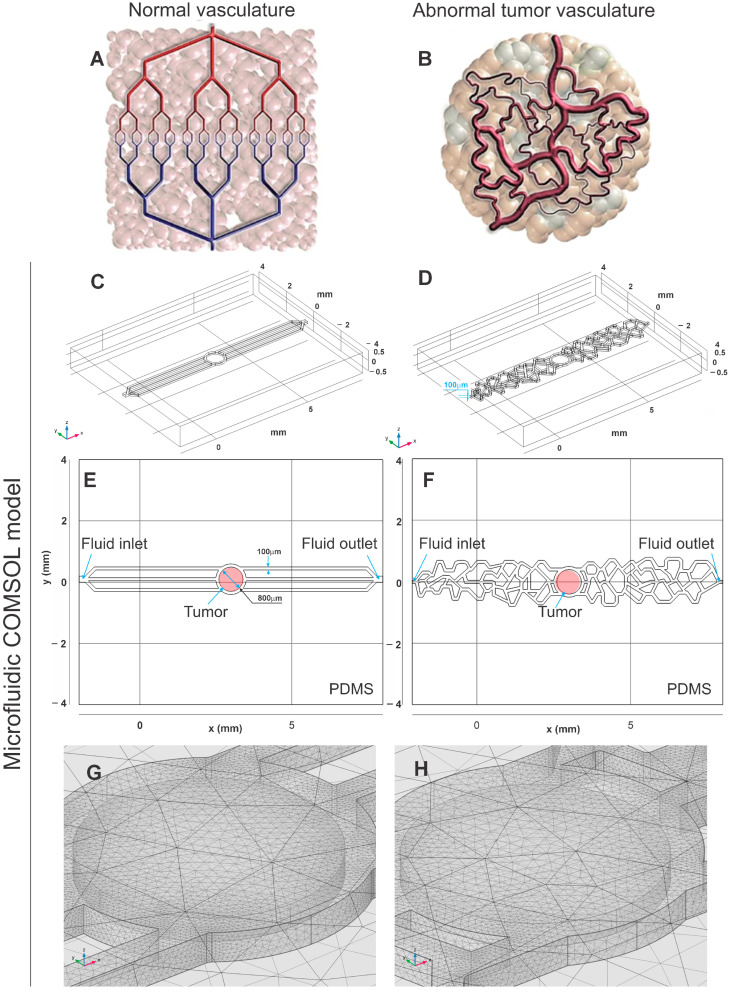
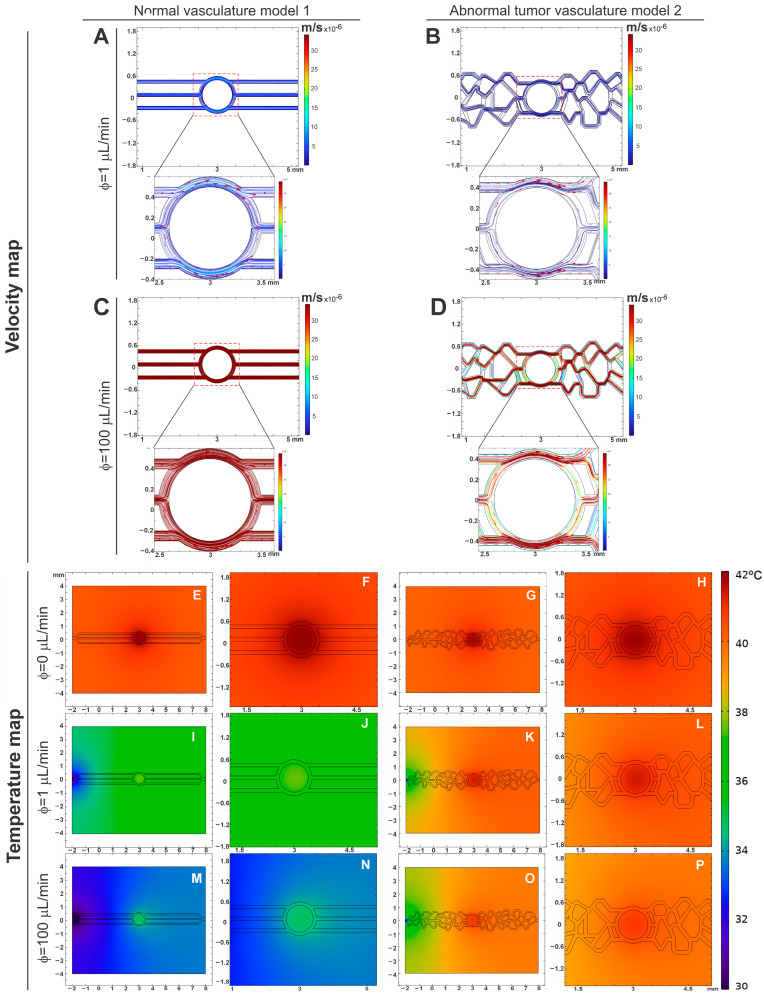
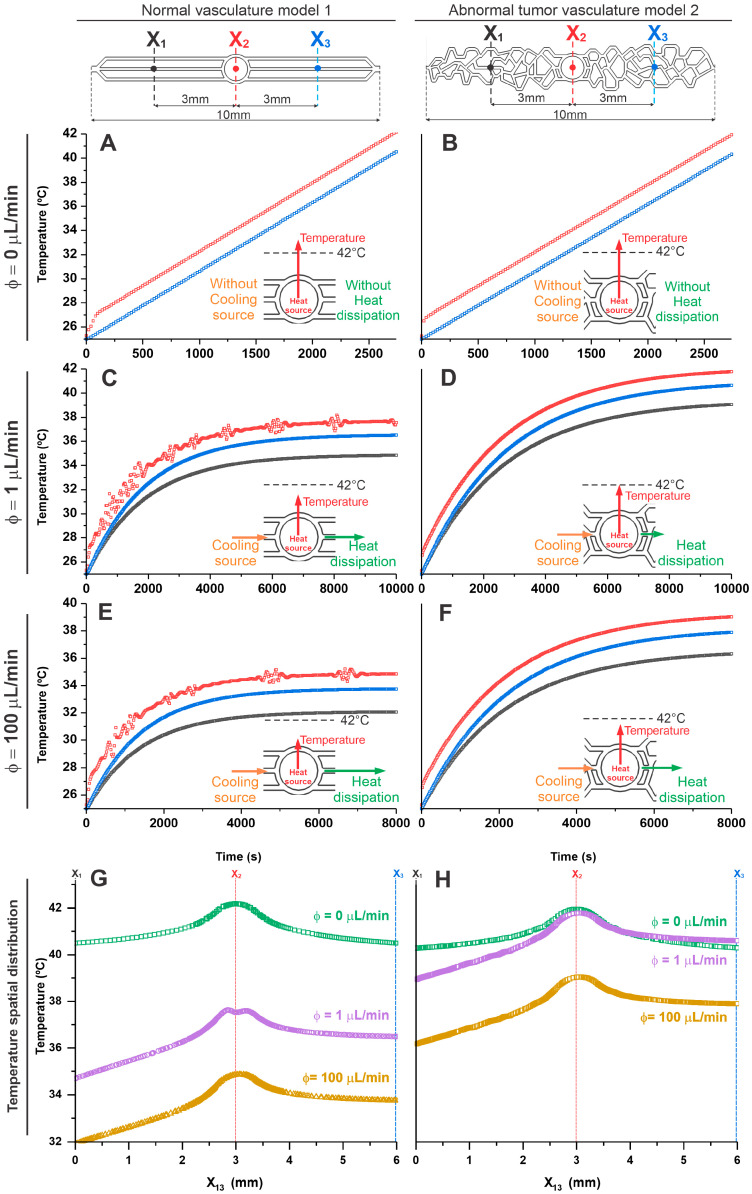
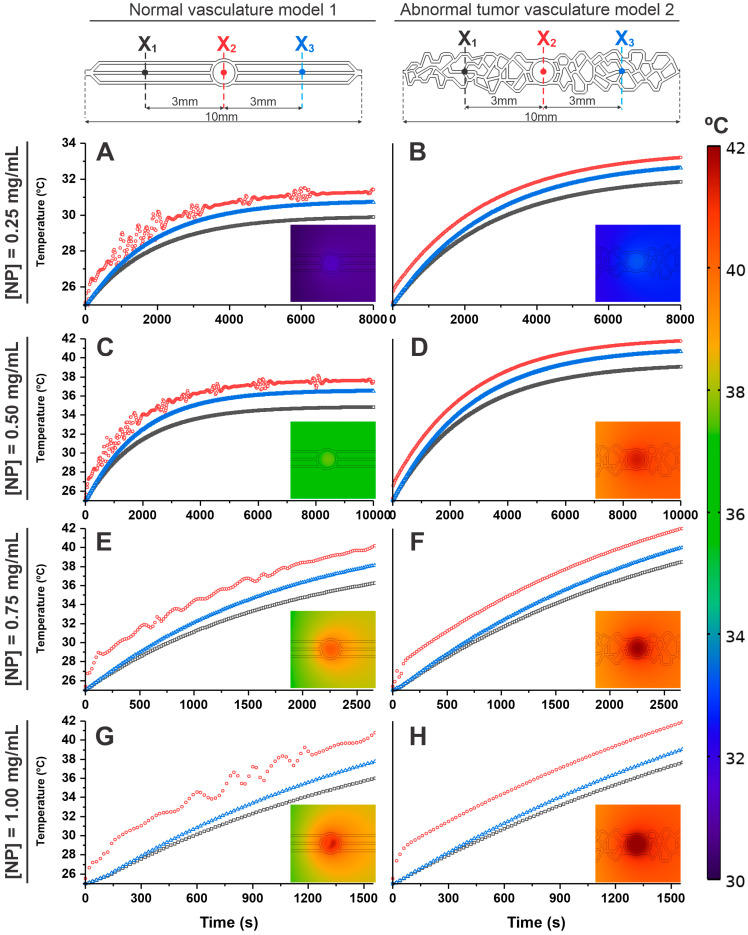
Glioblastoma multiforme (GBM) is the most severe form of brain cancer in adults, characterized by its complex vascular network that contributes to resistance to conventional therapies. Thermal therapies, such as magnetic hyperthermia (MHT), emerge as promising alternatives, using heat to selectively target tumor cells while minimizing damage to healthy tissues. The organ-on-a-chip can replicate this complex vascular network of GBM, allowing for detailed investigations of heat dissipation in MHT, while computational simulations refine treatment parameters. In this in silico study, tumor-on-a-chip models were used to optimize MHT therapy by comparing heat dissipation in normal and abnormal vascular networks, considering geometries, flow rates, and concentrations of magnetic nanoparticles (MNPs). In the high vascular complexity model, the maximum velocity was 19 times lower than in the normal vasculature model and 4 times lower than in the low-complexity tumor model, highlighting the influence of vascular complexity on velocity and temperature distribution. The MHT simulation showed greater heat intensity in the central region, with a flow rate of 1 µL/min and 0.5 mg/mL of MNPs being the best conditions to achieve the therapeutic temperature. The complex vasculature model had the lowest heat dissipation, reaching 44.15 °C, compared to 42.01 °C in the low-complexity model and 37.80 °C in the normal model. These results show that greater vascular complexity improves heat retention, making it essential to consider this heterogeneity to optimize MHT treatment. Therefore, for an efficient MHT process, it is necessary to simulate ideal blood flow and MNP conditions to ensure heat retention at the tumor site, considering its irregular vascularization and heat dissipation for effective destruction.
多形性胶质母细胞瘤(GBM)是成人中最严重的脑癌形式,其特征在于其复杂的血管网络,这导致对传统疗法产生抗性。热疗法,如磁热疗(MHT),成为有前景的替代方案,利用热量选择性地靶向肿瘤细胞,同时将对健康组织的损害降至最低。芯片器官可以复制GBM的这种复杂血管网络,从而能够对MHT中的热耗散进行详细研究,而计算模拟则可以优化治疗参数。在这项计算机模拟研究中,通过比较正常和异常血管网络中的热耗散,考虑几何形状、流速和磁性纳米颗粒(MNP)的浓度,使用芯片上肿瘤模型来优化MHT治疗。在高血管复杂性模型中,最大速度比正常血管模型低19倍,比低复杂性肿瘤模型低4倍,突出了血管复杂性对速度和温度分布的影响。MHT模拟显示中心区域的热强度更大,流速为1微升/分钟和MNP浓度为0.5毫克/毫升是达到治疗温度的最佳条件。与低复杂性模型中的42.01℃和正常模型中的37.80℃相比,复杂血管模型的热耗散最低,达到44.15℃。这些结果表明,更大的血管复杂性可改善热量保留,因此考虑这种异质性对于优化MHT治疗至关重要。因此,对于高效的MHT过程,有必要模拟理想的血流和MNP条件,以确保在肿瘤部位保留热量,同时考虑其不规则的血管化和热耗散以实现有效破坏。