Institute for Advancing Health Through Agriculture, Texas A&M University, College Station, TX, United States.
Texas A&M Agriculture, Food and Nutrition Evidence Center, Fort Worth, TX, United States.
Adv Nutr. 2024 Nov;15(11):100308. doi: 10.1016/j.advnut.2024.100308. Epub 2024 Sep 28.
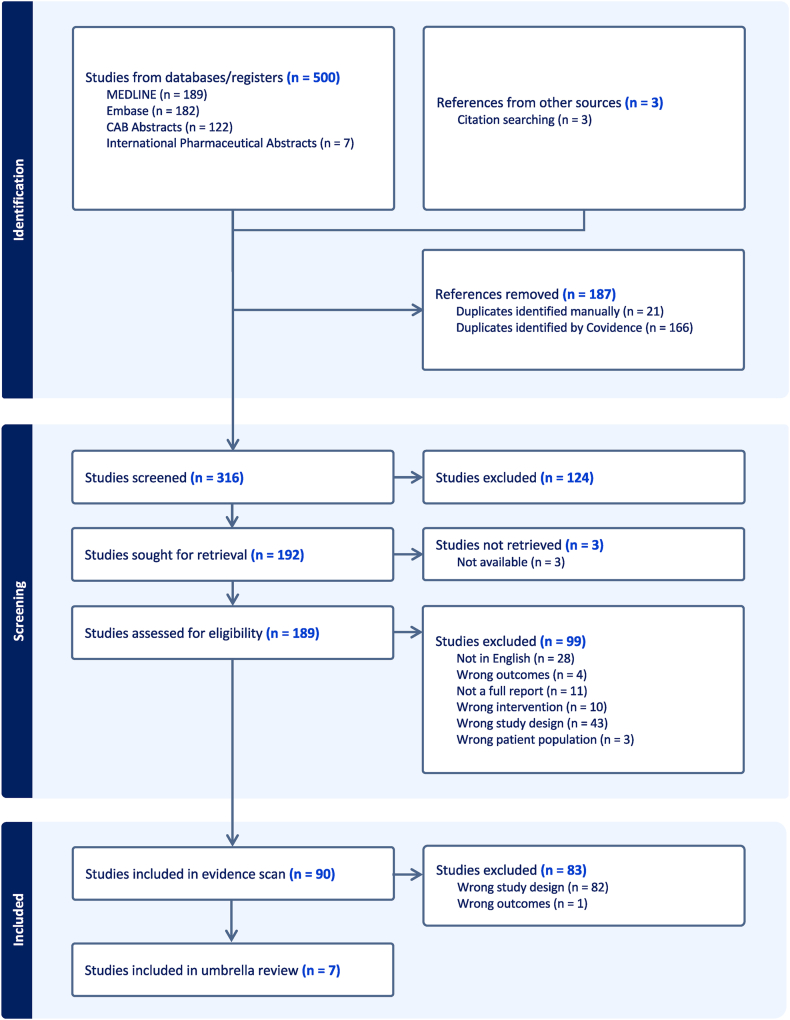
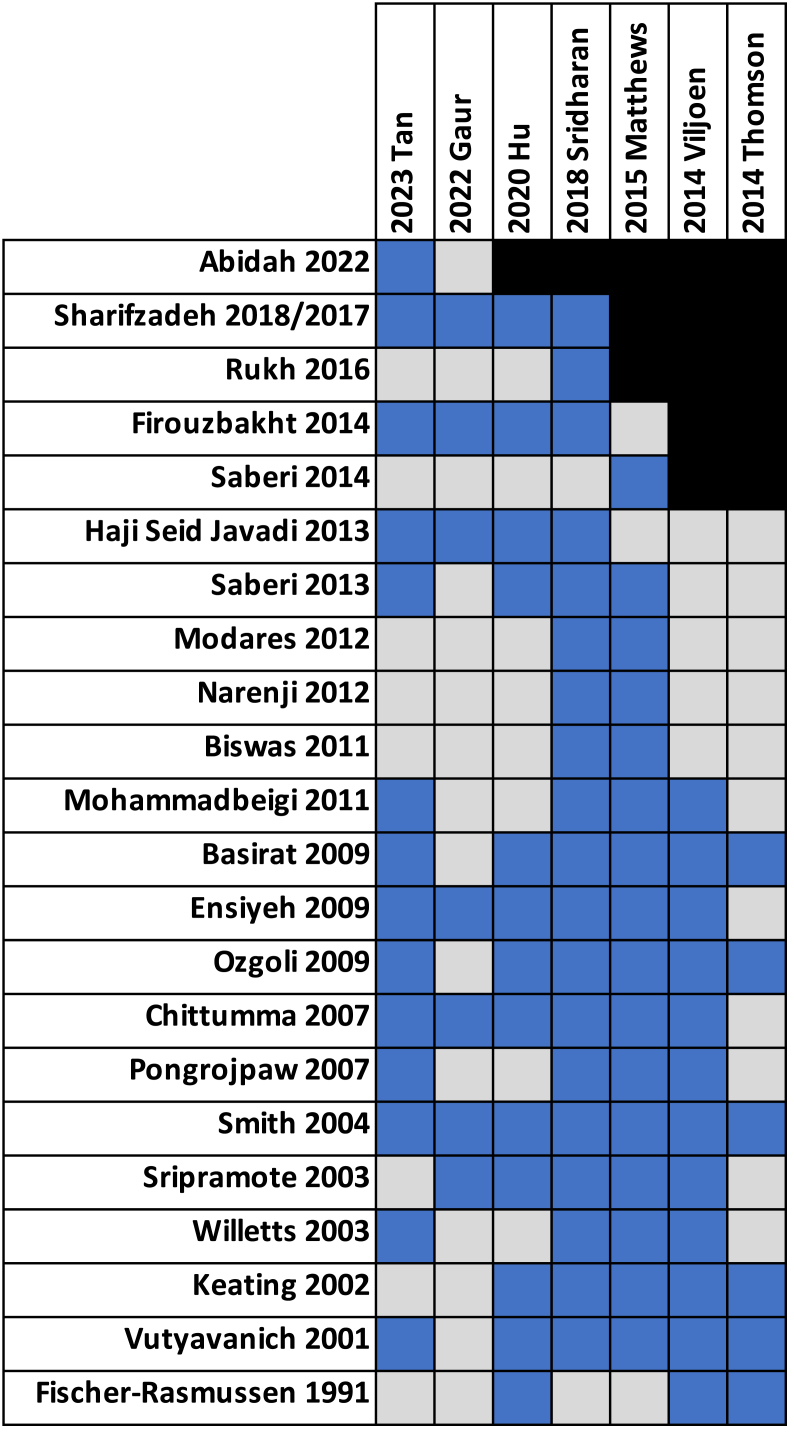
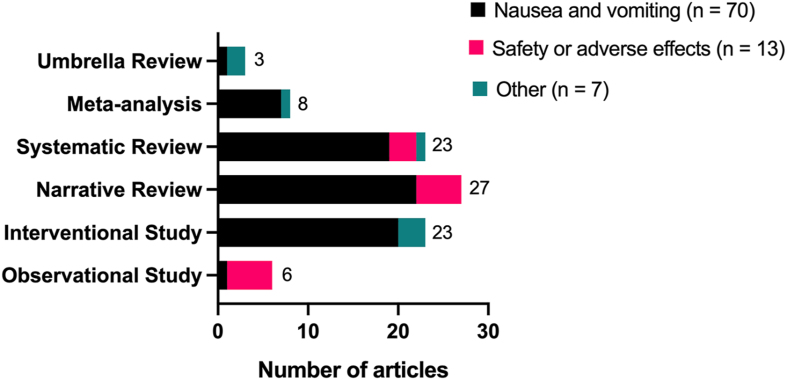
Ginger is a commonly used nonpharmacological treatment of pregnancy-related symptoms including nausea and vomiting, inflammation, and gastrointestinal dysfunction. Determining the efficacy of ginger is particularly important during pregnancy and lactation when maternal and neonatal detrimental effects may be a concern. This evidence scan and umbrella review aimed to assess the extent and quality of the evidence regarding the effectiveness and safety of using dietary preparations of ginger during pregnancy and lactation. We searched MEDLINE, Embase, CAB Abstracts, and International Pharmaceutical Abstracts up to 20 December, 2023, to identify maternal and neonatal outcomes associated with ginger use during pregnancy or lactation compared to placebo or conventional medicines. Outcomes for which a meta-analysis (MA) of intervention studies was identified were synthesized in an umbrella review. The AMSTAR-2 (A MeaSurement Tool to Assess systematic Reviews-2) tool was used to critically appraise the reviews. The percent overlap in primary studies was calculated overall and pairwise for each included MA. Data extracted from each MA included the summary estimate of the effect of ginger, the formulation of the ginger treatment, gestational timepoint at intervention, population enrolled in the study, type of intervention, comparator intervention, and number of study participants. The evidence scan identified 90 articles relevant to ginger use during pregnancy and lactation. Seven MAs of ginger use for treating nausea and vomiting of pregnancy reported 22 independent studies with a 49% study overlap overall. The majority of the MAs found a significant positive effect of ginger on the improvement of nausea in pregnancy compared with placebo, or equivalence to conventional treatments, and no evidence of significant adverse effects. The quality of the MAs ranged from critically low to low. The evidence suggests that ginger is effective at reducing nausea in pregnancy; however, the included studies contained substantial heterogeneity and were of low quality.
生姜是一种常用于治疗妊娠相关症状的非药物治疗方法,包括恶心和呕吐、炎症和胃肠功能障碍。在妊娠和哺乳期,确定生姜的疗效尤为重要,因为此时母体和新生儿可能会受到不良影响。本证据扫描和伞式评价旨在评估关于在妊娠和哺乳期使用生姜的饮食制剂的有效性和安全性的证据的范围和质量。我们检索了 MEDLINE、Embase、CAB Abstracts 和 International Pharmaceutical Abstracts,截至 2023 年 12 月 20 日,以确定与妊娠或哺乳期使用生姜相比,安慰剂或常规药物与母婴结局相关的情况。对于可以进行干预研究荟萃分析(MA)的结局,我们在伞式评价中进行了综合分析。使用 AMSTAR-2(评估系统评价的测量工具-2)工具对评价进行了严格评估。总体上和两两计算了每个纳入 MA 的主要研究的重叠百分比。从每个 MA 中提取的数据包括生姜治疗效果的汇总估计值、生姜治疗的制剂、干预时的妊娠时间点、研究中纳入的人群、干预类型、比较干预类型和研究参与者的数量。证据扫描确定了 90 篇与妊娠和哺乳期生姜使用相关的文章。7 篇关于生姜治疗妊娠恶心和呕吐的 MA 报告了 22 项独立研究,总体重叠率为 49%。大多数 MA 发现生姜在改善妊娠恶心方面与安慰剂相比有显著的积极效果,或与常规治疗等效,且没有证据表明有显著的不良影响。MA 的质量从极低到低不等。证据表明,生姜能有效缓解妊娠恶心;然而,纳入的研究存在很大的异质性且质量较低。