School of Chemical and Biological Engineering, Seoul National University, Seoul, Republic of Korea.
Department of Biomedicine & Health Sciences, The Catholic University of Korea, Seoul, Republic of Korea.
Nat Commun. 2024 Oct 1;15(1):8481. doi: 10.1038/s41467-024-52812-6.
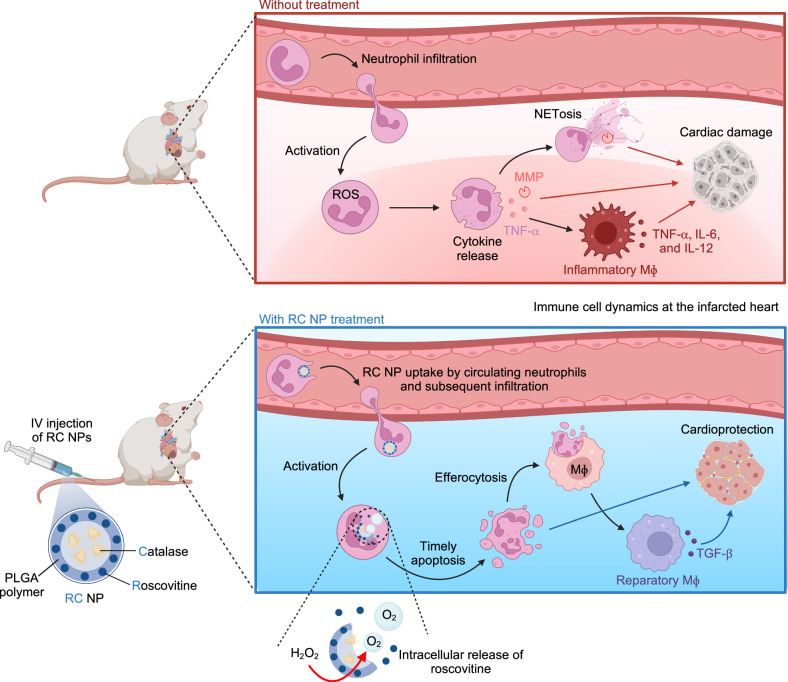
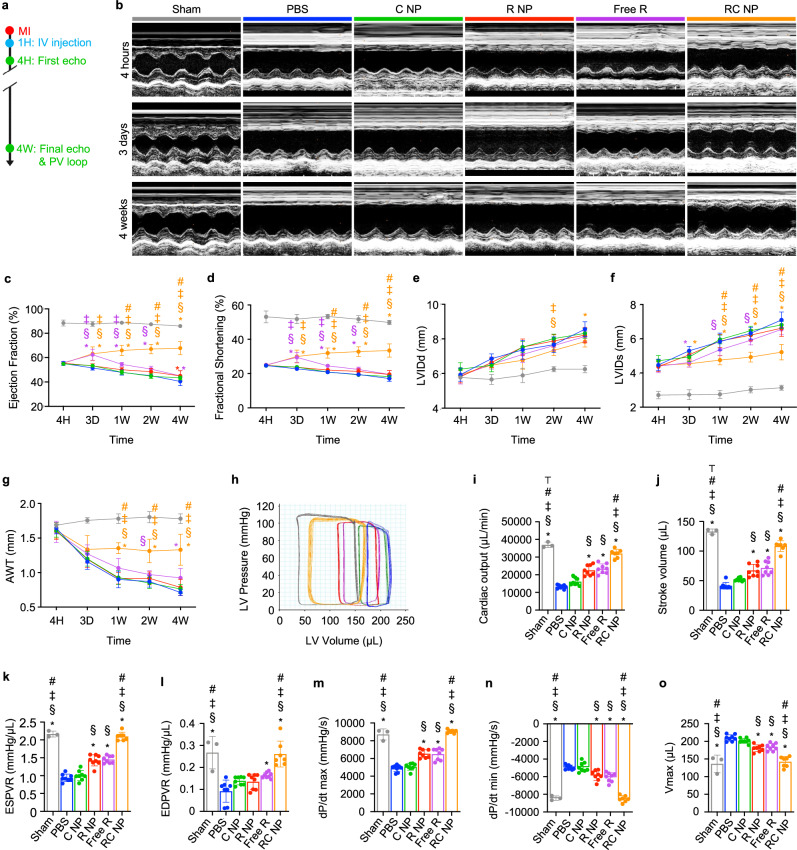
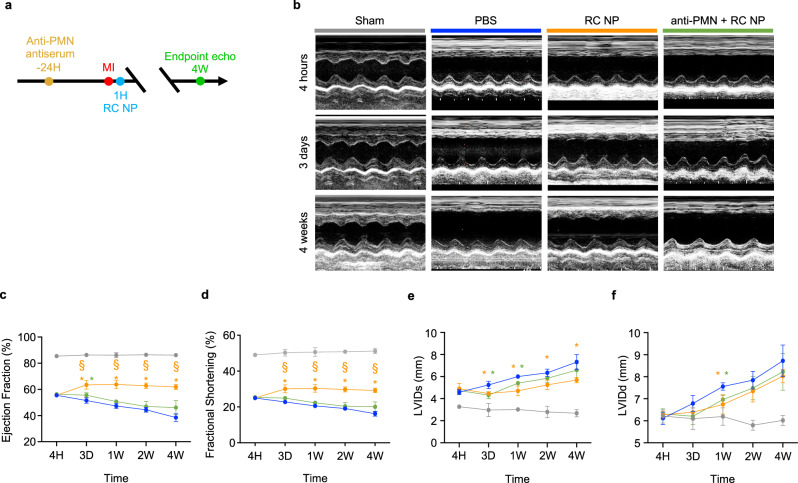
Neutrophils are critical mediators of both the initiation and resolution of inflammation after myocardial infarction (MI). Overexuberant neutrophil signaling after MI exacerbates cardiomyocyte apoptosis and cardiac remodeling while neutrophil apoptosis at the injury site promotes macrophage polarization toward a pro-resolving phenotype. Here, we describe a nanoparticle that provides spatiotemporal control over neutrophil fate to both stymie MI pathogenesis and promote healing. Intravenous injection of roscovitine/catalase-loaded poly(lactic-co-glycolic acid) nanoparticles after MI leads to nanoparticle uptake by circulating neutrophils migrating to the infarcted heart. Activated neutrophils at the infarcted heart generate reactive oxygen species, triggering intracellular release of roscovitine, a cyclin-dependent kinase inhibitor, from the nanoparticles, thereby inducing neutrophil apoptosis. Timely apoptosis of activated neutrophils at the infarcted heart limits neutrophil-driven inflammation, promotes macrophage polarization toward a pro-resolving phenotype, and preserves heart function. Modulating neutrophil fate to tune both inflammatory and reparatory processes may be an effective strategy to treat MI.
中性粒细胞是心肌梗死后炎症发生和消退的关键介质。心肌梗死后过度活跃的中性粒细胞信号会加剧心肌细胞凋亡和心脏重构,而损伤部位的中性粒细胞凋亡则会促使巨噬细胞向促修复表型极化。在这里,我们描述了一种纳米颗粒,它可以控制中性粒细胞的命运,从而阻止心肌梗死的发病机制并促进愈合。心肌梗死后静脉注射罗司库丁/过氧化氢酶负载的聚(乳酸-共-羟基乙酸)纳米颗粒后,循环中的中性粒细胞会迁移到梗死的心脏,从而摄取纳米颗粒。在梗死的心脏中,激活的中性粒细胞会产生活性氧,触发纳米颗粒内罗司库丁(一种细胞周期蛋白依赖性激酶抑制剂)的细胞内释放,从而诱导中性粒细胞凋亡。梗死心脏中激活的中性粒细胞的及时凋亡可限制中性粒细胞驱动的炎症,促进巨噬细胞向促修复表型极化,并保持心脏功能。调节中性粒细胞的命运以调节炎症和修复过程可能是治疗心肌梗死的有效策略。