Department of Medical Biotechnology, College of Biotechnology, Misr University for Science and Technology, Giza P.O. Box 77, Egypt.
Institute of Laboratory Medicine and Pathobiochemistry, Molecular Diagnostics, Hospital of the Universities of Giessen and Marburg (UKGM), Philipps University Marburg, Baldinger Str., 35043 Marburg, Germany.
Cells. 2024 Oct 9;13(19):1666. doi: 10.3390/cells13191666.
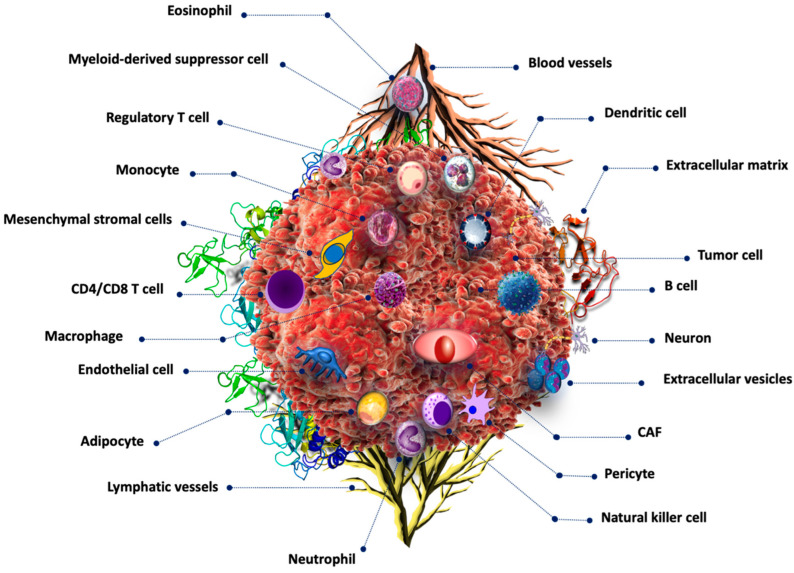
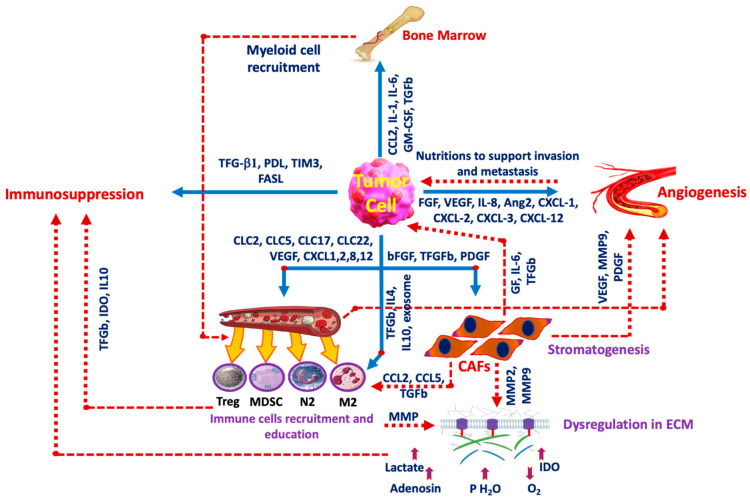
Liver cancer represents a substantial global health challenge, contributing significantly to worldwide morbidity and mortality. It has long been understood that tumors are not composed solely of cancerous cells, but also include a variety of normal cells within their structure. These tumor-associated normal cells encompass vascular endothelial cells, fibroblasts, and various inflammatory cells, including neutrophils, monocytes, macrophages, mast cells, eosinophils, and lymphocytes. Additionally, tumor cells engage in complex interactions with stromal cells and elements of the extracellular matrix (ECM). Initially, the components of what is now known as the tumor microenvironment (TME) were thought to be passive bystanders in the processes of tumor proliferation and local invasion. However, recent research has significantly advanced our understanding of the TME's active role in tumor growth and metastasis. Tumor progression is now known to be driven by an intricate imbalance of positive and negative regulatory signals, primarily influenced by specific growth factors produced by both inflammatory and neoplastic cells. This review article explores the latest developments and future directions in understanding how the TME modulates liver cancer, with the aim of informing the design of novel therapies that target critical components of the TME.
肝癌是一个全球性的健康挑战,对全球的发病率和死亡率有重大影响。长期以来,人们已经认识到肿瘤不仅仅由癌细胞组成,还包括其结构内的各种正常细胞。这些肿瘤相关的正常细胞包括血管内皮细胞、成纤维细胞以及各种炎症细胞,如中性粒细胞、单核细胞、巨噬细胞、肥大细胞、嗜酸性粒细胞和淋巴细胞。此外,肿瘤细胞与基质细胞和细胞外基质(ECM)的成分之间也存在着复杂的相互作用。最初,现在被称为肿瘤微环境(TME)的组成部分被认为是肿瘤增殖和局部浸润过程中的被动旁观者。然而,最近的研究极大地提高了我们对 TME 在肿瘤生长和转移中积极作用的理解。现在已知肿瘤的进展是由正、负调节信号的复杂失衡所驱动的,这些信号主要受到炎症和肿瘤细胞产生的特定生长因子的影响。这篇综述文章探讨了理解肿瘤微环境如何调节肝癌的最新进展和未来方向,旨在为靶向肿瘤微环境关键成分的新型治疗方法的设计提供信息。