Subramanian Mukundh, Manogaran Yagniyasree, Ramasamy Pasiyappazham
Physiology, Saveetha Dental College & Hospitals, Saveetha Institute of Medical and Technical Sciences, Saveetha University, Chennai, IND.
Prosthodontics, Saveetha Dental College & Hospitals, Saveetha Institute of Medical and Technical Sciences, Saveetha University, Chennai, IND.
Cureus. 2024 Sep 22;16(9):e69951. doi: 10.7759/cureus.69951. eCollection 2024 Sep.
Chitosan, a biopolymer derived from chitin, has attracted scholarly interest because of its antibacterial, biocompatible, and biodegradable characteristics. We can phosphorylate the cuttlebone of , a natural source of chitin, to enhance its antimicrobial properties. Phosphorylated chitosan is promising for treating oral infections, which are the causative agents of a variety of dental disorders.
The goal of this study is to look into how to make phosphorylated chitosan from cuttlebone and what effect different concentrations have on killing oral clinical pathogens like , , , and .
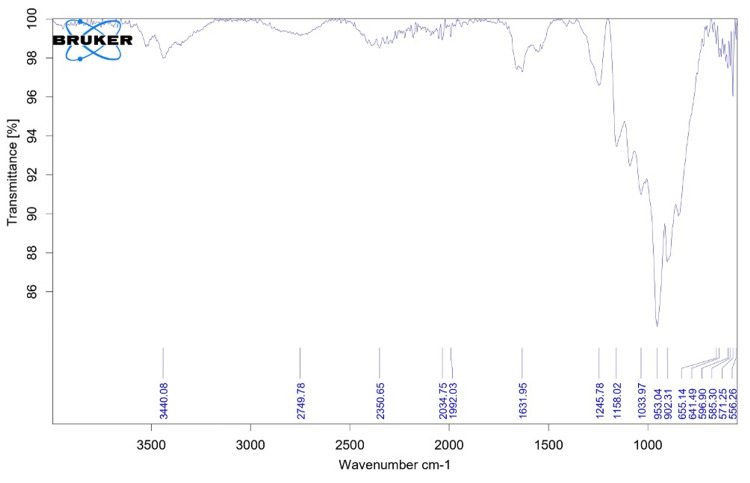
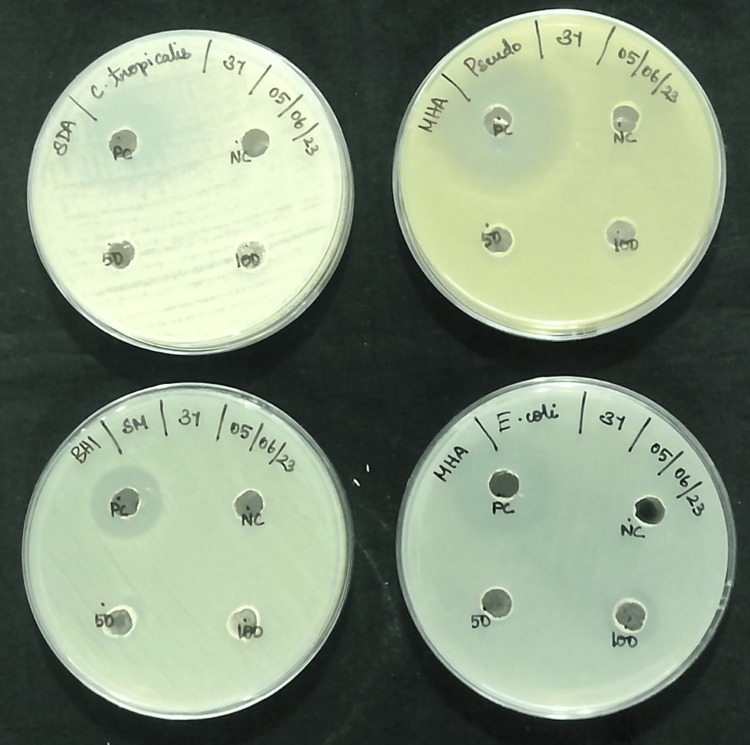
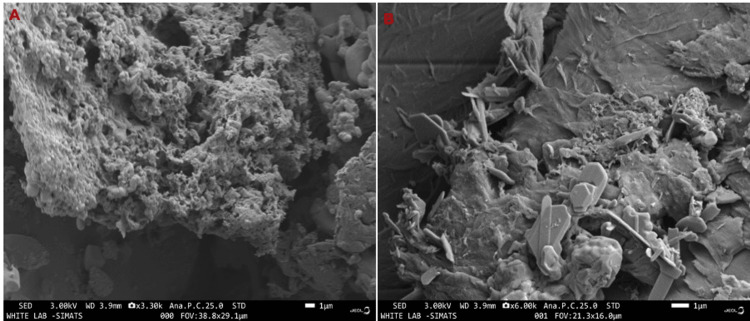
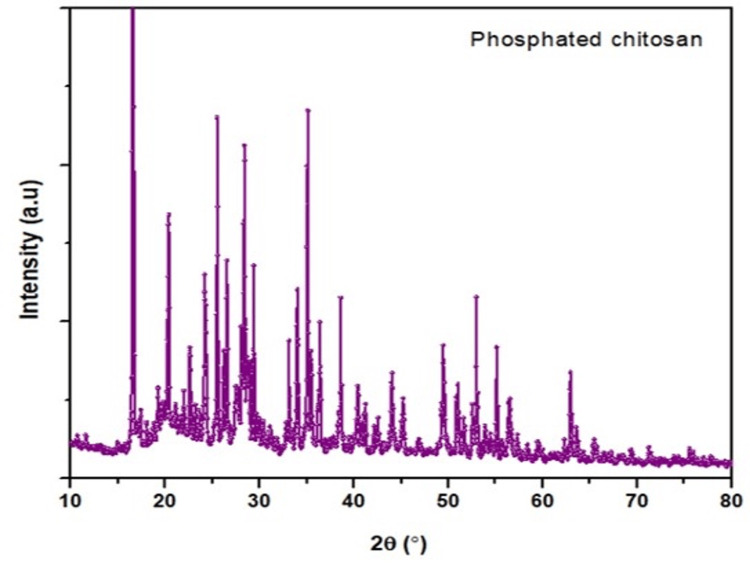
We extracted chitin and chitosan from the cuttlebone of a specimen of . We then synthesized phosphorylated chitosan by phosphorylating chitosan. We then assessed the antimicrobial activities of phosphorylated chitosan using the well diffusion method. We characterized and evaluated it using Fourier transform infrared spectroscopy (FTIR), Fourier emission scanning electron microscopy (FESEM), and X-ray diffraction (XRD).
Phosphorylated chitosan, in 100% concentration, had the highest inhibition zone of 14 ± 0.82 mm against and (14 ± 0.75). However, the two different concentrations studied showed no activity against both and .
This work successfully used the cuttlebone of to yield phosphorylated chitosan, subsequently demonstrating its antimicrobial potential against dental clinical pathogens. Different concentrations of phosphorylated chitosan strongly controlled its antimicrobial activity, with larger concentrations exhibiting stronger inhibitory effects. According to these findings, phosphorylated chitosan appears to be a promising material for dental care solutions that target clinical bacteria in the mouth.
壳聚糖是一种由甲壳素衍生而来的生物聚合物,因其抗菌、生物相容性和可生物降解特性而引起了学术关注。我们可以将天然甲壳素来源的乌贼骨磷酸化,以增强其抗菌性能。磷酸化壳聚糖在治疗口腔感染方面具有潜力,口腔感染是多种牙齿疾病的致病因素。
本研究的目的是探究如何从乌贼骨制备磷酸化壳聚糖,以及不同浓度对杀灭口腔临床病原体(如 、 、 、 )有何影响。
我们从一个 标本的乌贼骨中提取甲壳素和壳聚糖。然后通过对壳聚糖进行磷酸化反应来合成磷酸化壳聚糖。接着我们使用琼脂扩散法评估磷酸化壳聚糖的抗菌活性。我们使用傅里叶变换红外光谱(FTIR)、场发射扫描电子显微镜(FESEM)和X射线衍射(XRD)对其进行表征和评估。
100%浓度的磷酸化壳聚糖对 和 (14±0.75)的抑菌圈最大,为14±0.82毫米。然而,所研究的两种不同浓度对 和 均无活性。
本研究成功利用 乌贼骨制备出磷酸化壳聚糖,随后证明了其对口腔临床病原体具有抗菌潜力。不同浓度的磷酸化壳聚糖强烈控制其抗菌活性,浓度越高,抑制作用越强。根据这些发现,磷酸化壳聚糖似乎是一种有前途的材料,可用于针对口腔临床细菌的口腔护理解决方案。