• 文献检索
  • 文档翻译
  • 深度研究
  • 学术资讯
  • Suppr Zotero 插件Zotero 插件
  • 邀请有礼
  • 套餐&价格
  • 历史记录
应用&插件
Suppr Zotero 插件Zotero 插件浏览器插件Mac 客户端Windows 客户端微信小程序
定价
高级版会员购买积分包购买API积分包
服务
文献检索文档翻译深度研究API 文档MCP 服务
关于我们
关于 Suppr公司介绍联系我们用户协议隐私条款
关注我们

Suppr 超能文献

核心技术专利:CN118964589B侵权必究
粤ICP备2023148730 号-1Suppr @ 2026

文献检索

告别复杂PubMed语法,用中文像聊天一样搜索,搜遍4000万医学文献。AI智能推荐,让科研检索更轻松。

立即免费搜索

文件翻译

保留排版,准确专业,支持PDF/Word/PPT等文件格式,支持 12+语言互译。

免费翻译文档

深度研究

AI帮你快速写综述,25分钟生成高质量综述,智能提取关键信息,辅助科研写作。

立即免费体验

基于云的医疗保健监测系统的高级联合联邦学习方法。

Advanced federated ensemble internet of learning approach for cloud based medical healthcare monitoring system.

机构信息

College of Information and Communication Engineering, Harbin Engineering University, Harbin150001, China.

Software College, Northeastern University, Shenyang, 110169, China.

出版信息

Sci Rep. 2024 Oct 30;14(1):26068. doi: 10.1038/s41598-024-77196-x.

DOI:10.1038/s41598-024-77196-x
PMID:39478132
原文链接:https://pmc.ncbi.nlm.nih.gov/articles/PMC11526108/
Abstract

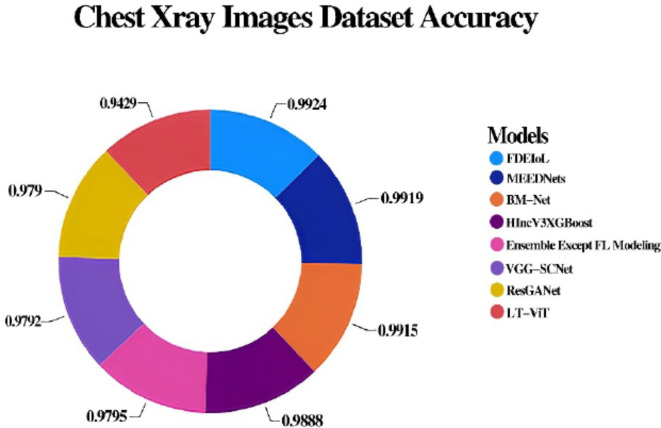
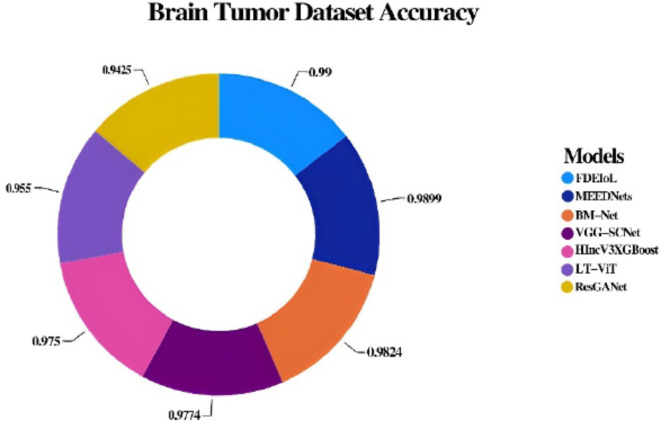
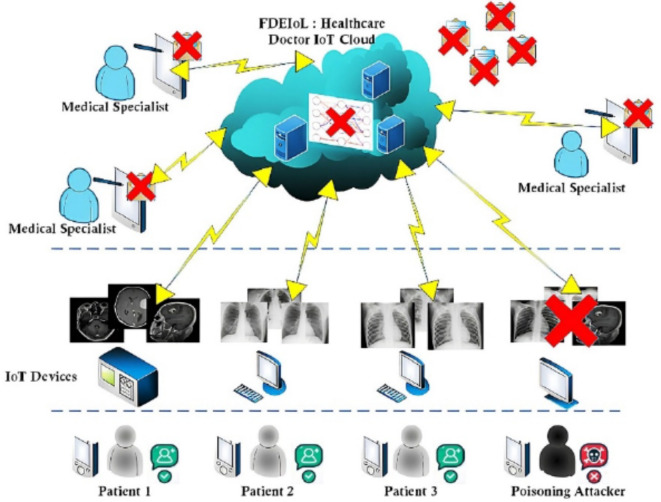
Medical image machines serve as a valuable tool to monitor and diagnose a variety of diseases. However, manual and centralized interpretation are both error-prone and time-consuming due to malicious attacks. Numerous diagnostic algorithms have been developed to improve precision and prevent poisoning attacks by integrating symptoms, test methods, and imaging data. But in today's digital technology world, it is necessary to have a global cloud-based diagnostic artificial intelligence model that is efficient in diagnosis and preventing poisoning attacks and might be used for multiple purposes. We propose the Healthcare Federated Ensemble Internet of Learning Cloud Doctor System (FDEIoL) model, which integrates different Internet of Things (IoT) devices to provide precise and accurate interpretation without poisoning attack problems, thereby facilitating IoT-enabled remote patient monitoring for smart healthcare systems. Furthermore, the FDEIoL system model uses a federated ensemble learning strategy to provide an automatic, up-to-date global prediction model based on input local models from the medical specialist. This assures biomedical security by safeguarding patient data and preserving the integrity of diagnostic processes. The FDEIoL system model utilizes local model feature selection to discriminate between malicious and non-malicious local models, and ensemble strategies use positive and negative samples to optimize the performance of the test dataset, enhancing its capability for remote patient monitoring. The FDEIoL system model achieved an exceptional accuracy rate of 99.24% on the Chest X-ray dataset and 99.0% on the MRI dataset of brain tumors compared to centralized models, demonstrating its ability for precision diagnosis in IoT-enabled healthcare systems.

摘要

医疗影像设备是监测和诊断各种疾病的重要工具。然而,由于恶意攻击,手动和集中式解释既容易出错又耗时。已经开发了许多诊断算法,通过整合症状、测试方法和成像数据来提高精度并防止中毒攻击。但是在当今的数字技术世界中,需要有一种高效的、基于云计算的、用于诊断和防止中毒攻击的、可用于多种目的的全球诊断人工智能模型。我们提出了医疗联合联盟互联网学习云医生系统(FDEIoL)模型,该模型集成了不同的物联网(IoT)设备,提供精确和准确的解释,而不会出现中毒攻击问题,从而促进物联网支持的远程患者监测,实现智能医疗保健系统。此外,FDEIoL 系统模型使用联合联盟学习策略,根据医学专家输入的本地模型,提供自动、最新的全球预测模型。这通过保护患者数据和诊断过程的完整性来确保生物医学安全。FDEIoL 系统模型利用本地模型特征选择来区分恶意和非恶意的本地模型,并且集合策略利用正例和负例来优化测试数据集的性能,增强其远程患者监测能力。FDEIoL 系统模型在 Chest X-ray 数据集上的准确率达到了 99.24%,在脑肿瘤的 MRI 数据集上的准确率达到了 99.0%,与集中式模型相比,这表明它能够在物联网支持的医疗保健系统中进行精确诊断。
https://cdn.ncbi.nlm.nih.gov/pmc/blobs/2d22/11526108/4176da046f14/41598_2024_77196_Fig15_HTML.jpg
https://cdn.ncbi.nlm.nih.gov/pmc/blobs/2d22/11526108/5fd0028d1984/41598_2024_77196_Fig1_HTML.jpg
https://cdn.ncbi.nlm.nih.gov/pmc/blobs/2d22/11526108/37e0bc80756b/41598_2024_77196_Fig2_HTML.jpg
https://cdn.ncbi.nlm.nih.gov/pmc/blobs/2d22/11526108/31d977ebe9a8/41598_2024_77196_Fig3_HTML.jpg
https://cdn.ncbi.nlm.nih.gov/pmc/blobs/2d22/11526108/a05b1128a0be/41598_2024_77196_Fig4_HTML.jpg
https://cdn.ncbi.nlm.nih.gov/pmc/blobs/2d22/11526108/53469c0dc541/41598_2024_77196_Fig5_HTML.jpg
https://cdn.ncbi.nlm.nih.gov/pmc/blobs/2d22/11526108/d644b3bbaccb/41598_2024_77196_Fig6_HTML.jpg
https://cdn.ncbi.nlm.nih.gov/pmc/blobs/2d22/11526108/35169f39b63c/41598_2024_77196_Fig7_HTML.jpg
https://cdn.ncbi.nlm.nih.gov/pmc/blobs/2d22/11526108/8419cc3b411e/41598_2024_77196_Fig8_HTML.jpg
https://cdn.ncbi.nlm.nih.gov/pmc/blobs/2d22/11526108/c0e6398e1e7f/41598_2024_77196_Fig9_HTML.jpg
https://cdn.ncbi.nlm.nih.gov/pmc/blobs/2d22/11526108/f91e2946e9e0/41598_2024_77196_Fig10_HTML.jpg
https://cdn.ncbi.nlm.nih.gov/pmc/blobs/2d22/11526108/b0833a417e41/41598_2024_77196_Fig11_HTML.jpg
https://cdn.ncbi.nlm.nih.gov/pmc/blobs/2d22/11526108/d31967a230fe/41598_2024_77196_Fig12_HTML.jpg
https://cdn.ncbi.nlm.nih.gov/pmc/blobs/2d22/11526108/af32ddd4808b/41598_2024_77196_Fig13_HTML.jpg
https://cdn.ncbi.nlm.nih.gov/pmc/blobs/2d22/11526108/9555de7eca40/41598_2024_77196_Fig14_HTML.jpg
https://cdn.ncbi.nlm.nih.gov/pmc/blobs/2d22/11526108/4176da046f14/41598_2024_77196_Fig15_HTML.jpg
https://cdn.ncbi.nlm.nih.gov/pmc/blobs/2d22/11526108/5fd0028d1984/41598_2024_77196_Fig1_HTML.jpg
https://cdn.ncbi.nlm.nih.gov/pmc/blobs/2d22/11526108/37e0bc80756b/41598_2024_77196_Fig2_HTML.jpg
https://cdn.ncbi.nlm.nih.gov/pmc/blobs/2d22/11526108/31d977ebe9a8/41598_2024_77196_Fig3_HTML.jpg
https://cdn.ncbi.nlm.nih.gov/pmc/blobs/2d22/11526108/a05b1128a0be/41598_2024_77196_Fig4_HTML.jpg
https://cdn.ncbi.nlm.nih.gov/pmc/blobs/2d22/11526108/53469c0dc541/41598_2024_77196_Fig5_HTML.jpg
https://cdn.ncbi.nlm.nih.gov/pmc/blobs/2d22/11526108/d644b3bbaccb/41598_2024_77196_Fig6_HTML.jpg
https://cdn.ncbi.nlm.nih.gov/pmc/blobs/2d22/11526108/35169f39b63c/41598_2024_77196_Fig7_HTML.jpg
https://cdn.ncbi.nlm.nih.gov/pmc/blobs/2d22/11526108/8419cc3b411e/41598_2024_77196_Fig8_HTML.jpg
https://cdn.ncbi.nlm.nih.gov/pmc/blobs/2d22/11526108/c0e6398e1e7f/41598_2024_77196_Fig9_HTML.jpg
https://cdn.ncbi.nlm.nih.gov/pmc/blobs/2d22/11526108/f91e2946e9e0/41598_2024_77196_Fig10_HTML.jpg
https://cdn.ncbi.nlm.nih.gov/pmc/blobs/2d22/11526108/b0833a417e41/41598_2024_77196_Fig11_HTML.jpg
https://cdn.ncbi.nlm.nih.gov/pmc/blobs/2d22/11526108/d31967a230fe/41598_2024_77196_Fig12_HTML.jpg
https://cdn.ncbi.nlm.nih.gov/pmc/blobs/2d22/11526108/af32ddd4808b/41598_2024_77196_Fig13_HTML.jpg
https://cdn.ncbi.nlm.nih.gov/pmc/blobs/2d22/11526108/9555de7eca40/41598_2024_77196_Fig14_HTML.jpg
https://cdn.ncbi.nlm.nih.gov/pmc/blobs/2d22/11526108/4176da046f14/41598_2024_77196_Fig15_HTML.jpg

相似文献

1
Advanced federated ensemble internet of learning approach for cloud based medical healthcare monitoring system.基于云的医疗保健监测系统的高级联合联邦学习方法。
Sci Rep. 2024 Oct 30;14(1):26068. doi: 10.1038/s41598-024-77196-x.
2
Integrating meta-heuristic with named data networking for secure edge computing in IoT enabled healthcare monitoring system.将元启发式与命名数据网络集成到物联网支持的医疗保健监测系统中的安全边缘计算中。
Sci Rep. 2024 Sep 15;14(1):21532. doi: 10.1038/s41598-024-71506-z.
3
Security Analysis for Smart Healthcare Systems.智能医疗保健系统的安全分析。
Sensors (Basel). 2024 May 24;24(11):3375. doi: 10.3390/s24113375.
4
Detection of Malicious Cloud Bandwidth Consumption in Cloud Computing Using Machine Learning Techniques.利用机器学习技术检测云计算中的恶意带宽消耗。
Comput Intell Neurosci. 2022 Sep 5;2022:4003403. doi: 10.1155/2022/4003403. eCollection 2022.
5
A Smart Biometric Identity Management Framework for Personalised IoT and Cloud Computing-Based Healthcare Services.用于个性化物联网和基于云计算的医疗保健服务的智能生物识别身份管理框架。
Sensors (Basel). 2021 Jan 14;21(2):552. doi: 10.3390/s21020552.
6
Optimized intrusion detection in IoT and fog computing using ensemble learning and advanced feature selection.使用集成学习和先进特征选择技术实现物联网和雾计算中的优化入侵检测。
PLoS One. 2024 Aug 1;19(8):e0304082. doi: 10.1371/journal.pone.0304082. eCollection 2024.
7
Utilizing Deep Feature Fusion for Automatic Leukemia Classification: An Internet of Medical Things-Enabled Deep Learning Framework.利用深度特征融合进行自动白血病分类:一种基于物联网的深度学习框架。
Sensors (Basel). 2024 Jul 8;24(13):4420. doi: 10.3390/s24134420.
8
Towards blockchain based federated learning in categorizing healthcare monitoring devices on artificial intelligence of medical things investigative framework.在医疗物联网人工智能调查框架中,基于区块链的联邦学习在医疗监测设备分类中的应用。
BMC Med Imaging. 2024 May 10;24(1):105. doi: 10.1186/s12880-024-01279-4.
9
Dew-Cloud-Based Hierarchical Federated Learning for Intrusion Detection in IoMT.基于雾云的物联网入侵检测的分层联邦学习。
IEEE J Biomed Health Inform. 2023 Feb;27(2):722-731. doi: 10.1109/JBHI.2022.3186250. Epub 2023 Feb 3.
10
Customised Intrusion Detection for an Industrial IoT Heterogeneous Network Based on Machine Learning Algorithms Called FTL-CID.基于机器学习算法的工业物联网异构网络的定制入侵检测,称为 FTL-CID。
Sensors (Basel). 2022 Dec 28;23(1):321. doi: 10.3390/s23010321.

本文引用的文献

1
Integration of federated learning with IoT for smart cities applications, challenges, and solutions.将联邦学习与物联网集成用于智慧城市应用、挑战及解决方案。
PeerJ Comput Sci. 2023 Dec 6;9:e1657. doi: 10.7717/peerj-cs.1657. eCollection 2023.
2
Association between Gross National Income per capita and COVID-19 vaccination coverage: a global ecological study.人均国民总收入与 COVID-19 疫苗接种覆盖率之间的关系:一项全球生态学研究。
BMC Public Health. 2023 Dec 4;23(1):2415. doi: 10.1186/s12889-023-17241-y.
3
SBXception: A Shallower and Broader Xception Architecture for Efficient Classification of Skin Lesions.
SBXception:一种用于皮肤病变高效分类的更浅且更宽的Xception架构。
Cancers (Basel). 2023 Jul 13;15(14):3604. doi: 10.3390/cancers15143604.
4
Medical Image Classifications for 6G IoT-Enabled Smart Health Systems.面向支持6G物联网的智能健康系统的医学图像分类
Diagnostics (Basel). 2023 Feb 22;13(5):834. doi: 10.3390/diagnostics13050834.
5
Role of Ensemble Deep Learning for Brain Tumor Classification in Multiple Magnetic Resonance Imaging Sequence Data.集成深度学习在多磁共振成像序列数据脑肿瘤分类中的作用
Diagnostics (Basel). 2023 Jan 28;13(3):481. doi: 10.3390/diagnostics13030481.
6
COVID-19 Detection Through Transfer Learning Using Multimodal Imaging Data.利用多模态成像数据通过迁移学习进行新冠病毒疾病检测
IEEE Access. 2020 Aug 14;8:149808-149824. doi: 10.1109/ACCESS.2020.3016780. eCollection 2020.
7
Deep Learning on Chest X-ray Images to Detect and Evaluate Pneumonia Cases at the Era of COVID-19.在新冠疫情时代利用胸部X光图像进行深度学习以检测和评估肺炎病例
J Med Syst. 2021 Jun 8;45(7):75. doi: 10.1007/s10916-021-01745-4.
8
Covid-19 Imaging Tools: How Big Data is Big?新冠病毒-19成像工具:大数据究竟有多大?
J Med Syst. 2021 Jun 3;45(7):71. doi: 10.1007/s10916-021-01747-2.
9
A Transfer Learning-Based Active Learning Framework for Brain Tumor Classification.一种基于迁移学习的脑肿瘤分类主动学习框架。
Front Artif Intell. 2021 May 17;4:635766. doi: 10.3389/frai.2021.635766. eCollection 2021.
10
Chest X-ray Classification Using Deep Learning for Automated COVID-19 Screening.使用深度学习进行胸部X光分类以实现COVID-19自动筛查
SN Comput Sci. 2021;2(4):300. doi: 10.1007/s42979-021-00695-5. Epub 2021 May 26.