Albulaihed Yazeed, Mishra Prakriti, Saeed Mohd, Alabdallah Nadiyah M, Ginawi Tarig, Ansari Irfan Ahmad
Department of Biology, College of Science, University of Hail, Hail, Saudi Arabia.
Department of Biosciences, Integral University, Lucknow, India.
Front Pharmacol. 2024 Oct 29;15:1438237. doi: 10.3389/fphar.2024.1438237. eCollection 2024.
Conventional chemotherapy treatment is commonly linked to significant side effects due to high therapeutic doses. In this regard, nanoformulations with chemotherapeutic medications hold promise in enhancing drug effectiveness through the reduction of therapeutic dosages, thereby mitigating the potential for adverse side effects. Because of numerous applications in the biomedical arena, there has been a rising interest in developing an environmentally acceptable, long-lasting, and affordable technique for the production of gold nanoparticles. In this particular context, the incorporation of plant extracts in the production of metallic nanoparticles has garnered the interest of numerous scholars. Here, we report the synthesis of gold particles by the green method using leaf extract and their conjugation with doxorubicin.
The gold nanoparticles were synthesized by using extract and were characterized with various biophysical techniques. Subsequently, gold nanoparticles were conjugated with doxorubicin and their efficacy was tested on A549 cells.
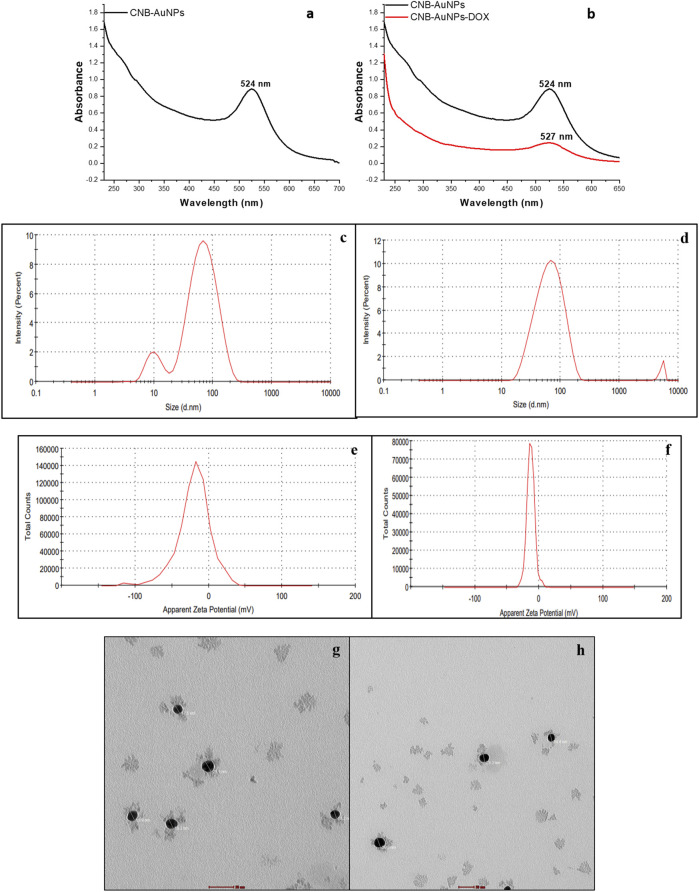
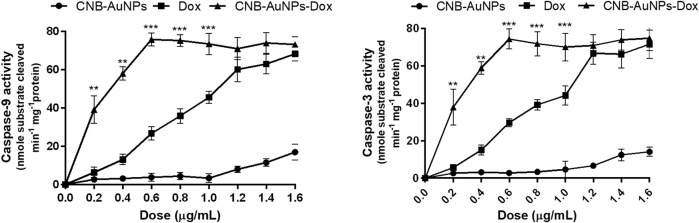
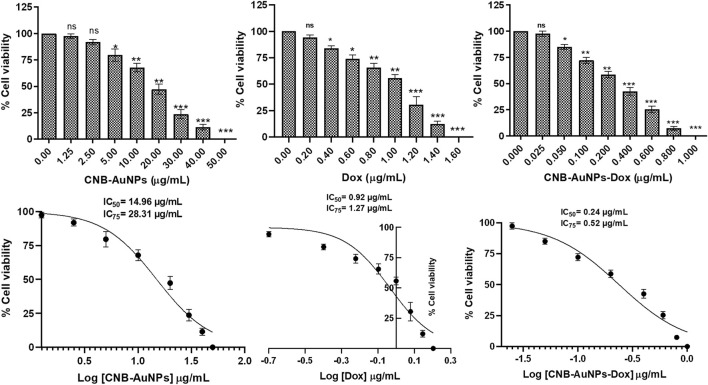
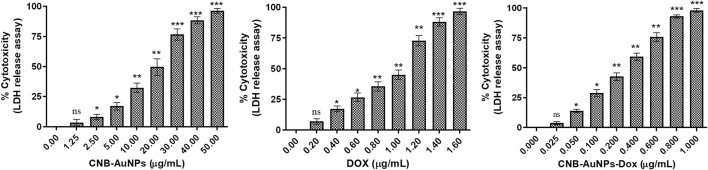
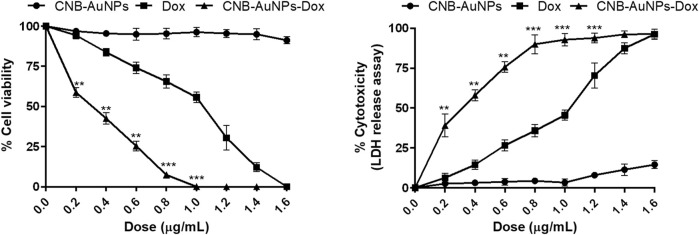
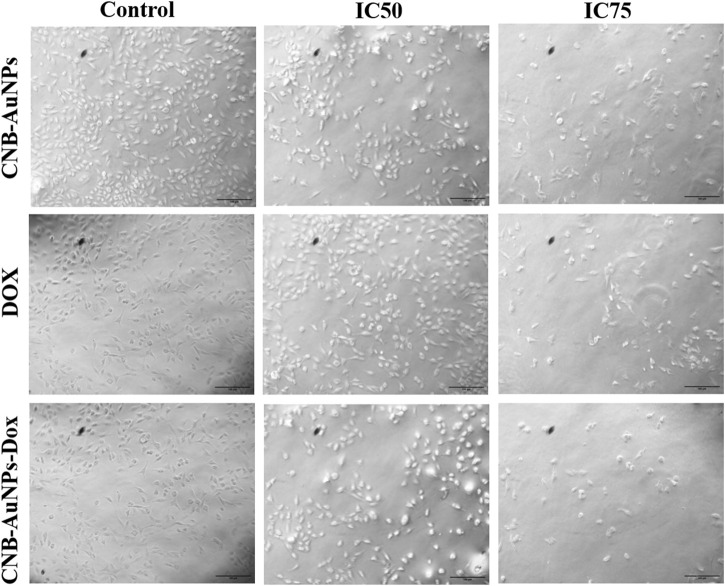
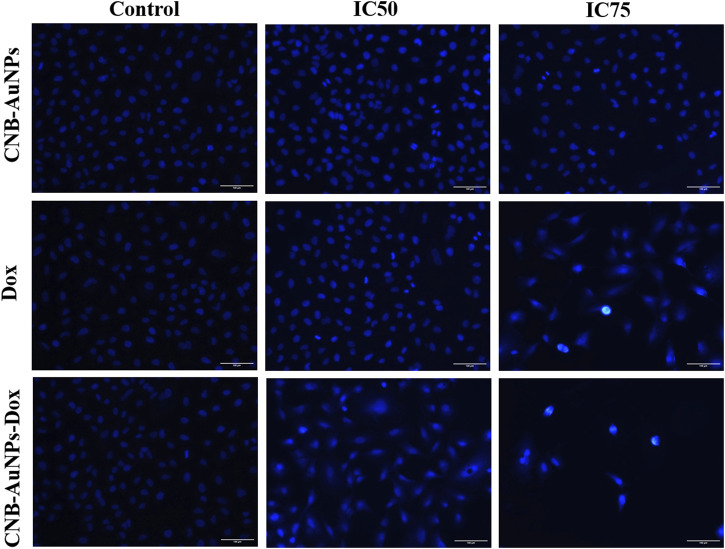
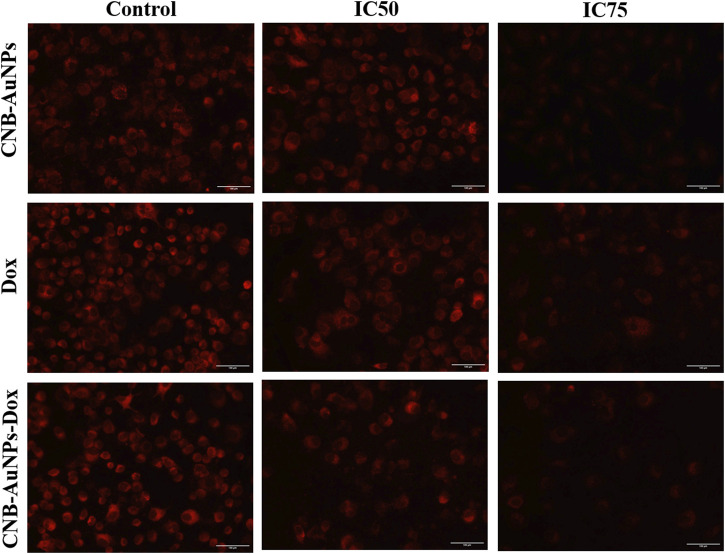
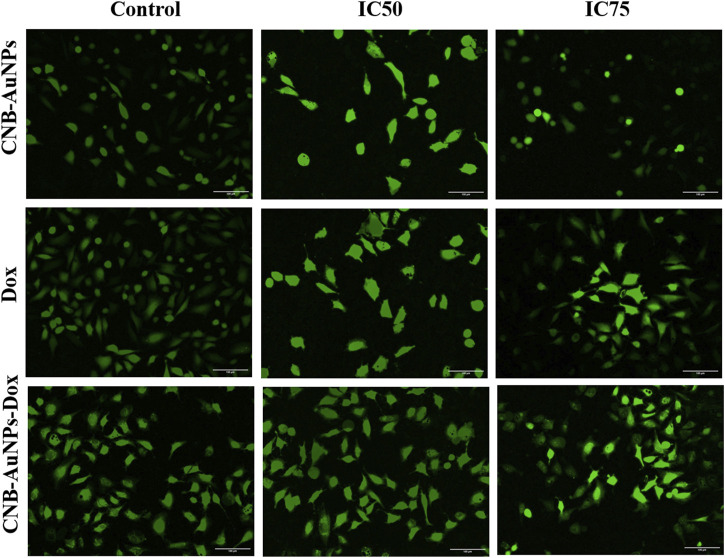
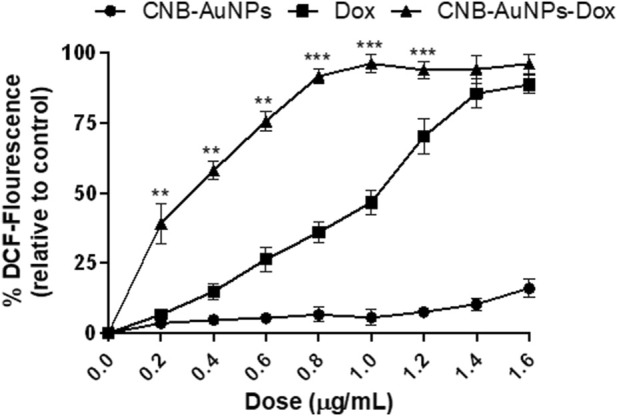
The biogenic synthesis of gold nanoparticles was ascertained through an absorption peak at a wavelength of 524 nm, and it was shifted to 527 nm when conjugated with doxorubicin. Nanoparticles were found to be stable exhibiting a zeta potential value of -20.1 mV, and it changed to -12.7 mV when loaded with doxorubicin. The hydrodynamic diameter of nanoparticles was determined to be 45.64 nm and it was increased to 58.95 nm when conjugated with the drug. The average size of nanoparticles analyzed by TEM was found to be approximately 17.2 nm, while it was 23.5 nm in the case of drug-nanoconjugate. Moreover, there was a significant amelioration in the antiproliferative potential of doxorubicin against lung cancer A549 cells when delivered with gold nanocarrier, which was evident by the lower IC50 and IC75 values of drug-nanoconjugates in comparison to drug alone. Furthermore, the inhibitory effect of drug-nanoconjugates and drug alone was characterized by alteration in the cell morphology, nuclear condensation, increased production of reactive oxygen species, abrogation of mitochondrial membrane potential, and enhanced caspase activities in A549 cells. In sum, our results suggested enhanced efficacy of doxorubicin-gold nanoconjugates, indicating effective delivery of doxorubicin inside the cell by gold nanoparticles.
由于治疗剂量高,传统化疗通常会带来显著的副作用。在这方面,含有化疗药物的纳米制剂有望通过降低治疗剂量来提高药物疗效,从而减轻潜在的副作用。由于在生物医学领域有众多应用,人们对开发一种环境可接受、持久且经济实惠的金纳米颗粒生产技术的兴趣日益浓厚。在这种特定背景下,将植物提取物纳入金属纳米颗粒的生产已引起众多学者的关注。在此,我们报告了使用叶提取物通过绿色方法合成金颗粒及其与阿霉素的缀合。
使用提取物合成金纳米颗粒,并用各种生物物理技术对其进行表征。随后,将金纳米颗粒与阿霉素缀合,并在A549细胞上测试其功效。
通过在524nm波长处的吸收峰确定了金纳米颗粒的生物合成,与阿霉素缀合后该峰移至527nm。发现纳米颗粒稳定,其zeta电位值为-20.1mV,负载阿霉素后变为-12.7mV。纳米颗粒的流体动力学直径确定为45.64nm,与药物缀合后增加到58.95nm。通过透射电子显微镜分析的纳米颗粒的平均尺寸约为17.2nm,而药物-纳米缀合物的平均尺寸为23.5nm。此外,当与金纳米载体一起递送时,阿霉素对肺癌A549细胞的抗增殖潜力有显著改善,这通过药物-纳米缀合物与单独药物相比更低的IC50和IC75值得以体现。此外,药物-纳米缀合物和单独药物的抑制作用通过A549细胞中细胞形态的改变、核浓缩、活性氧产生增加、线粒体膜电位的消除以及半胱天冬酶活性的增强来表征。总之,我们的结果表明阿霉素-金纳米缀合物的疗效增强,表明金纳米颗粒可有效地将阿霉素递送至细胞内。