Oikawa Kaori, Fujisaki Koki, Shimizu Motoki, Takeda Takumi, Nemoto Keiichiro, Saitoh Hiromasa, Hirabuchi Akiko, Hiraka Yukie, Miyaji Naomi, Białas Aleksandra, Langner Thorsten, Kellner Ronny, Bozkurt Tolga O, Cesari Stella, Kroj Thomas, Banfield Mark J, Kamoun Sophien, Terauchi Ryohei
Iwate Biotechnology Research Center, Kitakami, Iwate, Japan.
The Sainsbury Laboratory, University of East Anglia, Norwich Research Park, Norwich, United Kingdom.
PLoS Pathog. 2024 Nov 18;20(11):e1012647. doi: 10.1371/journal.ppat.1012647. eCollection 2024 Nov.
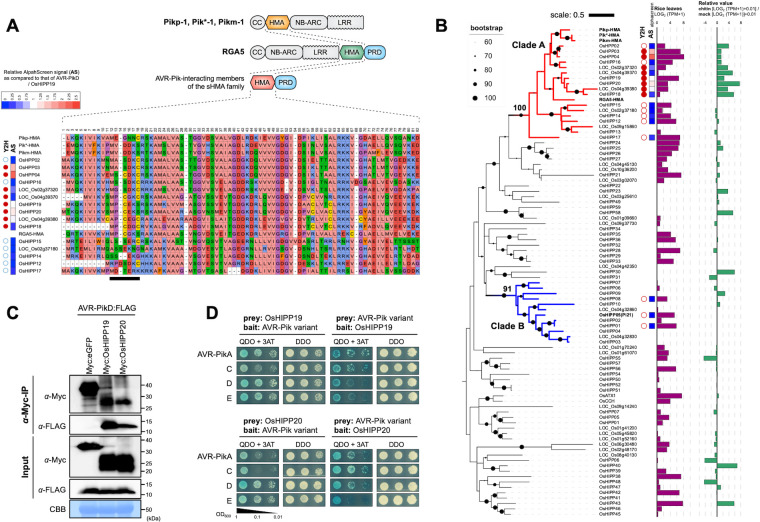
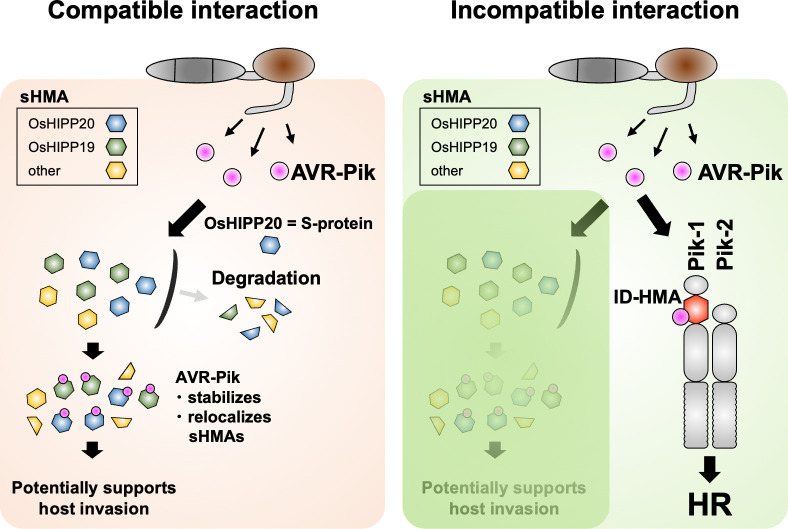
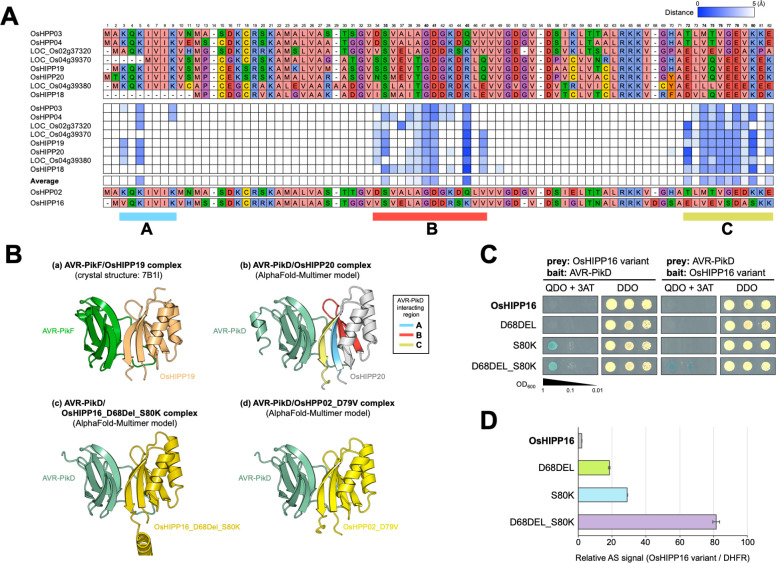
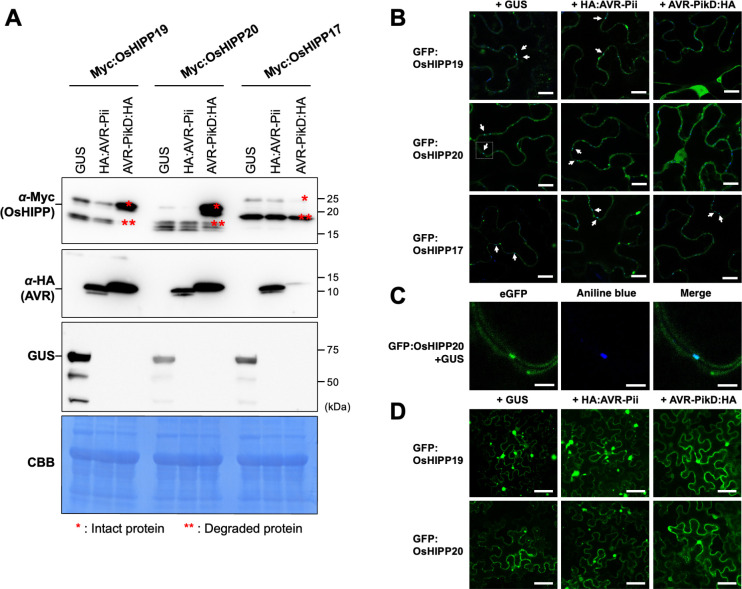
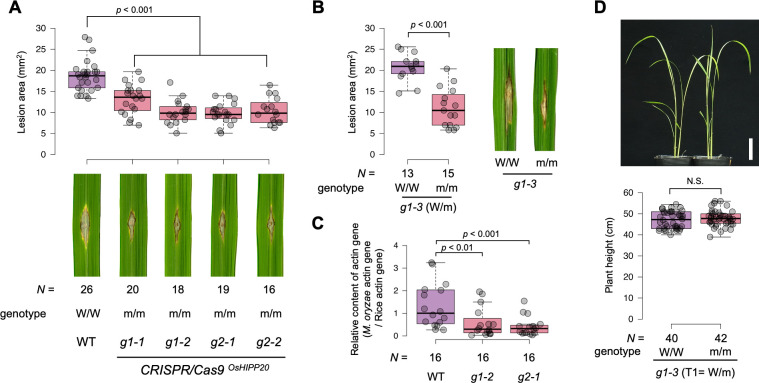
Intracellular nucleotide-binding domain and leucine-rich repeat-containing (NLR) receptors play crucial roles in immunity across multiple domains of life. In plants, a subset of NLRs contain noncanonical integrated domains that are thought to have evolved from host targets of pathogen effectors to serve as pathogen baits. However, the functions of host proteins with similarity to NLR integrated domains and the extent to which they are targeted by pathogen effectors remain largely unknown. Here, we show that the blast fungus effector AVR-Pik binds a subset of related rice proteins containing a heavy metal-associated (HMA) domain, one of the domains that has repeatedly integrated into plant NLR immune receptors. We find that AVR-Pik binding stabilizes the rice small HMA (sHMA) proteins OsHIPP19 and OsHIPP20. Knockout of OsHIPP20 causes enhanced disease resistance towards the blast pathogen, indicating that OsHIPP20 is a susceptibility gene (S-gene). We propose that AVR-Pik has evolved to bind HMA domain proteins and co-opt their function to suppress immunity. Yet this binding carries a trade-off, it triggers immunity in plants carrying NLR receptors with integrated HMA domains.
细胞内核苷酸结合结构域和富含亮氨酸重复序列(NLR)的受体在多个生命领域的免疫中发挥着关键作用。在植物中,一部分NLR包含非典型整合结构域,这些结构域被认为是从病原体效应子的宿主靶标进化而来,用作病原体诱饵。然而,与NLR整合结构域相似的宿主蛋白的功能以及它们被病原体效应子靶向的程度在很大程度上仍不清楚。在这里,我们表明稻瘟病菌效应子AVR-Pik与水稻中一组含有重金属相关(HMA)结构域的相关蛋白结合,HMA结构域是多次整合到植物NLR免疫受体中的结构域之一。我们发现AVR-Pik的结合稳定了水稻小HMA(sHMA)蛋白OsHIPP19和OsHIPP20。敲除OsHIPP20会增强对稻瘟病菌的抗病性,表明OsHIPP20是一个感病基因(S基因)。我们提出,AVR-Pik已经进化到能够结合HMA结构域蛋白并利用它们的功能来抑制免疫。然而,这种结合存在权衡,它会在携带整合了HMA结构域的NLR受体的植物中引发免疫反应。