Bai Ge, Truong Thu Minh, Pathak Gaurav N, Benoit Lora, Rao Babar
Department of Dermatology Rutgers Robert Wood Johnson Medical School Piscataway New Jersey USA.
Department of Dermatology Rutgers New Jersey Medical School Newark New Jersey USA.
Skin Health Dis. 2024 Feb 13;4(6):e348. doi: 10.1002/ski2.348. eCollection 2024 Dec.
Exosomes are extracellular vesicles that transport bioactive substances during normal and abnormal cellular physiological processes. The unique properties of exosomes can be exploited for use as biomarkers and targeted drug delivery vehicles, and are, for this reason, gaining increasing attention in the field of dermatology. This review aims to synthesise the existing evidence supporting exosomes in regenerative and cosmetic dermatology.
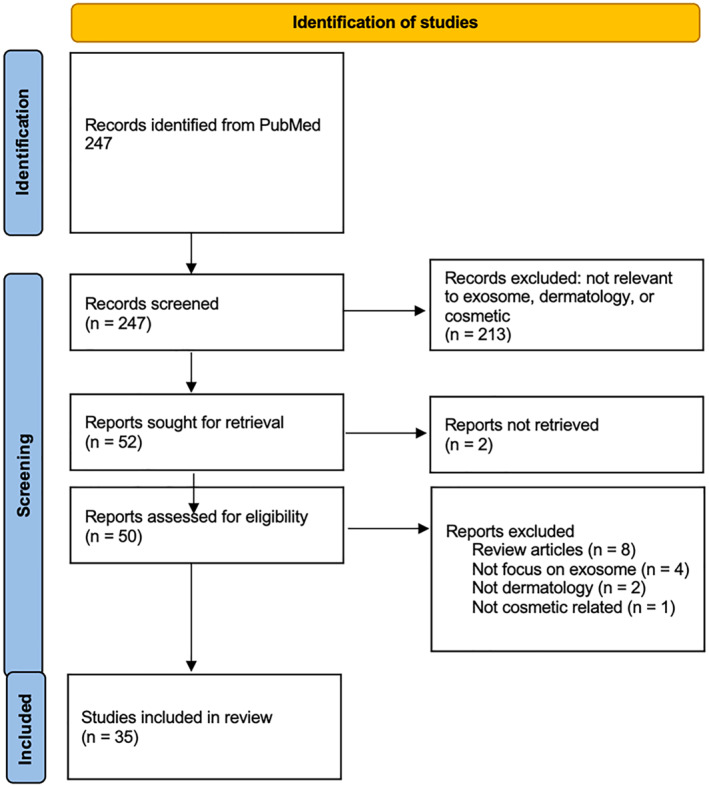
A comprehensive PubMed search for the period of 2010-2023 was performed using the MeSH terms "exosome" and "skin." The initial search yielded 246 studies, which were then refined to 178 studies following title and abstract screening. Studies were confined to human or animal studies published in English that evaluated the use of exosomes in medical/cosmetic dermatology. A subsequent full-text review based on these criteria yielded 34 studies, which were then reviewed.
Exosomes can be derived from a variety of biological sources and show potential application in wound healing, scar prophylaxis, photodamage prevention, skin regeneration, improved grafting success, hair loss mitigation, and as biomarkers and drug carriers.
Exosomes are gaining traction in regenerative and cosmetic dermatology. However, their widespread clinical application is hindered by cost, a complex isolation process, lack of uniform protocols, limited assessment of infective potential, and a paucity of clinical evidence. Further research in this area is needed, especially by way of clinical studies evaluating the efficacy of exosome-based treatments on human skin.
外泌体是细胞外囊泡,在正常和异常细胞生理过程中运输生物活性物质。外泌体的独特性质可被用作生物标志物和靶向药物递送载体,因此在皮肤病学领域越来越受到关注。本综述旨在综合支持外泌体在再生性和美容性皮肤病学中应用的现有证据。
使用医学主题词“外泌体”和“皮肤”对2010年至2023年期间的PubMed进行全面检索。初步检索得到246项研究,经标题和摘要筛选后,精炼至178项研究。研究仅限于以英文发表的评估外泌体在医学/美容皮肤病学中应用的人体或动物研究。基于这些标准进行的后续全文综述得到34项研究,随后对这些研究进行了审查。
外泌体可来源于多种生物来源,并在伤口愈合、瘢痕预防、光损伤预防、皮肤再生、提高移植成功率、减轻脱发以及作为生物标志物和药物载体方面显示出潜在应用。
外泌体在再生性和美容性皮肤病学中越来越受到关注。然而,其广泛的临床应用受到成本、复杂的分离过程、缺乏统一方案、对感染潜力的评估有限以及临床证据不足的阻碍。需要在该领域进行进一步研究,特别是通过临床研究评估基于外泌体的治疗对人体皮肤的疗效。