Posner Kevin M, Bakus Cassandra, Sodha Samir
Department of Orthopedic Surgery, Hackensack Meridian School of Medicine, Nutley, USA.
Department of Orthopedic Surgery, Hackensack University Medical Center, Hackensack, USA.
Cureus. 2024 Nov 5;16(11):e73060. doi: 10.7759/cureus.73060. eCollection 2024 Nov.
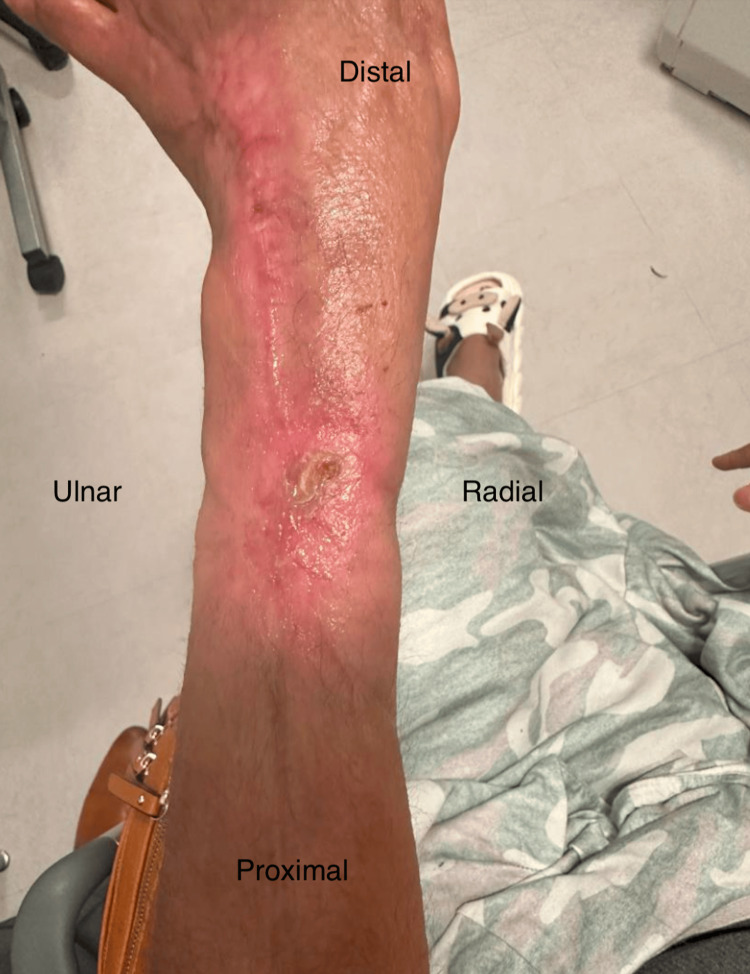
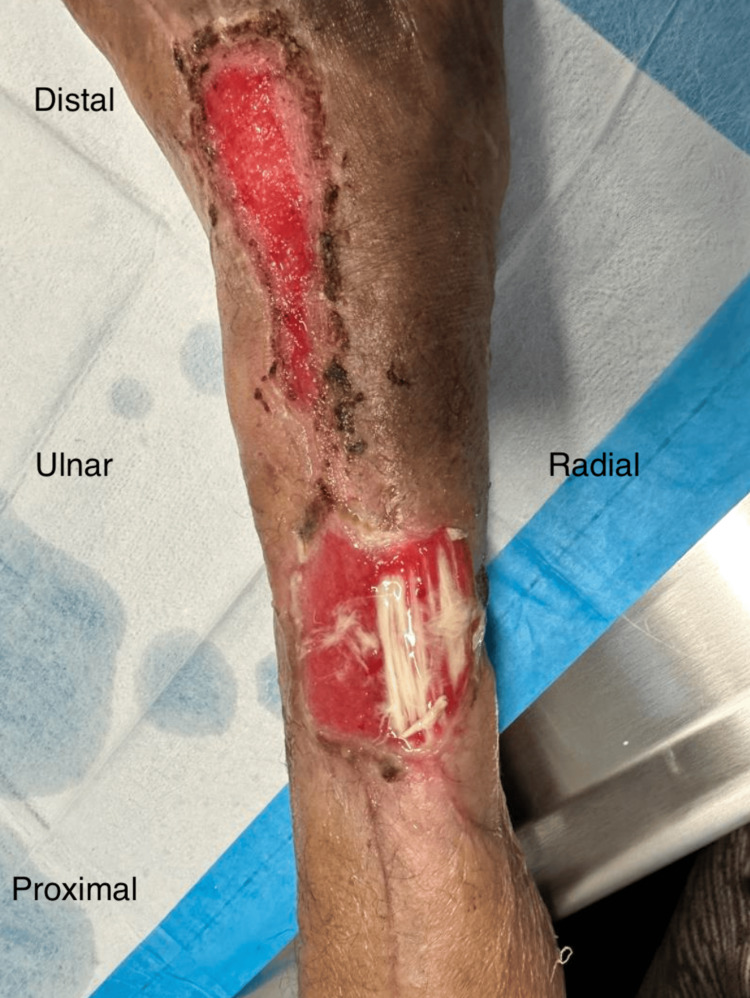
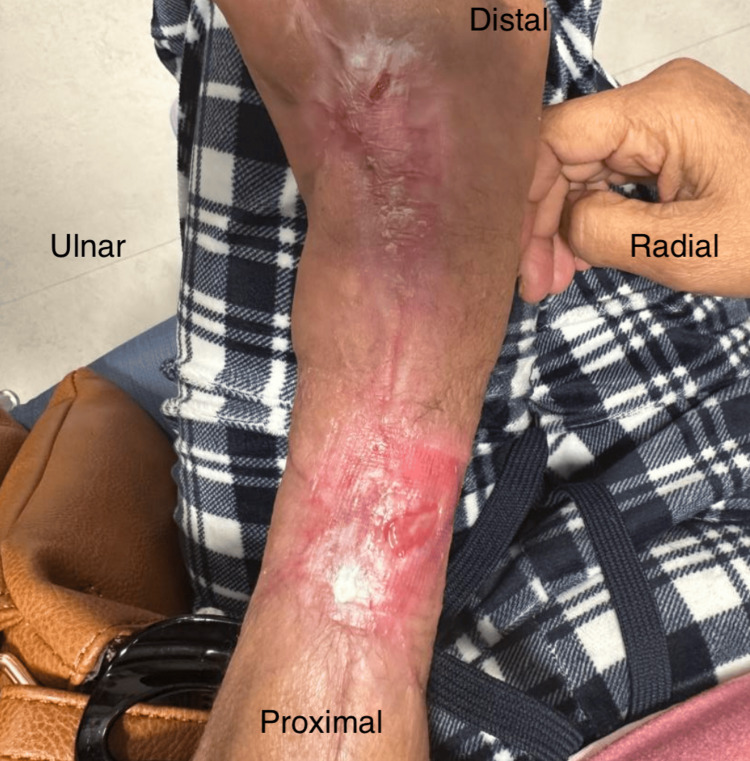
This case report explores the application of the Kerecis fish skin xenograft, derived from North Atlantic Cod, in treating a large full-thickness wound resulting from necrotizing fasciitis (NF). A 41-year-old female with multiple comorbidities presented with NF of the dorsal forearm and hand. Initially managed with serial washouts with extensive debridement, the remaining dorsal forearm full-thickness wound with exposed tendons was treated with an application of the Kerecis xenograft. The graft facilitated healing, evidenced by rapid epithelialization and decreased pain without the use of additional skin grafting. Traditionally used for chronic conditions, the use of Kerecis in this acute, complex wound highlights its potential for integrating into human tissue and modulating inflammation, as well as acting as an antimicrobial barrier. This case underscores the need for further research into the effectiveness of fish skin xenografts in acute and complex wounds, suggesting a potential shift in emergency wound care practices.
本病例报告探讨了源自北大西洋鳕鱼的Kerecis鱼皮异种移植物在治疗坏死性筋膜炎(NF)导致的大面积全层伤口中的应用。一名患有多种合并症的41岁女性出现了前臂背侧和手部的NF。最初通过多次冲洗和广泛清创进行处理,剩余的伴有肌腱外露的前臂背侧全层伤口采用Kerecis异种移植物进行治疗。该移植物促进了愈合,表现为快速上皮化和疼痛减轻,且无需额外进行皮肤移植。Kerecis传统上用于慢性疾病,在这种急性、复杂伤口中的应用凸显了其整合到人体组织和调节炎症的潜力,以及作为抗菌屏障的作用。本病例强调了进一步研究鱼皮异种移植物在急性和复杂伤口中有效性的必要性,表明紧急伤口护理实践可能发生转变。