Ke Zirui, Shen Leihua, Shao Jun
Department of Breast Surgery, Hubei Cancer Hospital, Tongji Medical College, Huazhong University of Science and Technology, Hubei Provincial Clinical Research Center for Breast Cancer, Wuhan Clinical Research, Wuhan, 430070, People's Republic of China.
Department of General Surgery, Xi'an Central Hospital, Shaanxi, 710000, People's Republic of China.
Int J Gen Med. 2024 Dec 12;17:6101-6114. doi: 10.2147/IJGM.S499238. eCollection 2024.
Axillary lymph node (ALN) is the most common metastasis path for breast cancer, and ALN dissection directly affects the postoperative staging and prognosis of breast cancer patients. Therefore, additional research is needed to accurately predict ALN metastasis before surgery and construct predictive models to assist in surgical decision-making and optimize patient care.
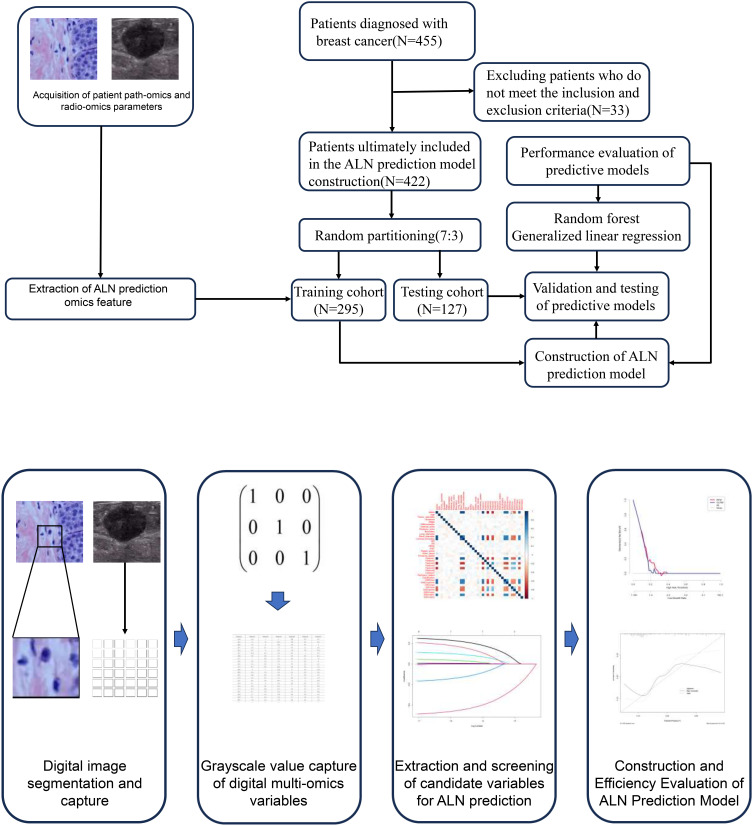
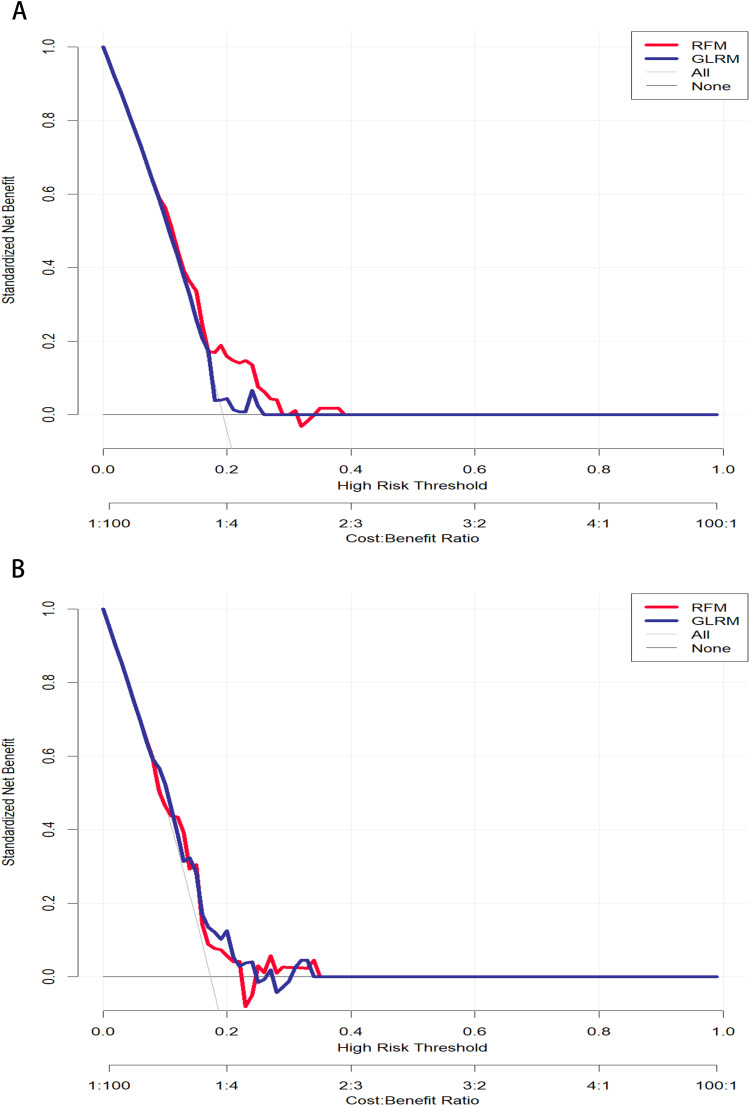
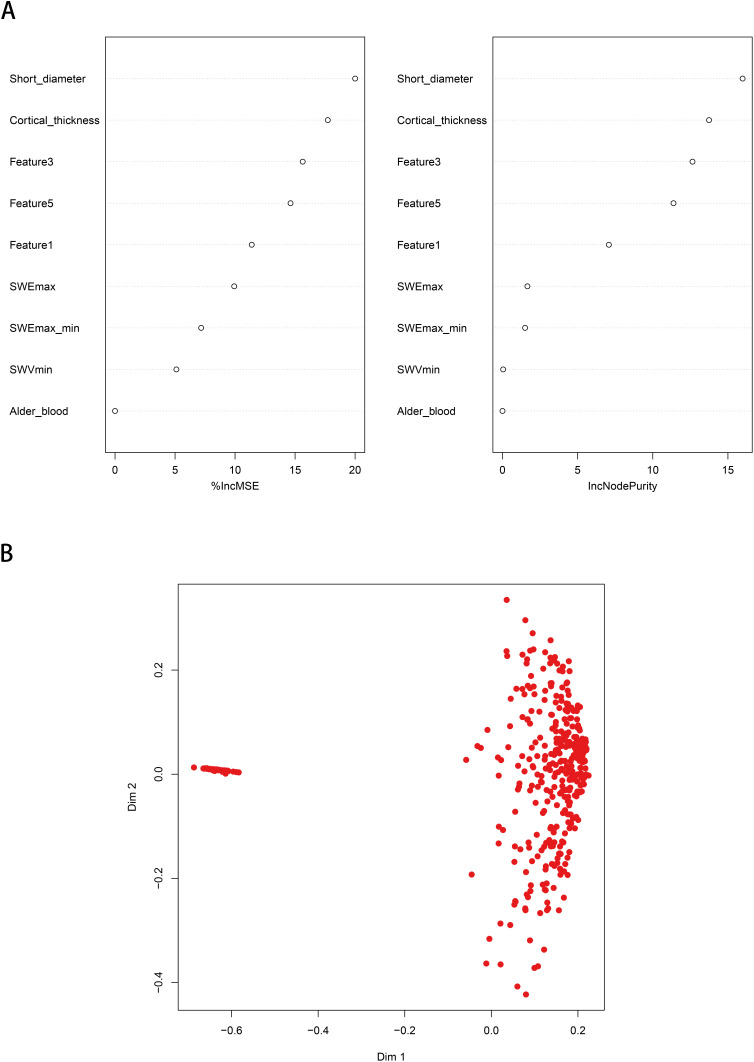
We retrospectively analyzed the clinical data, radiomics, and pathomics of the patients diagnosed with breast cancer in the Breast Cancer Center of Hubei Cancer Hospital from January 2017 to December 2022. The study participants were randomly assigned to either the training queue (70%) or the validation queue (30%). Logistic regression (ie generalized linear regression model [GLRM]) and random forest model (RFM) were used to construct an ALN prediction model in the training queue, and the discriminant power of the model was evaluated using area under curve (AUC) and decision curve analysis (DCA). Meanwhile, the validation queue was used to evaluate the ALN prediction performance of the constructed model.
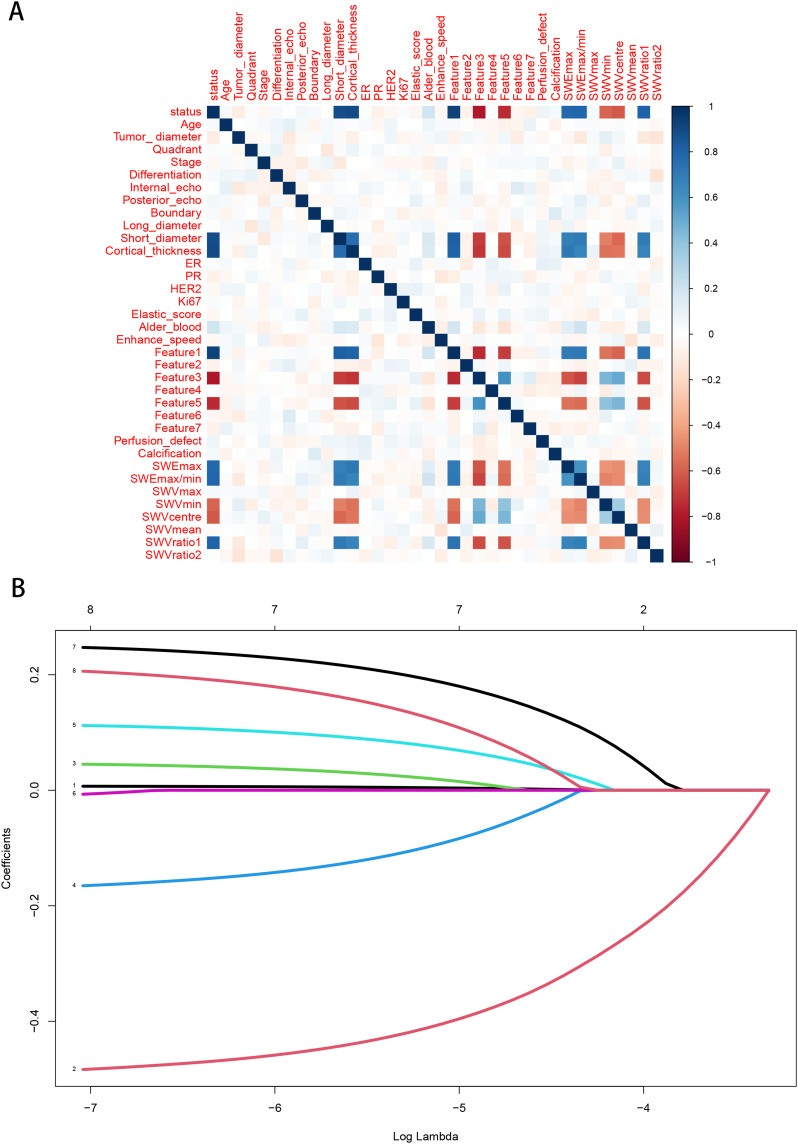
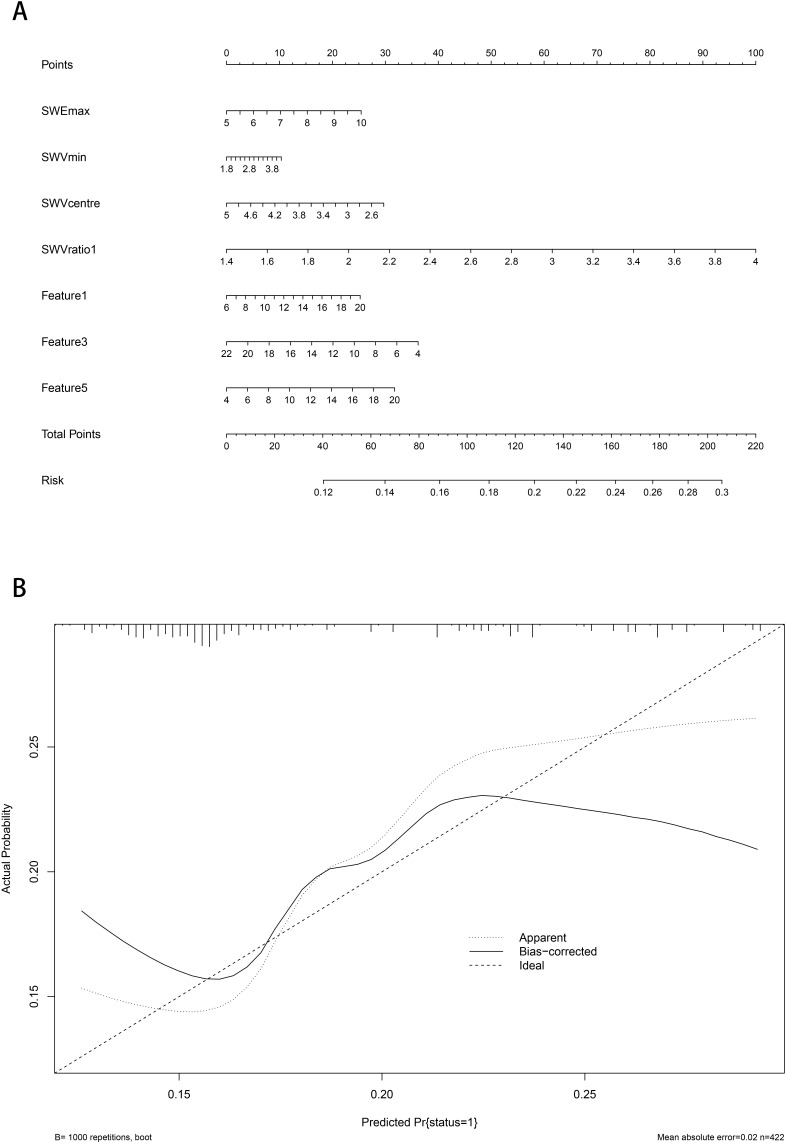
Out of the 422 patients encompassed in the study, 18.7% were diagnosed with ALN by postoperative pathology. The logical model included shear wave elastography (SWE) related to maximum, minimum, centre, ratio 1, pathomics (Feature 1, Feature 3, and Feature 5) and a nomogram of the GLRM was drawn. The AUC of GLRM was 0.818 (95% CI: 0.7570.879), significantly lower than that of RFM's AUC 0.893 (95% CI: 0.8360.950).
The prediction models based on machine learning (ML) algorithms and multiomics have shown good performance in predicting ALN metastasis, and RFM shows greater advantages compared to traditional GLRM. The findings of this study can help clinicians identify patients with higher risk of ALN metastasis and provide personalized perioperative management to assist preoperative decision-making and improve patient prognosis.
腋窝淋巴结(ALN)是乳腺癌最常见的转移途径,腋窝淋巴结清扫直接影响乳腺癌患者的术后分期及预后。因此,需要进一步研究以在术前准确预测ALN转移,并构建预测模型以辅助手术决策并优化患者护理。
我们回顾性分析了2017年1月至2022年12月在湖北省肿瘤医院乳腺癌中心确诊为乳腺癌的患者的临床数据、影像组学和病理组学数据。研究参与者被随机分配到训练队列(70%)或验证队列(30%)。在训练队列中使用逻辑回归(即广义线性回归模型[GLRM])和随机森林模型(RFM)构建ALN预测模型,并使用曲线下面积(AUC)和决策曲线分析(DCA)评估模型的判别能力。同时,使用验证队列评估所构建模型的ALN预测性能。
在该研究纳入的422例患者中,18.7%术后病理诊断为ALN转移。逻辑模型纳入了与最大值、最小值、中心值、比值1相关的剪切波弹性成像(SWE)、病理组学(特征1、特征3和特征5),并绘制了GLRM的列线图。GLRM的AUC为0.818(95%CI:0.7570.879),显著低于RFM的AUC 0.893(95%CI:0.8360.950)。
基于机器学习(ML)算法和多组学的预测模型在预测ALN转移方面表现出良好性能,与传统的GLRM相比,RFM显示出更大优势。本研究结果可帮助临床医生识别ALN转移风险较高的患者,并提供个性化的围手术期管理以辅助术前决策并改善患者预后。