Friedman Sam F, Khurshid Shaan, Venn Rachael A, Wang Xin, Diamant Nate, Di Achille Paolo, Weng Lu-Chen, Choi Seung Hoan, Reeder Christopher, Pirruccello James P, Singh Pulkit, Lau Emily S, Philippakis Anthony, Anderson Christopher D, Maddah Mahnaz, Batra Puneet, Ellinor Patrick T, Ho Jennifer E, Lubitz Steven A
Data Sciences Platform, The Broad Institute of MIT and Harvard, Cambridge, MA, USA.
Cardiovascular Research Center, Massachusetts General Hospital, Boston, MA, USA.
NPJ Digit Med. 2025 Jan 12;8(1):23. doi: 10.1038/s41746-024-01418-9.
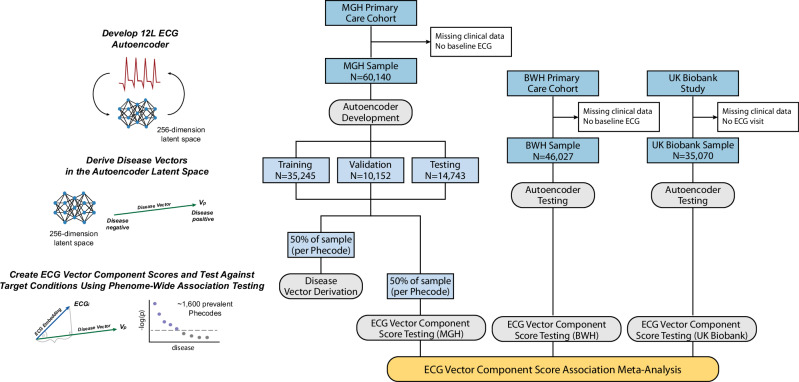
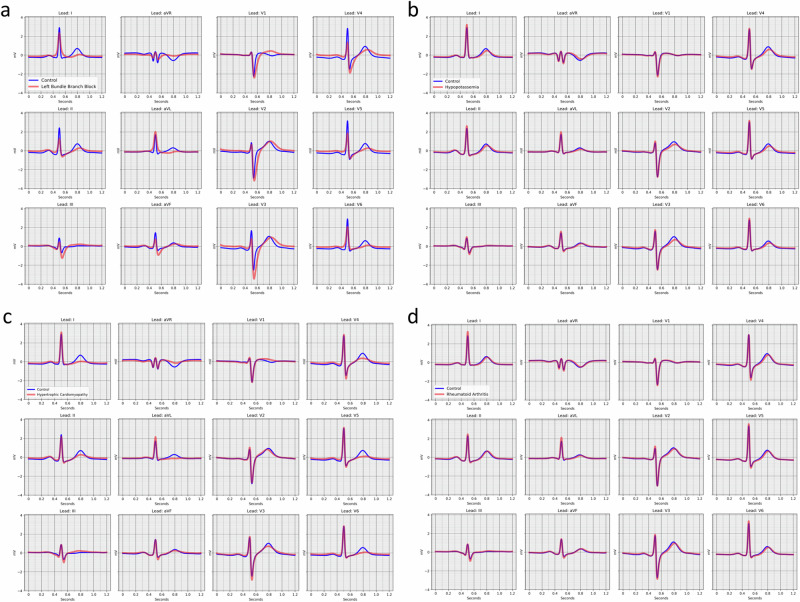
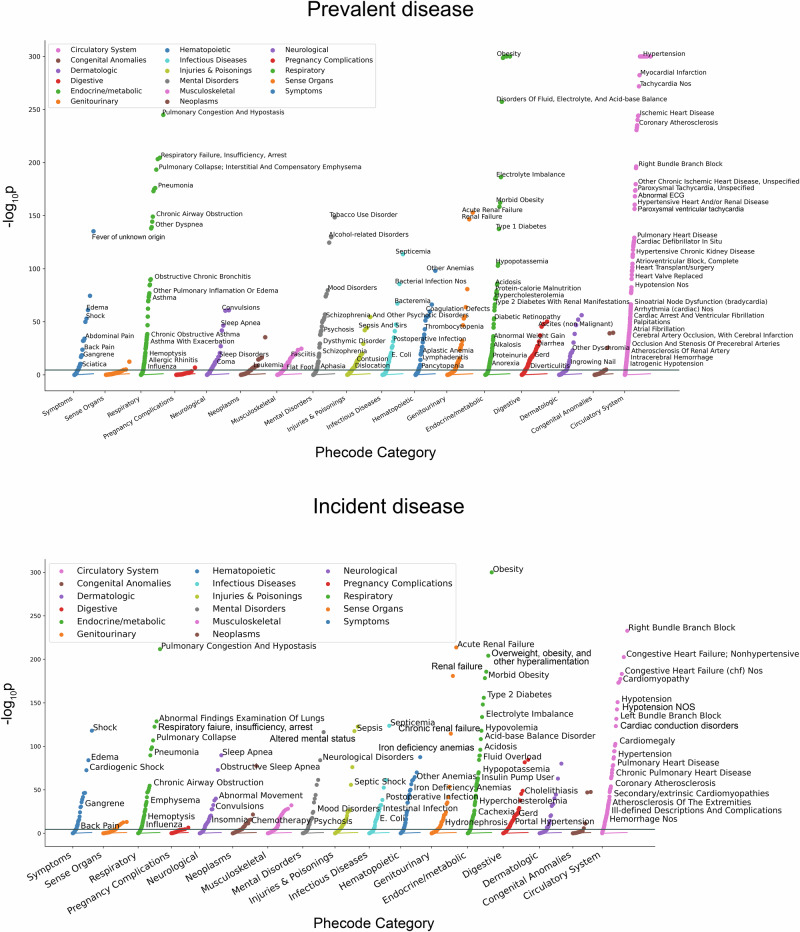
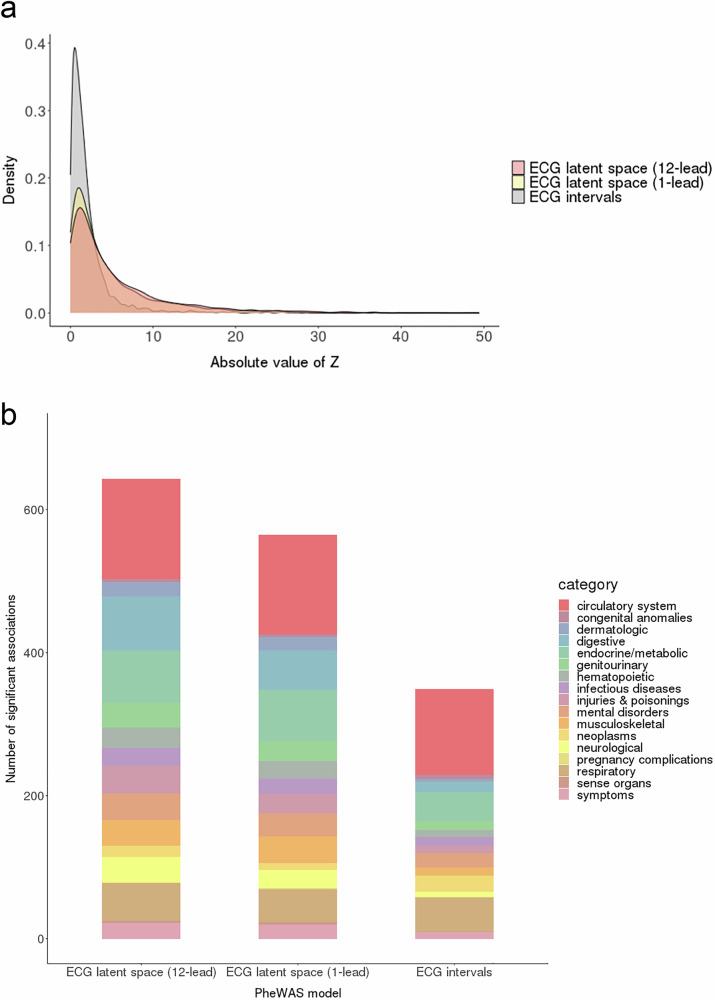
The 12-lead electrocardiogram (ECG) is inexpensive and widely available. Whether conditions across the human disease landscape can be detected using the ECG is unclear. We developed a deep learning denoising autoencoder and systematically evaluated associations between ECG encodings and ~1,600 Phecode-based diseases in three datasets separate from model development, and meta-analyzed the results. The latent space ECG model identified associations with 645 prevalent and 606 incident Phecodes. Associations were most enriched in the circulatory (n = 140, 82% of category-specific Phecodes), respiratory (n = 53, 62%) and endocrine/metabolic (n = 73, 45%) categories, with additional associations across the phenome. The strongest ECG association was with hypertension (p < 2.2×10). The ECG latent space model demonstrated more associations than models using standard ECG intervals, and offered favorable discrimination of prevalent disease compared to models comprising age, sex, and race. We further demonstrate how latent space models can be used to generate disease-specific ECG waveforms and facilitate individual disease profiling.
12导联心电图(ECG)价格低廉且广泛可用。目前尚不清楚能否通过心电图检测出人类疾病谱中的各种病症。我们开发了一种深度学习去噪自动编码器,并在与模型开发无关的三个数据集中系统地评估了心电图编码与约1600种基于Phecode的疾病之间的关联,并对结果进行了荟萃分析。潜在空间心电图模型识别出与645种常见Phecode和606种新发Phecode的关联。关联在循环系统(n = 140,占特定类别Phecode的82%)、呼吸系统(n = 53,62%)和内分泌/代谢系统(n = 73,45%)类别中最为丰富,在整个表型组中还有其他关联。最强的心电图关联是与高血压(p < 2.2×10)。与使用标准心电图间期的模型相比,心电图潜在空间模型显示出更多的关联,并且与包含年龄、性别和种族的模型相比,对常见疾病具有更好的辨别能力。我们进一步展示了潜在空间模型如何用于生成特定疾病的心电图波形并促进个体疾病特征分析。