Privrodski Boris, Jovanović Mladen, Delić Nikola, Ratajac Radomir, Privrodski Vladimir, Stanojković Aleksandar, Gavlik Bernadeta, Čapo Ivan
Institute for Children and Youth Health Care of Vojvodina, 21000 Novi Sad, Serbia.
Faculty of Medicine Novi Sad, University of Novi Sad, 21000 Novi Sad, Serbia.
Pharmaceuticals (Basel). 2025 Feb 21;18(3):296. doi: 10.3390/ph18030296.
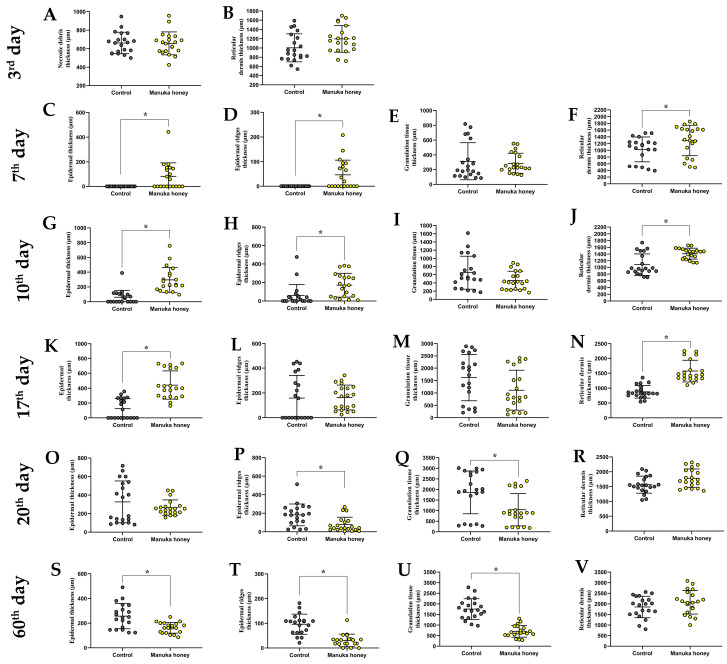
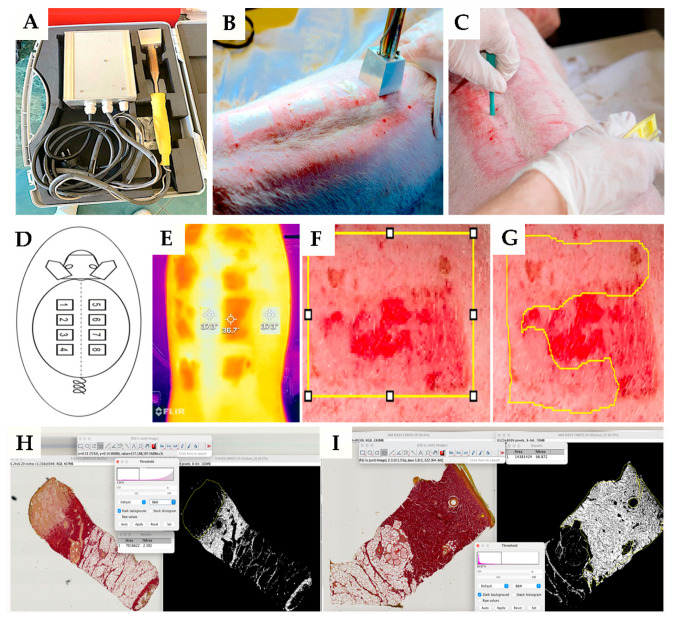
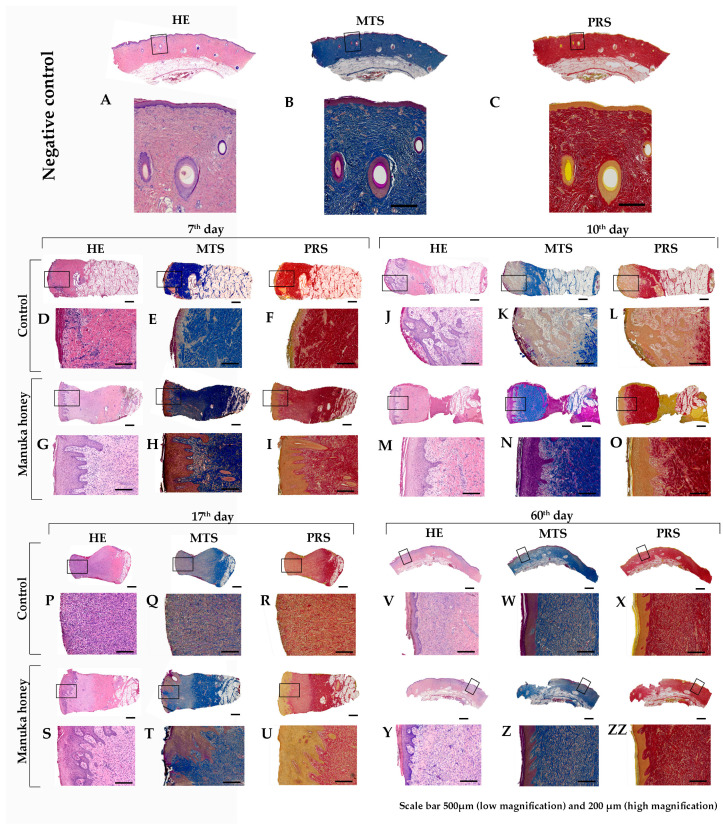
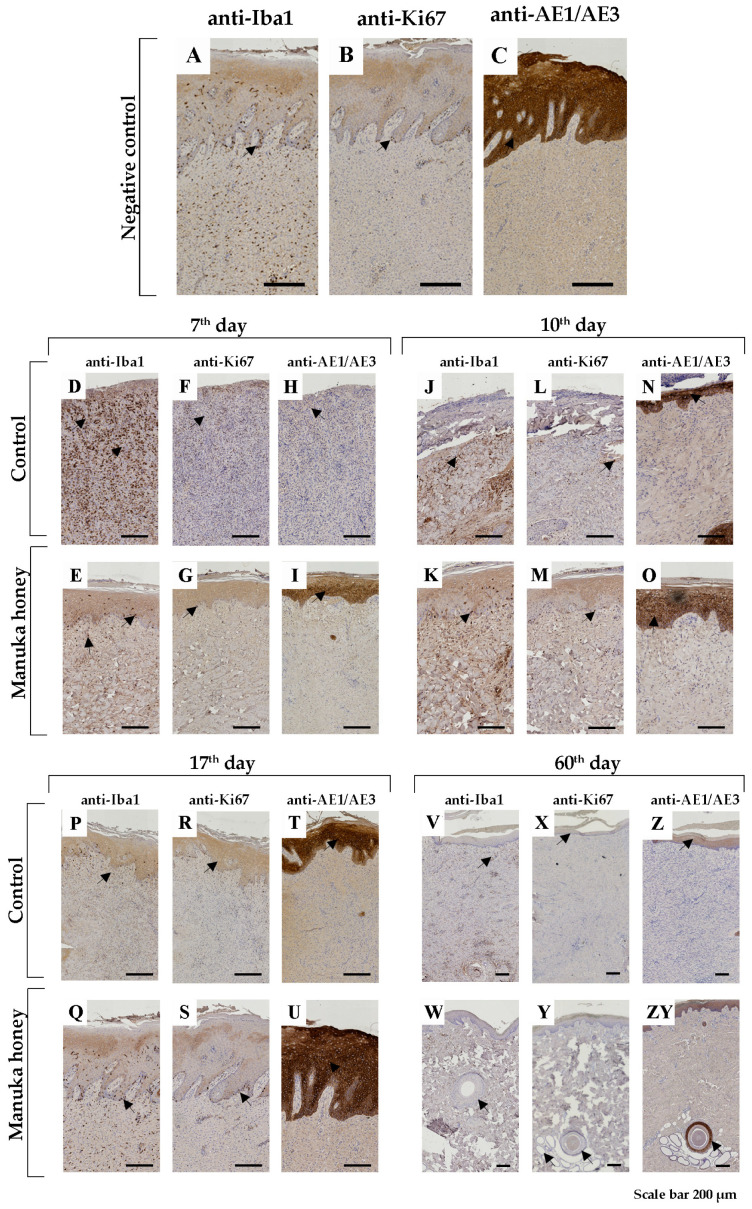
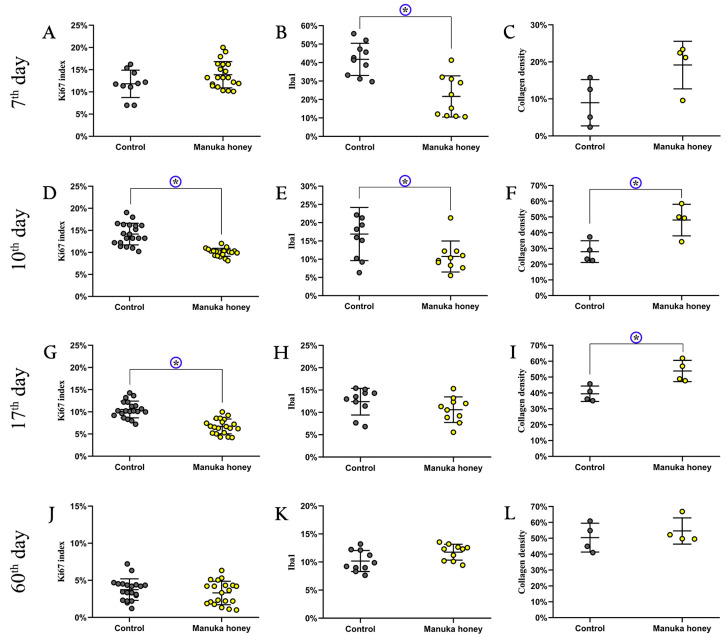
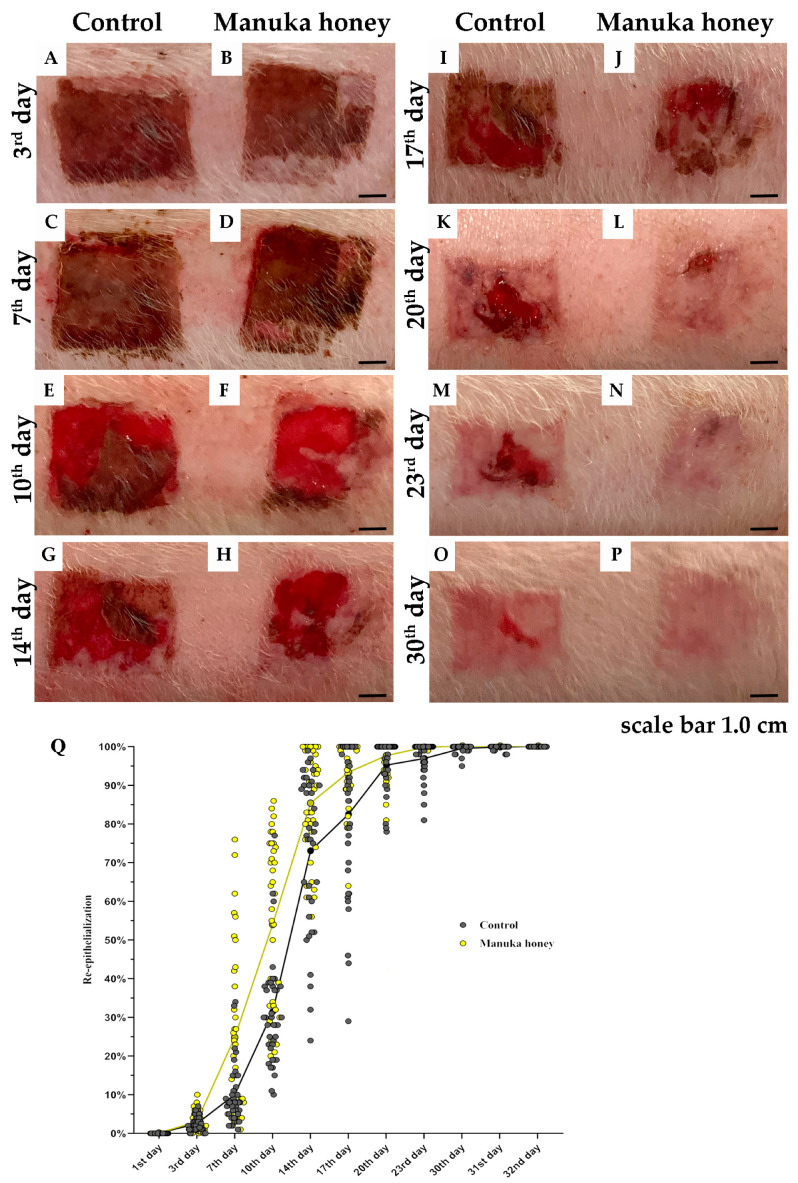
Burn injuries present significant medical challenges due to their complexity in healing and potential for severe scarring. This study evaluates the efficacy of Manuka honey in accelerating burn wound healing compared to conventional antibiotic ointments. Using a porcine model resembling human skin, nine Landrace breed female pigs with standardized deep dermal burns were treated with either Manuka honey in alginate or a combination of antibiotic ointments. Wound healing was assessed through macroscopic evaluation, a histopathological analysis, and immunohistochemical staining over a 60-day period. : Our findings indicate that the Manuka honey treatment was associated with significantly increased collagen density in the treated wounds compared to the control group ( < 0.05). The immunohistochemical analysis revealed lower macrophage activity (Iba1 staining) and a reduction in Ki67 expression on days 10 and 17 in the Manuka honey group, suggesting a more rapid transition toward tissue remodeling. The quantitative analysis showed a trend toward delayed epithelialization and increased inflammation in the control group, while wounds treated with Manuka honey exhibited faster reepithelialization and improved epidermal regeneration. However, additional studies are required to further assess collagen fiber organization and overall dermal architecture. These findings support the potential of Manuka honey as a beneficial treatment for burn wound healing, with evidence of enhanced reepithelialization and collagen deposition. Further research, including clinical trials, is necessary to fully elucidate its role in clinical practice and optimize treatment protocols.
由于烧伤愈合过程复杂且有严重瘢痕形成的可能性,烧伤会带来重大的医学挑战。本研究评估了麦卢卡蜂蜜与传统抗生素软膏相比,在加速烧伤创面愈合方面的疗效。使用一种类似于人类皮肤的猪模型,对9头具有标准化深度真皮烧伤的长白品种雌性猪分别用藻酸盐中的麦卢卡蜂蜜或抗生素软膏组合进行治疗。在60天的时间内,通过宏观评估、组织病理学分析和免疫组织化学染色对伤口愈合情况进行评估。我们的研究结果表明,与对照组相比,麦卢卡蜂蜜治疗组治疗伤口的胶原蛋白密度显著增加(<0.05)。免疫组织化学分析显示,麦卢卡蜂蜜组在第10天和第17天巨噬细胞活性较低(Iba1染色),Ki67表达降低,表明向组织重塑的转变更快。定量分析显示,对照组有上皮化延迟和炎症增加的趋势,而用麦卢卡蜂蜜治疗的伤口上皮再形成更快,表皮再生改善。然而,需要进一步的研究来进一步评估胶原纤维组织和整体真皮结构。这些发现支持了麦卢卡蜂蜜作为烧伤创面愈合有益治疗方法的潜力,有上皮再形成增强和胶原蛋白沉积的证据。包括临床试验在内的进一步研究对于充分阐明其在临床实践中的作用和优化治疗方案是必要的。