Barbu Andreea, Neamtu Bogdan, Zăhan Marius, Iancu Gabriela Mariana, Bacila Ciprian, Mireșan Vioara
Pediatric Research Department, Pediatric Clinical Hospital Sibiu, 550166 Sibiu, Romania.
Faculty of Animal Science and Biotechnologies, University of Agricultural Sciences and Veterinary Medicine Cluj-Napoca, 400372 Cluj-Napoca, Romania.
J Pers Med. 2021 Sep 7;11(9):890. doi: 10.3390/jpm11090890.
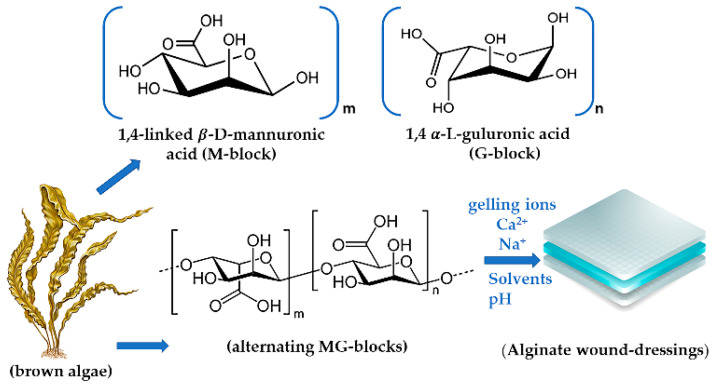
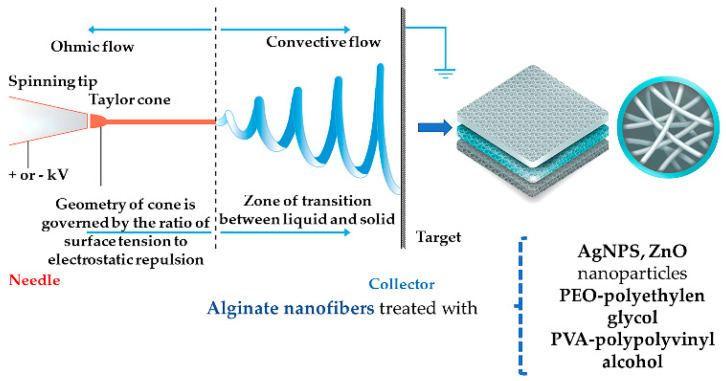
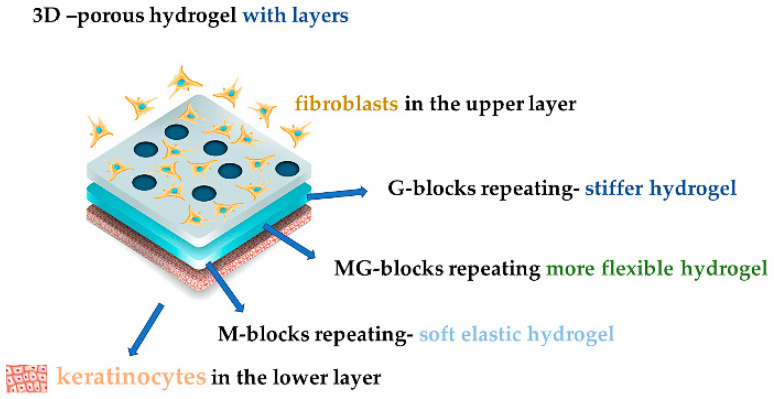
Chronic wounds represent a major public health issue, with an extremely high cost worldwide. In healthy individuals, the wound healing process takes place in different stages: inflammation, cell proliferation (fibroblasts and keratinocytes of the dermis), and finally remodeling of the extracellular matrix (equilibrium between metalloproteinases and their inhibitors). In chronic wounds, the chronic inflammation favors exudate persistence and bacterial film has a special importance in the dynamics of chronic inflammation in wounds that do not heal. Recent advances in biopolymer-based materials for wound healing highlight the performance of specific alginate forms. An ideal wound dressing should be adherent to the wound surface and not to the wound bed, it should also be non-antigenic, biocompatible, semi-permeable, biodegradable, elastic but resistant, and cost-effective. It has to give protection against bacterial, infectious, mechanical, and thermal agents, to modulate the level of wound moisture, and to entrap and deliver drugs or other molecules This paper explores the roles of alginates in advanced wound-dressing forms with a particular emphasis on hydrogels, nanofibers networks, 3D-scaffolds or sponges entrapping fibroblasts, keratinocytes, or drugs to be released on the wound-bed. The latest research reports are presented and supported with in vitro and in vivo studies from the current literature.
慢性伤口是一个重大的公共卫生问题,在全球范围内造成了极高的成本。在健康个体中,伤口愈合过程分不同阶段进行:炎症期、细胞增殖期(真皮层的成纤维细胞和角质形成细胞),最后是细胞外基质重塑期(金属蛋白酶与其抑制剂之间的平衡)。在慢性伤口中,慢性炎症促使渗出物持续存在,而细菌膜在不愈合伤口的慢性炎症动态变化中具有特殊重要性。基于生物聚合物的伤口愈合材料的最新进展突出了特定藻酸盐形式的性能。理想的伤口敷料应粘附于伤口表面而非伤口床,还应无抗原性、具有生物相容性、半透性、可生物降解、有弹性且坚韧,同时具有成本效益。它必须能抵御细菌、感染、机械和热因素,调节伤口湿度水平,并包裹和递送药物或其他分子。本文探讨了藻酸盐在先进伤口敷料形式中的作用,特别强调了水凝胶、纳米纤维网络、3D支架或海绵,这些敷料包裹着成纤维细胞、角质形成细胞或待在伤口床上释放的药物。文中呈现了最新的研究报告,并引用了当前文献中的体外和体内研究加以支持。