Corces V, Pellicer A, Axel R, Meselson M
Proc Natl Acad Sci U S A. 1981 Nov;78(11):7038-42. doi: 10.1073/pnas.78.11.7038.
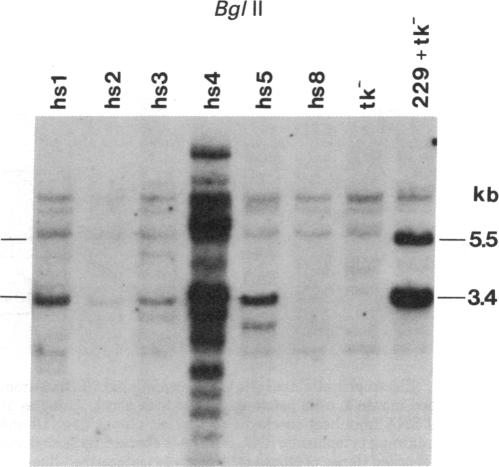
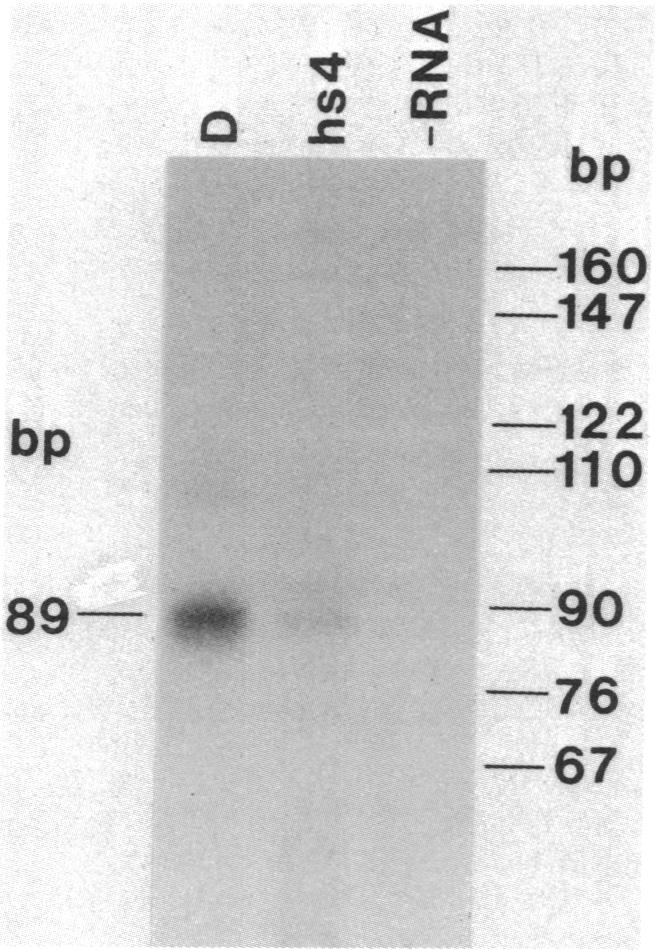
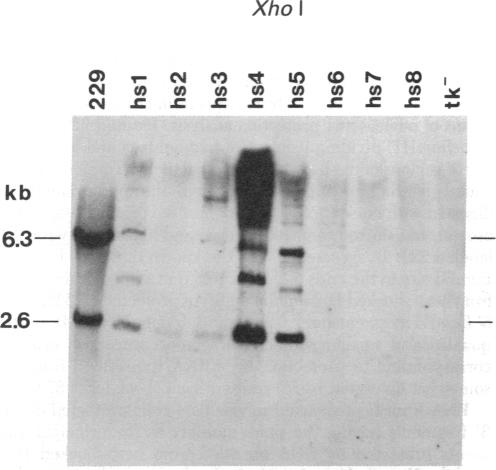
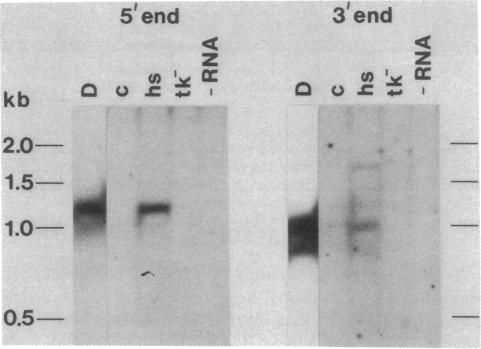
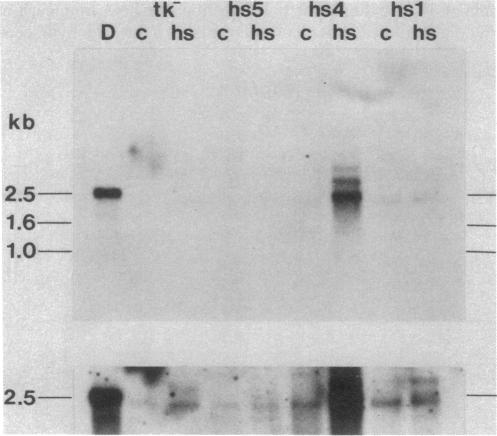
Mouse L cells were transformed with a cloned 3.6-kilobase (kb) segment of Drosophila melanogaster DNA carrying the 2.25-kb transcribed sequence for the Drosophila 70,000-dalton heat shock protein (hsp70) and 1.1 kb and 0.2 kb of 5' and 3' flanking DNA, respectively. Heat shock of one of three such transformed cell lines containing multiple copies of the intact Drosophila segment induced the abundant accumulation of transcripts of the Drosophila gene, with correct or nearly correct 5' and 3' termini. This provides evidence, in accord with earlier indications, that diverse eukaryotes, including vertebrates, have heat shock systems similar to that studied extensively in Drosophila. Our results suggest that the signals for heat shock transcription and the chromosomal sites with which they interact have been highly conserved in evolution and that the regulatory sequences controlling transcription of the gene for hsp70 lie within the 3.6-kb Drosophila segment.
用一段克隆的3.6千碱基(kb)的黑腹果蝇DNA片段转化小鼠L细胞,该片段携带果蝇70,000道尔顿热休克蛋白(hsp70)的2.25 kb转录序列以及分别为1.1 kb和0.2 kb的5'和3'侧翼DNA。三个含有完整果蝇片段多拷贝的此类转化细胞系之一经热休克后,诱导了果蝇基因转录本的大量积累,其5'和3'末端正确或近乎正确。这与早期迹象一致,提供了证据表明包括脊椎动物在内的多种真核生物具有与在果蝇中广泛研究的热休克系统相似的系统。我们的结果表明,热休克转录信号及其相互作用的染色体位点在进化过程中高度保守,并且控制hsp70基因转录的调控序列位于3.6 kb的果蝇片段内。