Fanning T G
Nucleic Acids Res. 1983 Aug 11;11(15):5073-91. doi: 10.1093/nar/11.15.5073.
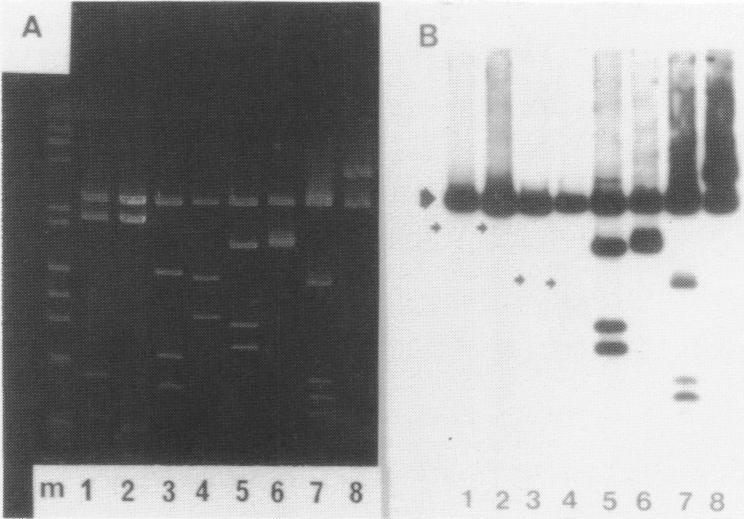
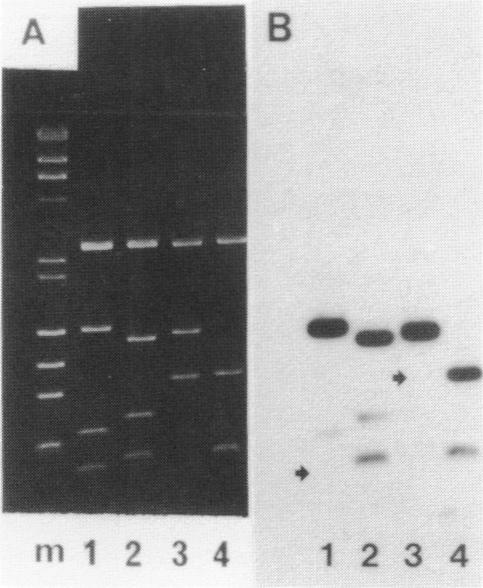
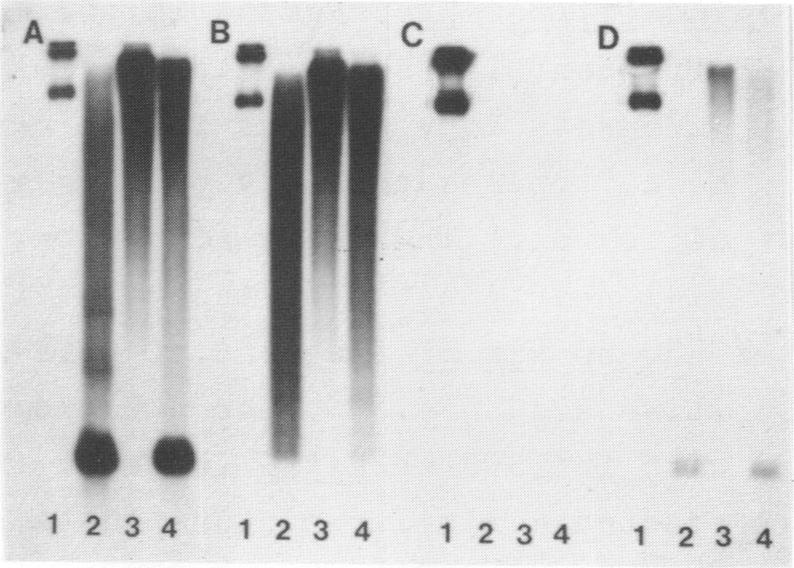
The BAM HI family of long interspersed DNAs in mice represent as much as 0.5% of the mouse genome. Cloned mouse DNA fragments which contain BAM HI/non-BAM HI junction sequences have been analyzed by restriction mapping and DNA sequencing. It has been found that BAM HI elements: (i) are approximately 7 kilobase pairs in size, (ii) are not bracketed by long repeated sequences analogous to the terminal repeats of proviruses and (iii) contain a poly-dA track at one end. The data strongly suggest that BAM HI elements arose by a process involving RNA intermediates. The beginning of the element, opposite the poly-dA track, contains a 22 base pair sequence exhibiting 65% homology to a ubiquitous mammalian sequence which may play a role in DNA replication (1). The poly-dA end of the element contains BAM5 and R sequences, both of which have been described previously (2,3).
小鼠中长散布DNA的BAM HI家族占小鼠基因组的比例高达0.5%。已通过限制性图谱分析和DNA测序对含有BAM HI/非BAM HI连接序列的克隆小鼠DNA片段进行了分析。已发现BAM HI元件:(i)大小约为7千碱基对,(ii)两侧没有类似于前病毒末端重复序列的长重复序列,并且(iii)一端含有多聚-dA序列。数据强烈表明,BAM HI元件是通过涉及RNA中间体的过程产生的。元件的起始端,与多聚-dA序列相对,包含一个22碱基对的序列,与一种普遍存在的哺乳动物序列具有65%的同源性,该序列可能在DNA复制中起作用(1)。元件的多聚-dA末端包含BAM5和R序列,这两种序列先前均已被描述(2,3)。