Kordula T, Travis J
Institute of Molecular Biology, Jagiellonian University, Krakow, Poland.
Biochem J. 1995 Jul 1;309 ( Pt 1)(Pt 1):63-7. doi: 10.1042/bj3090063.
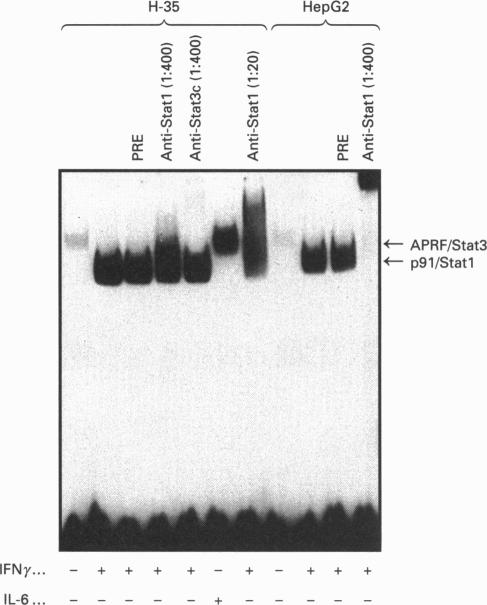
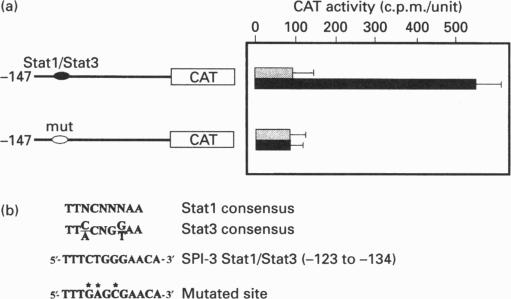
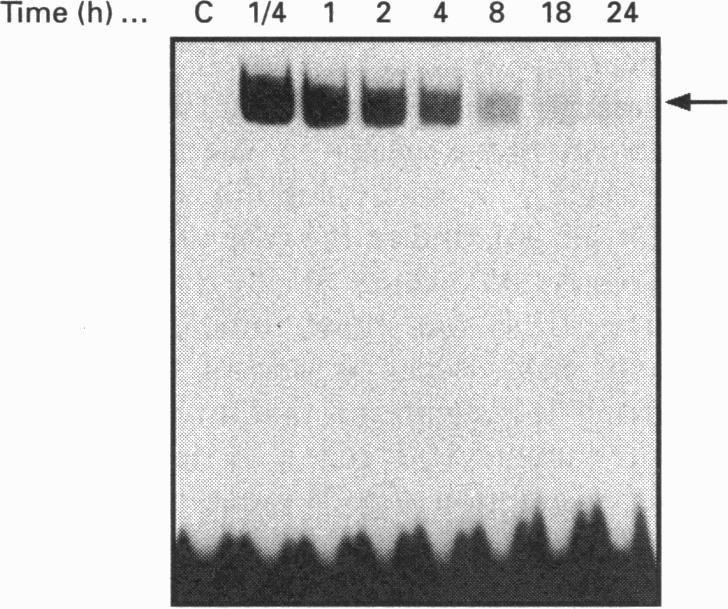
Transcription of rat serine proteinase inhibitor 3 (SPI-3) gene is rapidly induced in the liver in response to inflammation. Treatment of rat hepatoma H-35 cells with interferon gamma (INF gamma) results in the immediate induction of this gene, with its 147 bp-long promoter being sufficient for activation. Within this promoter we have identified an IFN gamma-responsive element which maps to the signal transducer and activator of transcription (Stat)3-binding site. Mutation of this element causes a loss of responsiveness to IFN gamma, whereas fusion to a heterologous promoter confers a positive response on IFN gamma. The latter apparently induces the binding of a protein, identified as Stat1, to the described element, which gradually decreases within 24 h. Thus the induction of the SPI-3 gene by IFN gamma correlates with the binding of Stat1 to a specific element which, in turn, binds Stat3 in response to interleukin 6.
大鼠丝氨酸蛋白酶抑制剂3(SPI-3)基因的转录在肝脏中因炎症反应而迅速被诱导。用γ干扰素(INFγ)处理大鼠肝癌H-35细胞可立即诱导该基因,其147bp长的启动子足以激活该基因。在这个启动子内,我们鉴定出一个IFNγ反应元件,它定位于信号转导和转录激活因子(Stat)3结合位点。该元件的突变导致对IFNγ的反应性丧失,而与异源启动子融合则赋予对IFNγ的阳性反应。后者显然诱导一种被鉴定为Stat1的蛋白质与所述元件结合,这种结合在24小时内逐渐减少。因此,IFNγ对SPI-3基因的诱导与Stat1与特定元件的结合相关,而该元件又会在白细胞介素6的作用下与Stat3结合。