Lauhio A, Salo T, Ding Y, Konttinen Y T, Nordström D, Tschesche H, Lähdevirta J, Golub L M, Sorsa T
Department of Bacteriology, University of Helsinki, Finland.
Clin Exp Immunol. 1994 Oct;98(1):21-8. doi: 10.1111/j.1365-2249.1994.tb06601.x.
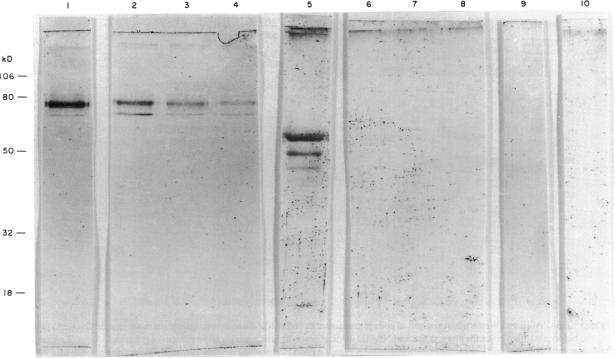
We studied the in vivo effect of long-term doxycycline treatment combined with NSAID on human interstitial collagenases, other matrix metalloproteinases, serine proteinases, tissue inhibitor of matrix metalloproteinase-1 (TIMP-1) and lactoferrin from saliva and serum during the course of acute reactive arthritis (ReA). Collagenase activity and serine proteases (elastase-like, cathepsin G-like and trypsin-like activities) of saliva (n = 10) and gelatinase, lactoferrin and TIMP-1 of saliva (n = 10) and serum (n = 10) samples before and after 2 months doxycycline treatment, combined with NSAID, were studied by quantitative SDS-PAGE assay, ELISA assay and by spectrophotometric assay. The cellular source and molecular forms of salivary collagenase were characterized by immunoblotting using specific antisera. We found that activities of total and endogenously active interstitial collagenase reduced significantly. The salivary collagenase was found to originate from neutrophils. No fragmentation of either pro 75-kD and active 65-kD MMP-8 was detected after 2 months doxycycline treatment. However, during 2 months doxycycline and NSAID treatment no reduction of salivary and serum gelatinase, lactoferrin and TIMP-1-levels and salivary serine protease activities were detected. The in vivo inhibition of collagenase (MMP-8) activity during long-term doxycycline therapy in human saliva containing inflammatory exudate of ReA patients may contribute to the reduced tissue destruction observed in recent clinical and animal model studies in arthritides during long-term doxycycline/tetracycline treatment.
我们研究了在急性反应性关节炎(ReA)病程中,长期强力霉素治疗联合非甾体抗炎药(NSAID)对人间质胶原酶、其他基质金属蛋白酶、丝氨酸蛋白酶、基质金属蛋白酶-1组织抑制剂(TIMP-1)以及唾液和血清中乳铁蛋白的体内作用。通过定量SDS-PAGE分析、ELISA分析和分光光度法分析,研究了10例患者唾液样本在强力霉素联合NSAID治疗2个月前后的胶原酶活性和丝氨酸蛋白酶(弹性蛋白酶样、组织蛋白酶G样和胰蛋白酶样活性),以及10例患者唾液和血清样本中的明胶酶、乳铁蛋白和TIMP-1。使用特异性抗血清通过免疫印迹法对唾液胶原酶的细胞来源和分子形式进行了表征。我们发现总间质胶原酶和内源性活性间质胶原酶的活性显著降低。发现唾液胶原酶来源于中性粒细胞。强力霉素治疗2个月后,未检测到75-kD前体和活性65-kD MMP-8的片段化。然而,在强力霉素和NSAID治疗2个月期间,未检测到唾液和血清中明胶酶、乳铁蛋白和TIMP-1水平以及唾液丝氨酸蛋白酶活性的降低。在含ReA患者炎性渗出液的人唾液中,长期强力霉素治疗期间胶原酶(MMP-8)活性的体内抑制作用,可能有助于解释在近期关于关节炎的临床和动物模型研究中,长期使用强力霉素/四环素治疗时观察到的组织破坏减少现象。