Bolsche F, MacCrimmon D J, Kropf S
Otto-v-Guericke-Universitat, Medizinische Fakultat, Magdeburg, Germany.
J Psychiatry Neurosci. 1996 Mar;21(2):83-8.
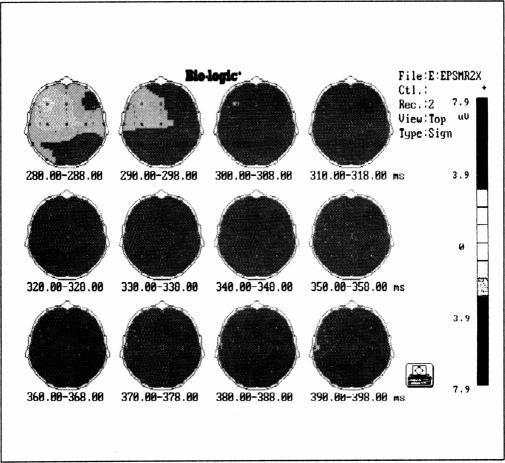
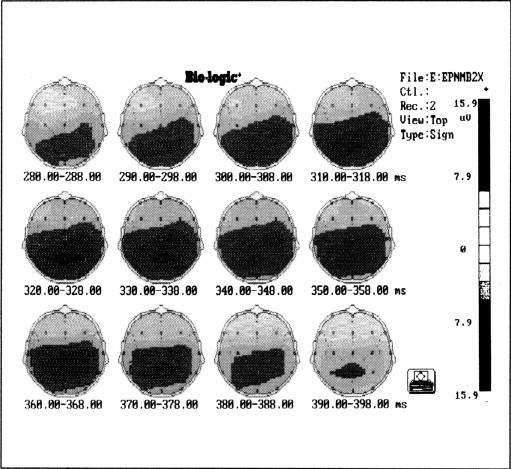
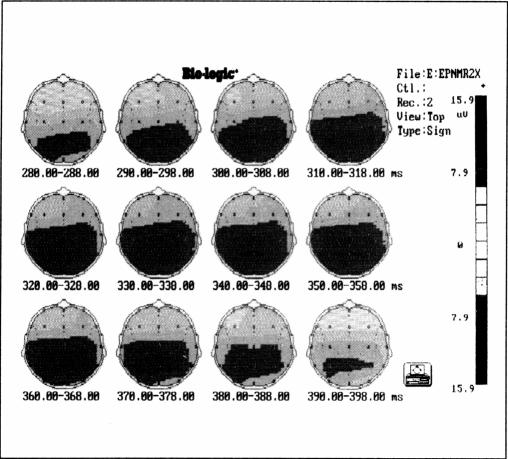
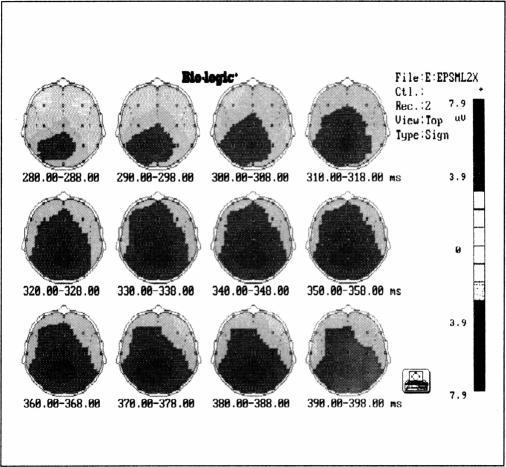
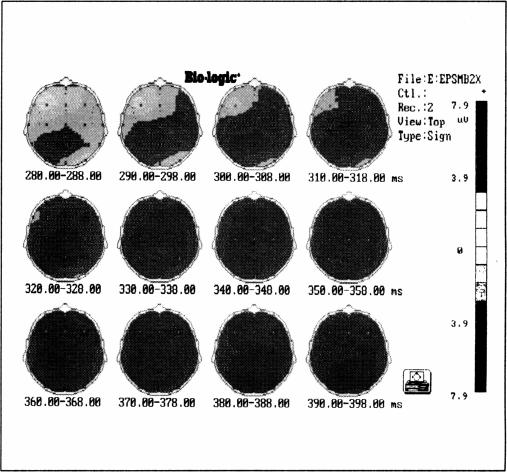
Reduced P300 amplitude in schizophrenia has been a consistent finding. Recent studies have raised the question of characteristic topographic distribution. This study reports the effects of binaural and unilateral stimuli on the P300 topography in schizophrenia. An auditory "oddball" paradigm was repeated 3 times with left, right and binaural stimulation. Data were recorded using a 19-electrode montage with linked ear reference. Subjects were 18 untreated, hallucinating, paranoid patients with schizophrenia and 24 healthy matched volunteers. For the control subjects, stimulus conditions had no effect on P300 topography. For the sample with schizophrenia, topography under unilateral left stimulation resembled that of control subjects. Binaural and right-sided stimulation shifted peak amplitudes to the right and frontally. In addition to the usually observed parietal peak, a second P300 maximum having a different time course appeared over right frontal areas. The data provide further support for lateralized dysfunction in schizophrenia.
精神分裂症患者P300波幅降低是一项一致的研究发现。近期研究提出了特征性地形分布的问题。本研究报告了双耳和单侧刺激对精神分裂症患者P300地形的影响。采用听觉“oddball”范式,分别进行左、右和双耳刺激,并重复3次。使用连接耳垂参考的19电极蒙太奇记录数据。研究对象为18名未接受治疗、有幻觉、偏执型精神分裂症患者和24名健康匹配志愿者。对于对照组受试者,刺激条件对P300地形没有影响。对于精神分裂症样本,单侧左侧刺激下的地形与对照组受试者相似。双耳和右侧刺激使峰值波幅向右和前方移动。除了通常观察到的顶叶峰值外,在右侧额叶区域出现了第二个具有不同时间进程的P300最大值。这些数据为精神分裂症的偏侧性功能障碍提供了进一步的支持。