Salari S H, Ward M E
J Clin Pathol. 1979 Nov;32(11):1155-62. doi: 10.1136/jcp.32.11.1155.
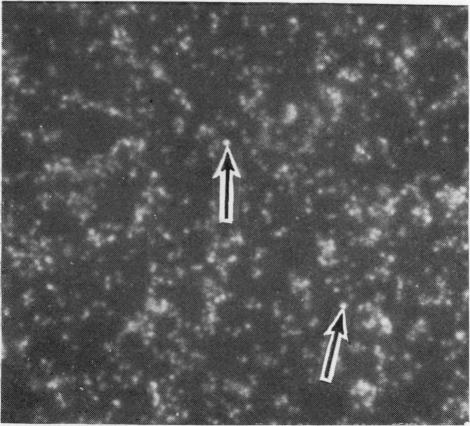
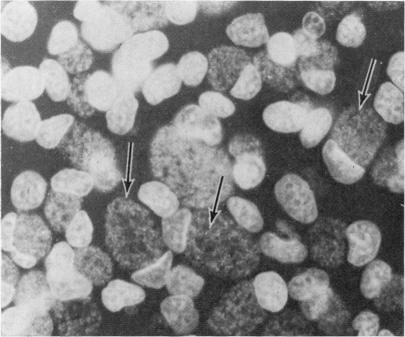
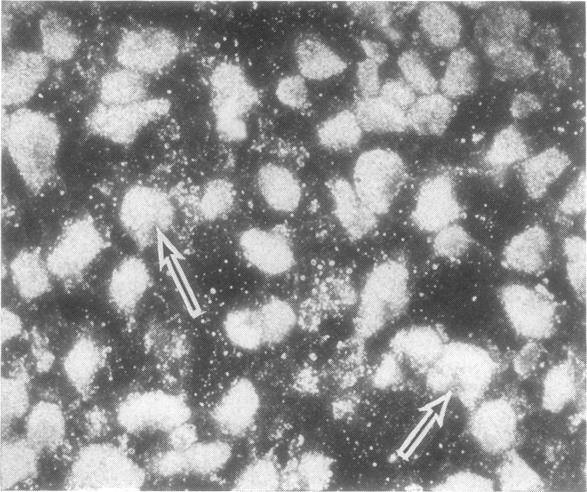
HeLa 229 cells were infected with genital tract strains of Chlamydia trachomatis. After incubation for varying times the infected cells were fixed and stained with the fluorescent DNA binding dyes Hoechst 33258 or DAPI for comparison with conventional Giemsa stain. Fluorochrome-treated preparations were examined by incident ultraviolet fluorescence microscopy and the Giemsa-stained preparations by dark-ground light microscopy. Chlamydial inclusion bodies could be identified unambiguously as early as 18 hours after infection of HeLa 229 cells using either Hoechst 33258 or DAPI but not until some 48 hours in Giemsa-stained preparations. The DNA rich chlamydial elementary bodies in infected egg yolk suspension were readily detected using Hoechst 33258. The fluorescent dye technique was simpler and more rapid than Giemsa staining. Using Hoechst 33258 it is possible to speed up the identification of chlamydial isolates growing in tissue culture.
将HeLa 229细胞用沙眼衣原体生殖道菌株进行感染。在不同时间孵育后,将感染的细胞固定,并用荧光DNA结合染料Hoechst 33258或DAPI进行染色,以便与传统的吉姆萨染色进行比较。用落射紫外荧光显微镜检查经荧光染料处理的标本,用暗视野光学显微镜检查吉姆萨染色的标本。使用Hoechst 33258或DAPI,早在HeLa 229细胞感染后18小时就能明确鉴定出衣原体包涵体,但在吉姆萨染色的标本中,直到约48小时才能鉴定出来。使用Hoechst 33258能很容易地检测到感染卵黄悬液中富含DNA的衣原体原体。荧光染料技术比吉姆萨染色更简单、更快速。使用Hoechst 33258可以加快对组织培养中生长的衣原体分离株的鉴定。