Hilts S R, Bock S E, Oke T L, Yates C L, Copes R A
Trail Lead Program Office, Trail, British Columbia, Canada.
Environ Health Perspect. 1998 Feb;106(2):79-83. doi: 10.1289/ehp.9810679.
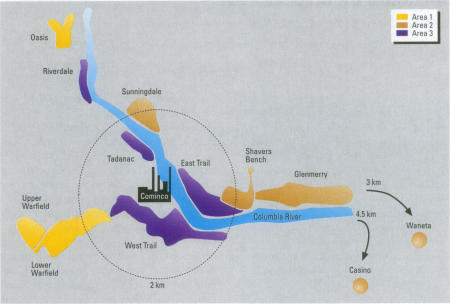
Trail, Canada, has been the site of an active lead/zinc smelter for nearly a century. Since 1991, the Trail Community Lead Task Force has carried out blood lead screening, case management, education programs targeted at early childhood groups and the general community, community dust abatement, exposure pathways studies, and remedial trials. From 1989 through 1996, average blood lead levels of children tested for the first time declined at an average rate of 0.6 microg/dl/year, while blood lead levels in Canadian children not living near point sources appeared to be leveling off following the phase-out of leaded gasoline. Since there was no concurrent improvement in local environmental conditions during this time, it is possible that the continuing decline in Trail blood lead levels has been at least partly due to community-wide intervention programs. One year follow-up of children whose families received in-home educational visits, as well as assistance with home-based dust control measures, found that these specific interventions produced average blood lead changes of +0.5- -4.0 microg/dl, with statistically significant declines in 3 years out of 5. Education and dust control, particularly actions targeted toward higher risk children, appear to have served as effective and appropriate interim remedial measures while major source control measures have been implemented at the smelter site.
加拿大特雷尔近一个世纪以来一直是活跃的铅锌冶炼厂所在地。自1991年以来,特雷尔社区铅问题特别工作组开展了血铅筛查、病例管理、针对幼儿群体和普通社区的教育项目、社区降尘、暴露途径研究以及补救试验。1989年至1996年期间,首次接受检测的儿童的平均血铅水平以每年0.6微克/分升的平均速度下降,而在无铅汽油逐步淘汰后,不住在点源附近的加拿大儿童的血铅水平似乎趋于平稳。由于在此期间当地环境状况没有同时改善,特雷尔血铅水平持续下降至少部分可能是由于社区范围内的干预项目。对那些家庭接受了家访以及在家中采取粉尘控制措施协助的儿童进行的一年随访发现,这些具体干预措施使血铅平均变化了+0.5至 -4.0微克/分升,在5年中有3年出现了统计学上显著的下降。在冶炼厂实施主要的源控制措施时,教育和粉尘控制,特别是针对高风险儿童的行动,似乎起到了有效且适当的临时补救措施的作用。