Dalvie Mohamed A, Cairncross Eugene, Solomon Abdullah, London Leslie
Occupational and Environmental Health Research Unit, Department of Public Health, Medical School, University of Cape Town, Anzio Road, Observatory 7925, Cape Town, South Africa.
Environ Health. 2003 Mar 10;2(1):1. doi: 10.1186/1476-069x-2-1.
In South Africa there is little data on environmental pollution of rural water sources by agrochemicals.
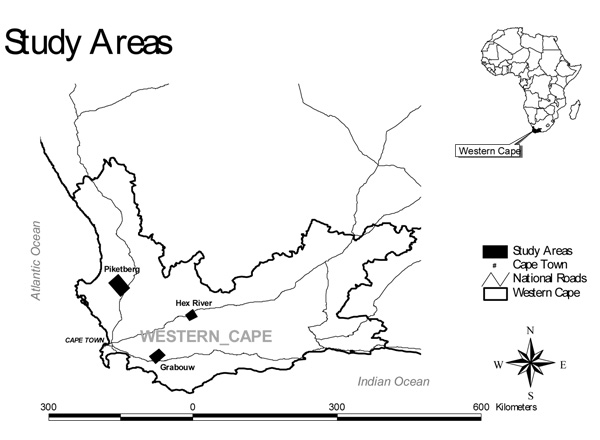
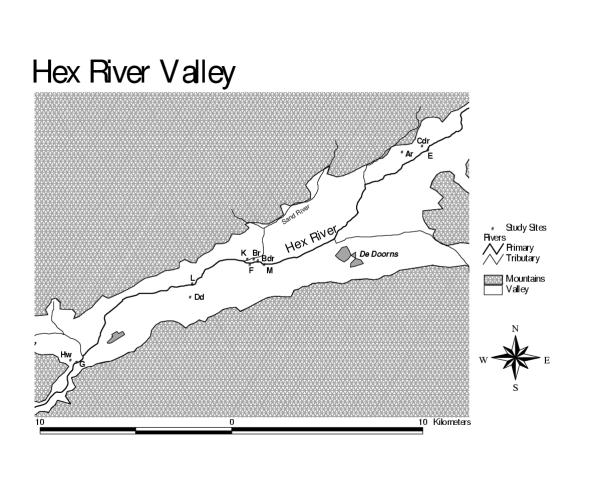
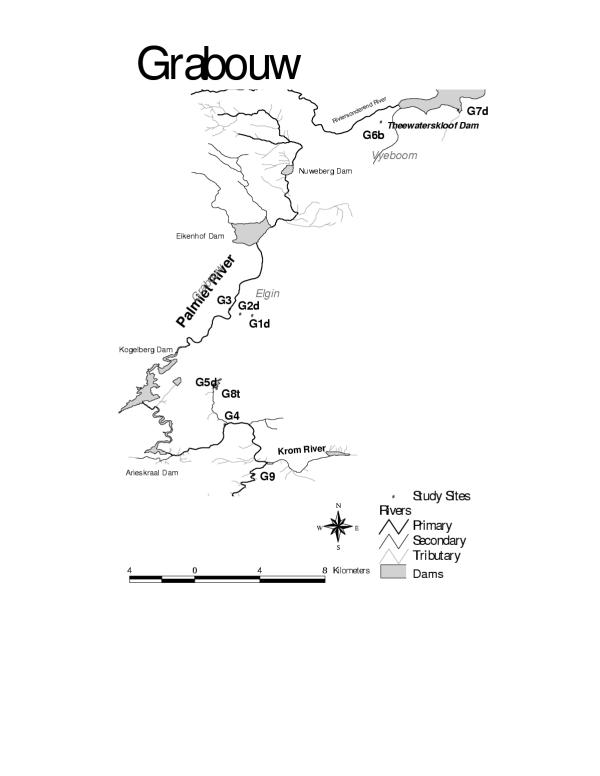
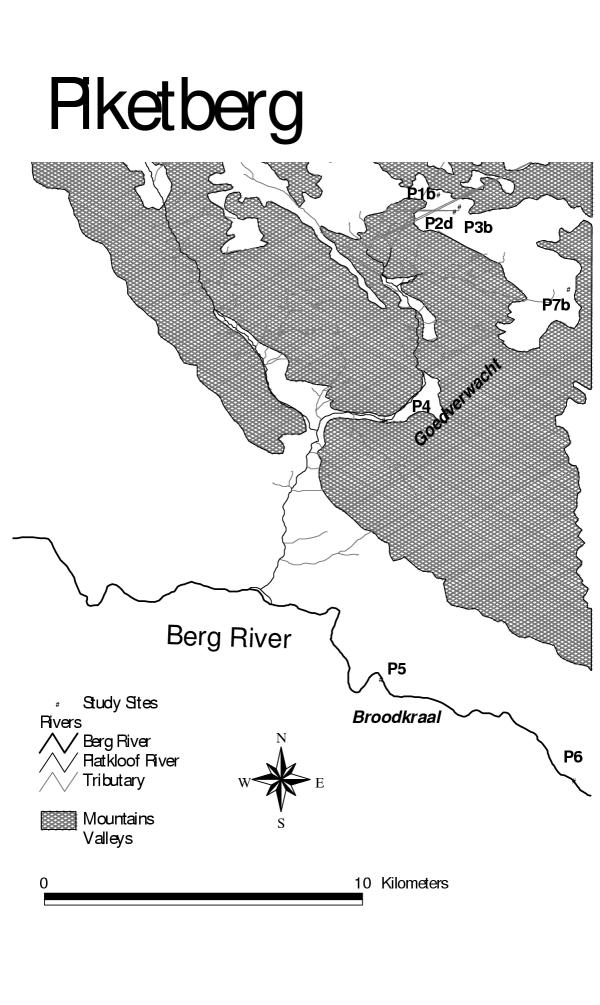
This study investigated pesticide contamination of ground and surface water in three intensive agricultural areas in the Western Cape: the Hex River Valley, Grabouw and Piketberg. Monitoring for endosulfan and chlorpyrifos at low levels was conducted as well as screening for other pesticides.
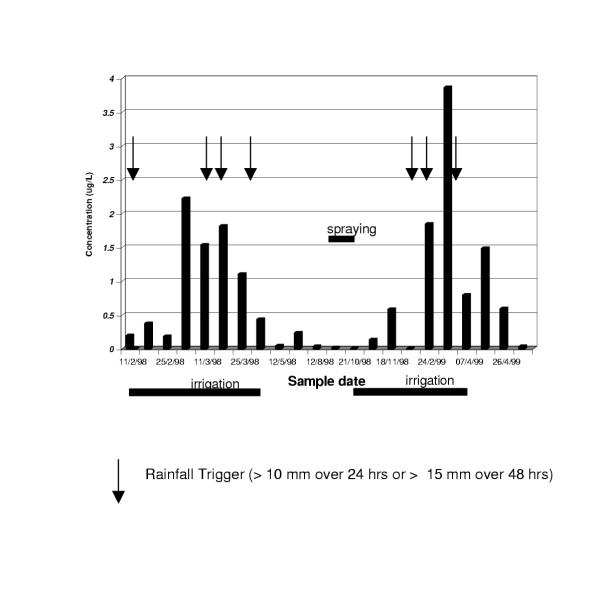
The quantification limit for endosulfan was 0.1 microg/L. Endosulfan was found to be widespread in ground water, surface water and drinking water. The contamination was mostly at low levels, but regularly exceeded the European Drinking Water Standard of 0.1 microg/L. The two most contaminated sites were a sub-surface drain in the Hex River Valley and a dam in Grabouw, with 0.83 +/- 1.0 microg/L (n = 21) and 3.16 +/- 3.5 microg/L (n = 13) average endosulfan levels respectively. Other pesticides including chlorpyrifos, azinphos-methyl, fenarimol, iprodione, deltamethrin, penconazole and prothiofos were detected. Endosulfan was most frequently detected in Grabouw (69%) followed by Hex River (46%) and Piketberg (39%). Detections were more frequent in surface water (47%) than in groundwater (32%) and coincided with irrigation, and to a lesser extent, to spraying and trigger rains. Total dietary endosulfan intake calculated from levels found in drinking water did not exceed the Joint WHO/FAO Meeting on Pesticide Residues (JMPR) criteria.
The study has shown the need for monitoring of pesticide contamination in surface and groundwater, and the development of drinking water quality standards for specific pesticides in South Africa.
在南非,关于农用化学品对农村水源造成环境污染的数据很少。
本研究调查了西开普省三个集约化农业区(赫克斯河谷、格拉布和皮克伯格)的地下水和地表水的农药污染情况。对硫丹和毒死蜱进行了低水平监测,并对其他农药进行了筛查。
硫丹的定量限为0.1微克/升。发现硫丹在地下水、地表水和饮用水中广泛存在。污染大多处于低水平,但经常超过欧洲饮用水标准的0.1微克/升。污染最严重的两个地点是赫克斯河谷的一条地下排水渠和格拉布的一座大坝,硫丹平均水平分别为0.83±1.0微克/升(n = 21)和3.16±3.5微克/升(n = 13)。还检测到了其他农药,包括毒死蜱、甲基谷硫磷、氯苯嘧啶醇、异菌脲、溴氰菊酯、戊唑醇和丙硫磷。硫丹在格拉布的检出频率最高(69%),其次是赫克斯河(46%)和皮克伯格(39%)。地表水中的检测频率(47%)高于地下水(32%),且与灌溉时间一致,在较小程度上与喷洒和暴雨有关。根据饮用水中发现的水平计算的膳食硫丹总摄入量未超过世界卫生组织/联合国粮食及农业组织农药残留联席会议(JMPR)的标准。
该研究表明有必要监测地表水和地下水中的农药污染情况,并制定南非特定农药的饮用水质量标准。