Chan Wai S, Wu Chun, Chow Sammy C S, Cheung To, To Ka-Fai, Leung Wai-Keung, Chan Paul K S, Lee Kam-Cheong, Ng Ho-Keung, Au Deborah M Y, Lo Anthony W I
Department of Anatomical and Cellular Pathology, The Chinese University of Hong Kong, Hong Kong SAR, China.
Mod Pathol. 2005 Nov;18(11):1432-9. doi: 10.1038/modpathol.3800439.
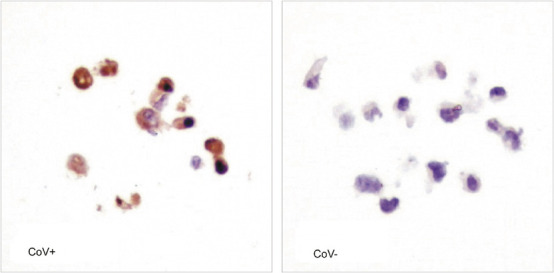
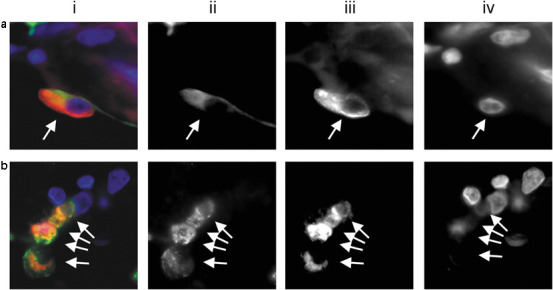
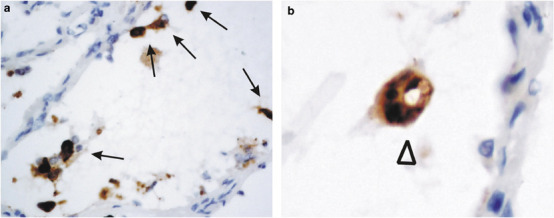
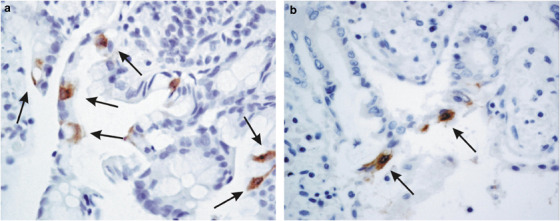
Severe acute respiratory syndrome (SARS) is a newly emerging infectious disease that haunted the world from November 2002 to July 2003. Little is known about the biology and pathophysiology of the novel coronavirus that causes SARS. The tissue and cellular distributions of coronaviral hypothetical and structural proteins in SARS were investigated. Antibodies against the hypothetical (SARS 3a, 3b, 6, 7a and 9b) and structural proteins (envelope, membrane, nucleocapsid and spike) of the coronavirus were generated from predicted antigenic epitopes of each protein. The presence of these proteins were first verified in coronavirus-infected Vero E6 tissue culture model. Immunohistochemical studies on different human tissues, including a cohort of nine autopsies, two liver biopsies and intestinal biopsies of SARS patients, further confirmed the existence of coronaviral hypothetical and structural proteins in the cytoplasm of pneumocytes and small intestinal surface enterocytes in SARS patients. With this vast array of antibodies, no signal was observed in other cell types including those organs in which reverse transcriptase-polymerase chain reactions were reported to be positive. Structural proteins and the functionally undefined hypothetical proteins were expressed in coronavirus-infected cells with distinct expression pattern in different organs in SARS patients. These antipeptide antibodies can be useful for the diagnosis of SARS at the tissue level.
严重急性呼吸综合征(SARS)是一种新出现的传染病,在2002年11月至2003年7月间肆虐全球。对于引发SARS的新型冠状病毒的生物学特性和病理生理学,人们知之甚少。本研究调查了冠状病毒假设蛋白和结构蛋白在SARS中的组织及细胞分布情况。针对冠状病毒的假设蛋白(SARS 3a、3b、6、7a和9b)和结构蛋白(包膜、膜、核衣壳和刺突),根据每种蛋白的预测抗原表位制备了抗体。这些蛋白首先在冠状病毒感染的Vero E6细胞培养模型中得到验证。对包括9例尸检、2例肝脏活检以及SARS患者肠道活检在内的不同人体组织进行免疫组织化学研究,进一步证实了SARS患者肺细胞和小肠表面肠细胞的细胞质中存在冠状病毒假设蛋白和结构蛋白。使用如此大量的抗体,在其他细胞类型中未观察到信号,包括那些据报道逆转录聚合酶链反应呈阳性的器官。结构蛋白和功能未明的假设蛋白在冠状病毒感染的细胞中表达,在SARS患者的不同器官中有不同的表达模式。这些抗肽抗体可用于在组织水平诊断SARS。