Zhang Ruifang, Eggleston Karen, Rotimi Vincent, Zeckhauser Richard J
Goldman Sachs International, Global Investment Research, London, UK.
Global Health. 2006 Apr 7;2:6. doi: 10.1186/1744-8603-2-6.
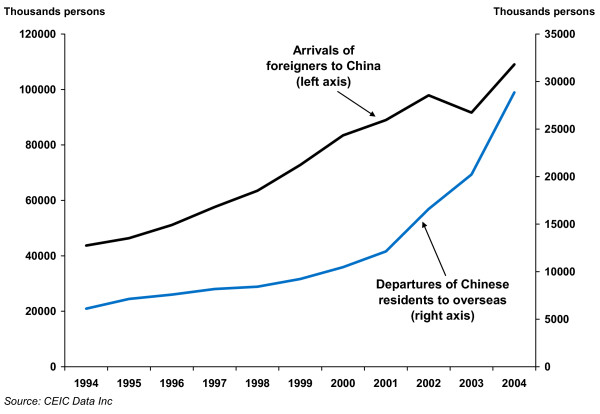
Antimicrobial resistance is an under-appreciated threat to public health in nations around the globe. With globalization booming, it is important to understand international patterns of resistance. If countries already experience similar patterns of resistance, it may be too late to worry about international spread. If large countries or groups of countries that are likely to leap ahead in their integration with the rest of the world--China being the standout case--have high and distinctive patterns of resistance, then a coordinated response could substantially help to control the spread of resistance. The literature to date provides only limited evidence on these issues.
We study the recent patterns of antibiotic resistance in three geographically separated, and culturally and economically distinct countries--China, Kuwait and the United States--to gauge the range and depth of this global health threat, and its potential for growth as globalization expands. Our primary measures are the prevalence of resistance of specific bacteria to specific antibiotics. We also propose and illustrate methods for aggregating specific "bug-drug" data. We use these aggregate measures to summarize the resistance pattern for each country and to study the extent of correlation between countries' patterns of drug resistance.
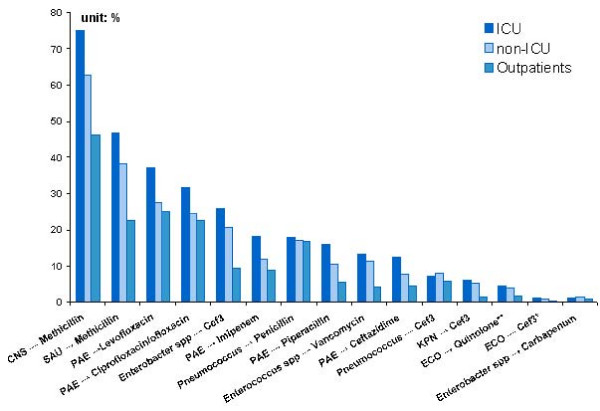
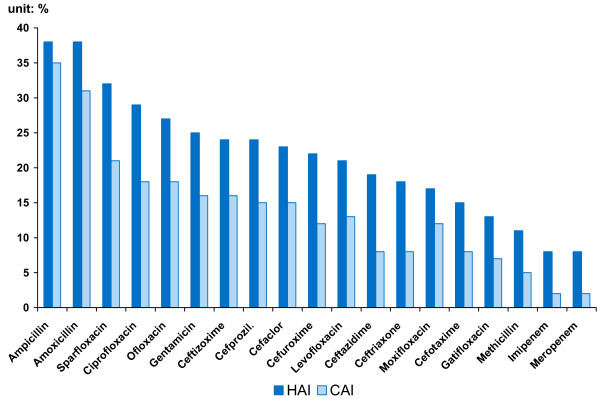
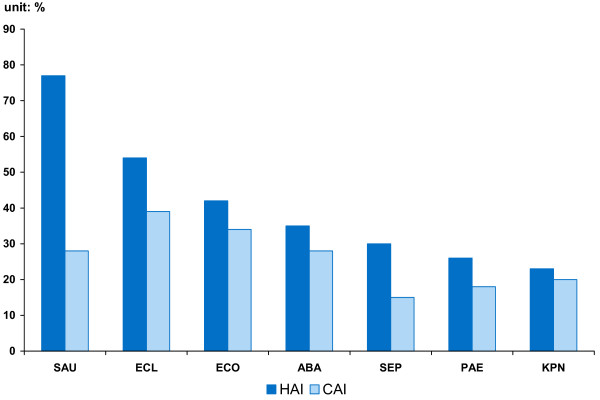
We find that China has the highest level of antibiotic resistance, followed by Kuwait and the U.S. In a study of resistance patterns of several most common bacteria in China in 1999 and 2001, the mean prevalence of resistance among hospital-acquired infections was as high as 41% (with a range from 23% to 77%) and that among community- acquired infections was 26% (with a range from 15% to 39%). China also has the most rapid growth rate of resistance (22% average growth in a study spanning 1994 to 2000). Kuwait is second (17% average growth in a period from 1999 to 2003), and the U.S. the lowest (6% from 1999 to 2002). Patterns of resistance across the three countries are not highly correlated; the most correlated were China and Kuwait, followed by Kuwait and the U.S., and the least correlated pair was China and the U.S.
Antimicrobial resistance is a serious and growing problem in all three countries. To date, there is not strong international convergence in the countries' resistance patterns. This finding may change with the greater international travel that will accompany globalization. Future research on the determinants of drug resistance patterns, and their international convergence or divergence, should be a priority.
在全球各国,抗生素耐药性对公众健康构成了一个未得到充分重视的威胁。随着全球化蓬勃发展,了解国际耐药模式至关重要。如果各国已经出现相似的耐药模式,那么担心其国际传播可能为时已晚。如果那些在与世界其他地区融合方面可能领先的大国或国家集团——中国是突出的例子——具有高度且独特的耐药模式,那么协调一致的应对措施可能会极大地有助于控制耐药性的传播。迄今为止的文献仅提供了关于这些问题的有限证据。
我们研究了三个地理位置相隔、文化和经济各具特色的国家——中国、科威特和美国——近期的抗生素耐药模式,以评估这一全球健康威胁的范围和深度,以及随着全球化扩张其潜在的增长情况。我们的主要衡量指标是特定细菌对特定抗生素的耐药率。我们还提出并阐述了汇总特定“细菌 - 药物”数据的方法。我们使用这些汇总指标来总结每个国家的耐药模式,并研究各国耐药模式之间的相关程度。
我们发现中国的抗生素耐药水平最高,其次是科威特和美国。在对中国1999年和2001年几种最常见细菌的耐药模式研究中,医院获得性感染的平均耐药率高达41%(范围为23%至77%),社区获得性感染的平均耐药率为26%(范围为15%至39%)。中国的耐药增长率也最快(在1994年至2000年的一项研究中平均增长22%)。科威特排第二(在1999年至2003年期间平均增长17%),美国最低(1999年至2002年为6%)。三国的耐药模式相关性不高;相关性最高的是中国和科威特,其次是科威特和美国,相关性最低的是中国和美国。
抗生素耐药性在这三个国家都是一个严重且日益严重的问题。迄今为止,各国的耐药模式在国际上并未出现强烈趋同。随着全球化带来的国际旅行增加,这一发现可能会改变。未来关于耐药模式的决定因素及其国际趋同或差异的研究应成为优先事项。