Pulvermüller Friedemann, Berthier Marcelo L
Medical Research Council Cognition and Brain Sciences Unit, Cambridge, UK.
Aphasiology. 2008 Jun;22(6):563-599. doi: 10.1080/02687030701612213. Epub 2008 May 21.
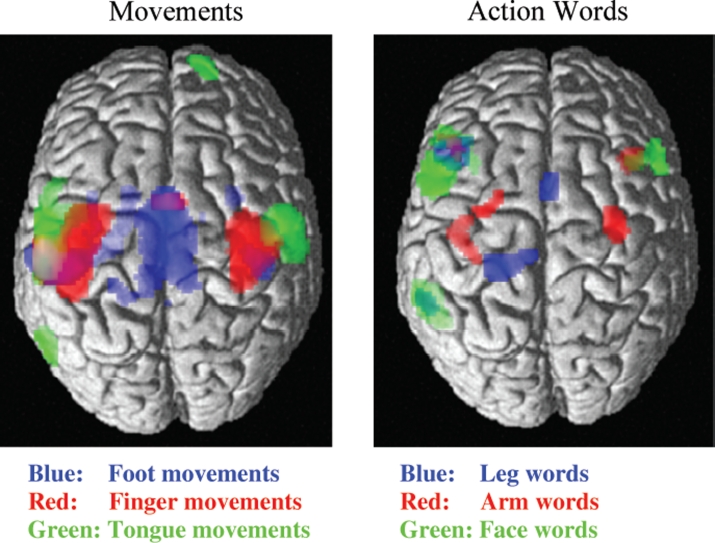
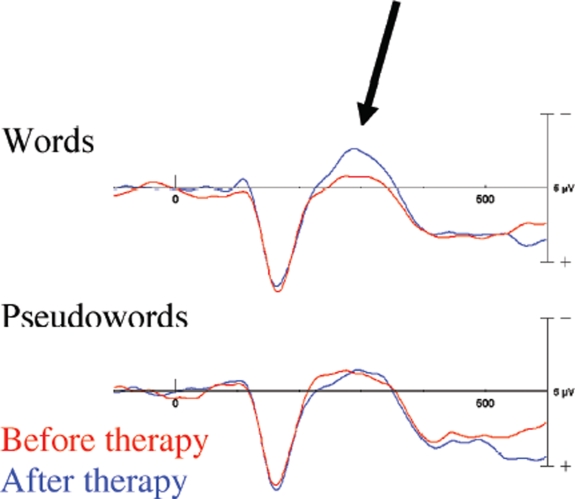
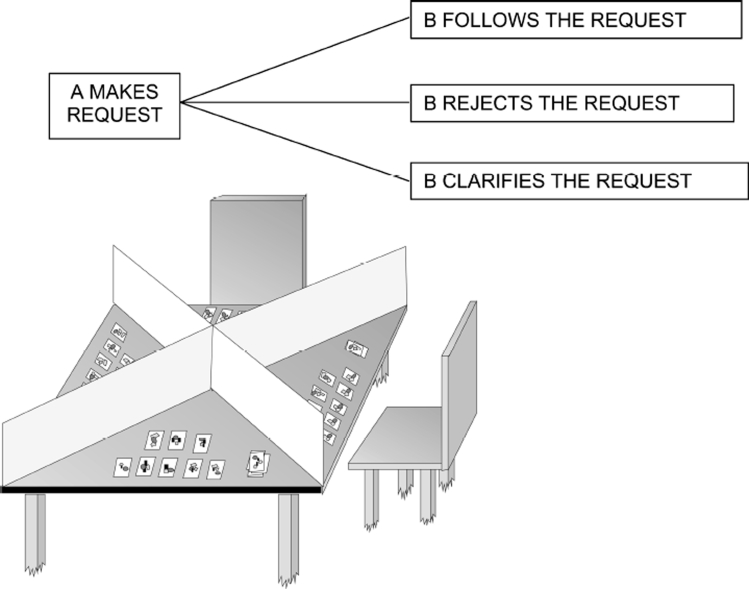
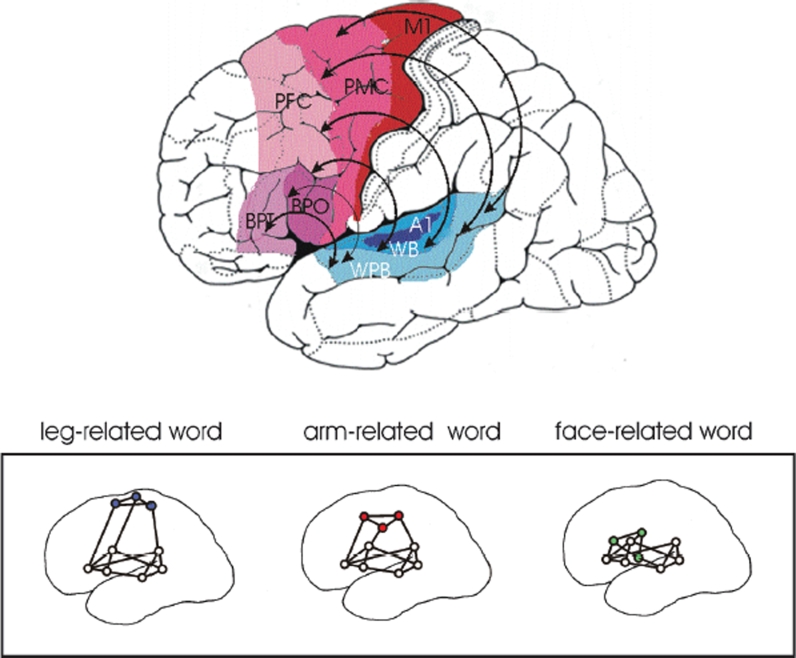
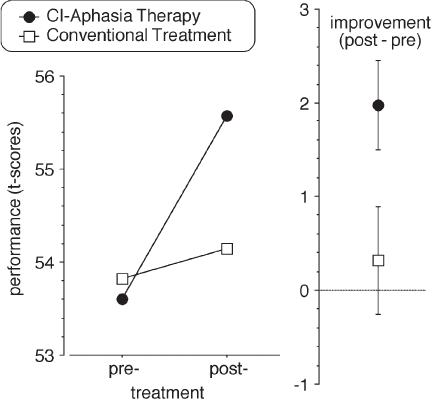
Brain research has documented that the cortical mechanisms for language and action are tightly interwoven and, concurrently, new approaches to language therapy in neurological patients are being developed that implement language training in the context of relevant linguistic and non-linguistic actions, therefore taking advantage of the mutual connections of language and action systems in the brain. A further well-known neuroscience principle is that learning at the neuronal level is driven by correlation; consequently, new approaches to language therapy emphasise massed practice in a short time, thus maximising therapy quantity and frequency and, therefore, correlation at the behavioural and neuronal levels. Learned non-use of unsuccessful actions plays a major role in the chronification of neurological deficits, and behavioural approaches to therapy have therefore employed shaping and other learning techniques to counteract such non-use. AIMS: Advances in theoretical and experimental neuroscience have important implications for clinical practice. We exemplify this in the domain of aphasia rehabilitation. MAIN CONTRIBUTION: Whereas classical wisdom had been that aphasia cannot be significantly improved at a chronic stage, we here review evidence that one type of intensive language-action therapy (ILAT)-constraint-induced aphasia therapy-led to significant improvement of language performance in patients with chronic aphasia. We discuss perspectives for further improving speech-language therapy, including drug treatment that may be particularly fruitful when applied in conjunction with behavioural treatment. In a final section we highlight intensive and rapid therapy studies in chronic aphasia as a unique tool for exploring the cortical reorganisation of language. CONCLUSIONS: We conclude that intensive language action therapy is an efficient tool for improving language functions even at chronic stages of aphasia. Therapy studies using this technique can open new perspectives for research into the plasticity of human language circuits.
脑科学研究表明,语言和行动的皮质机制紧密相连,同时,针对神经疾病患者的语言治疗新方法正在不断发展,这些方法在相关语言和非语言行动的背景下实施语言训练,从而利用大脑中语言和行动系统的相互联系。另一个广为人知的神经科学原理是,神经元水平的学习是由相关性驱动的;因此,语言治疗的新方法强调在短时间内进行集中练习,从而最大化治疗的数量和频率,进而在行为和神经元水平上实现相关性。习得性不使用不成功的行动在神经功能缺损的慢性化过程中起主要作用,因此行为治疗方法采用塑造和其他学习技巧来对抗这种不使用。目的:理论和实验神经科学的进展对临床实践具有重要意义。我们在失语症康复领域举例说明这一点。主要贡献:传统观点认为失语症在慢性阶段无法显著改善,但我们在此回顾证据表明,一种强化语言 - 行动疗法(ILAT)——强制性失语症疗法——能使慢性失语症患者的语言表现得到显著改善。我们讨论了进一步改进言语 - 语言治疗的前景,包括药物治疗,当与行为治疗联合应用时可能会特别有效。在最后一部分,我们强调慢性失语症的强化和快速治疗研究是探索语言皮质重组的独特工具。结论:我们得出结论,强化语言行动疗法即使在失语症的慢性阶段也是改善语言功能的有效工具。使用该技术的治疗研究可以为人类语言回路可塑性的研究开辟新的前景。