Institute of Medical Psychology, Goethe-University, Frankfurt am Main, Germany.
Behav Brain Funct. 2008 Nov 24;4:53. doi: 10.1186/1744-9081-4-53.
Brain-computer interface methodology based on self-regulation of slow-cortical potentials (SCPs) of the EEG (electroencephalogram) was used to assess conditional associative learning in one severely paralyzed, late-stage ALS patient. After having been taught arbitrary stimulus relations, he was evaluated for formation of equivalence classes among the trained stimuli.
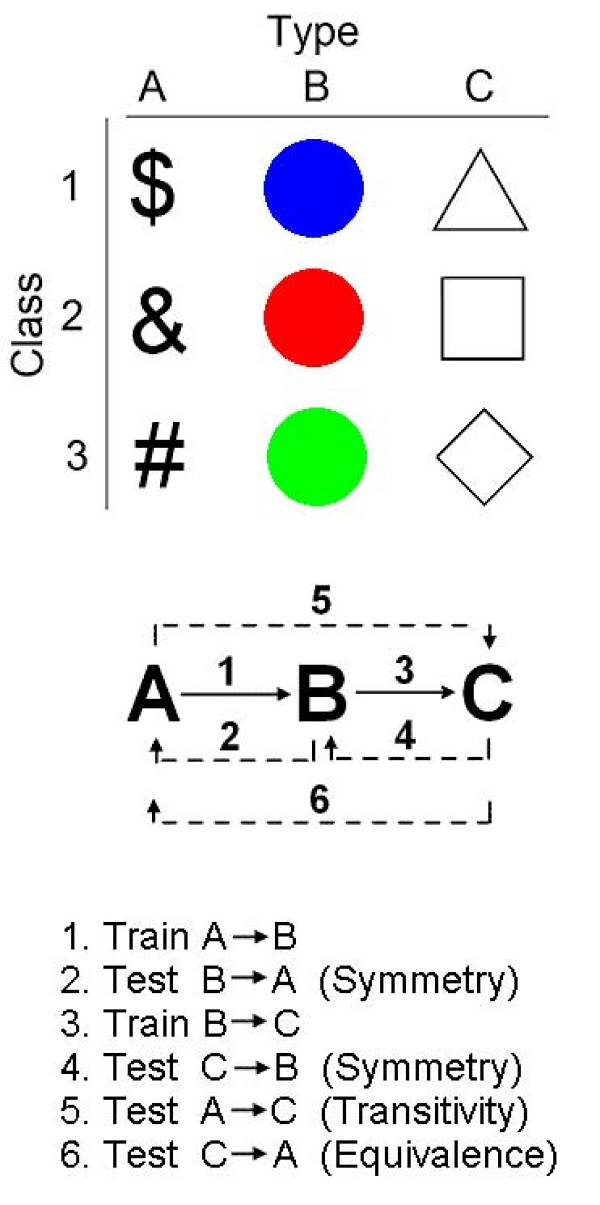
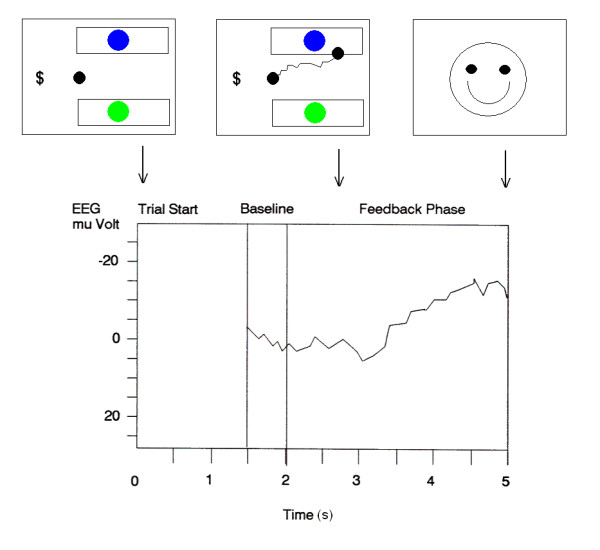
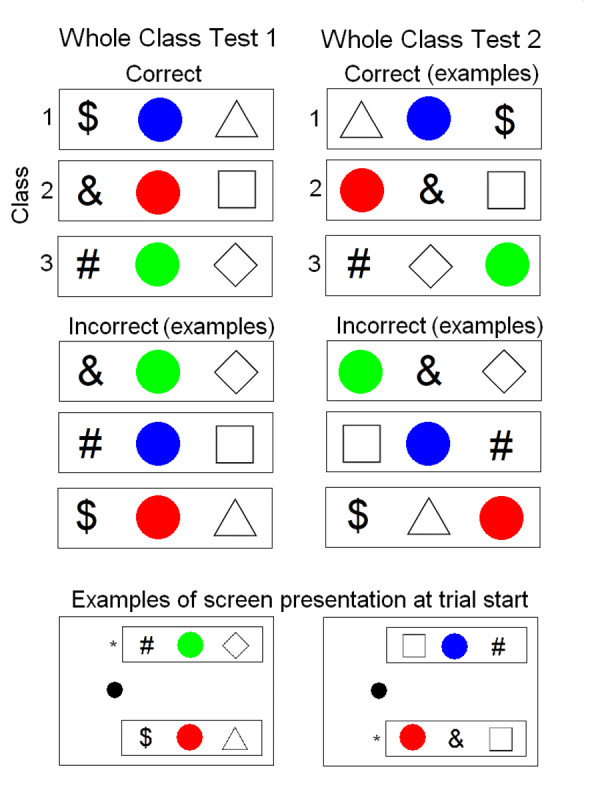
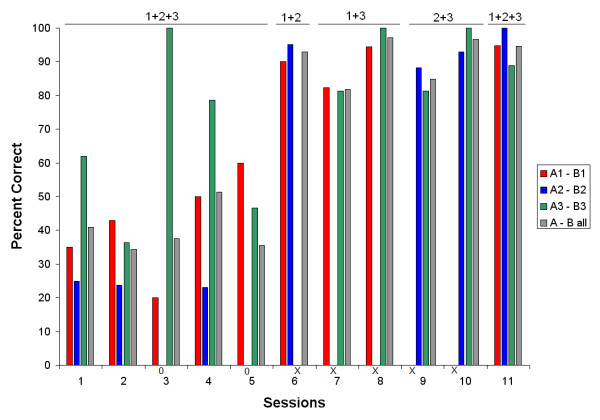
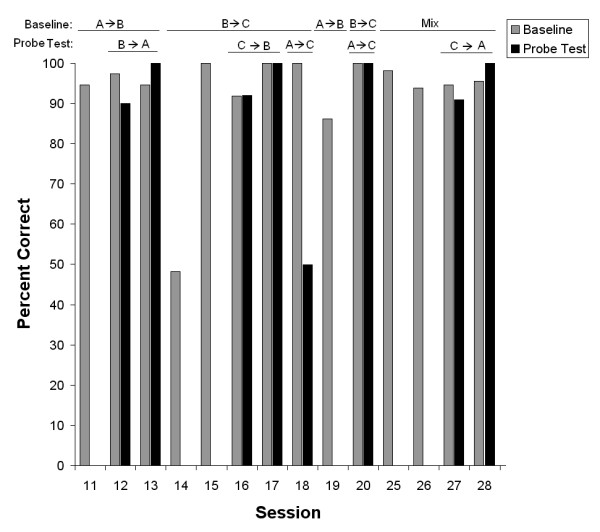
A monitor presented visual information in two targets. The method of teaching was matching to sample. Three types of stimuli were presented: signs (A), colored disks (B), and geometrical shapes (C). The sample was one type, and the choice was between two stimuli from another type. The patient used his SCP to steer a cursor to one of the targets. A smiley was presented as a reward when he hit the correct target. The patient was taught A-B and B-C (sample - comparison) matching with three stimuli of each type. Tests for stimulus equivalence involved the untaught B-A, C-B, A-C, and C-A relations. An additional test was discrimination between all three stimuli of one equivalence class presented together versus three unrelated stimuli. The patient also had sessions with identity matching using the same stimuli.
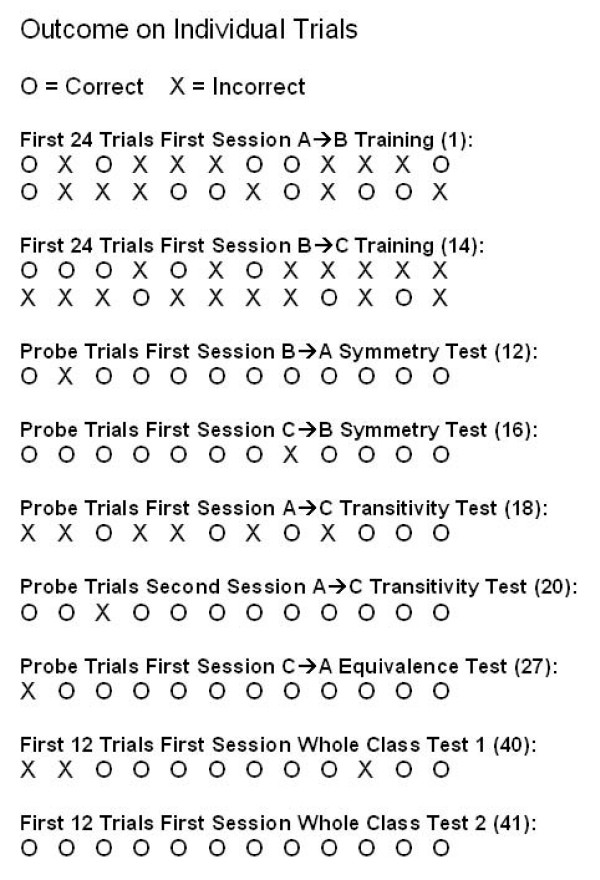
The patient showed high accuracy, close to 100%, on identity matching and could therefore discriminate the stimuli and control the cursor correctly. Acquisition of A-B matching took 11 sessions (of 70 trials each) and had to be broken into simpler units before he could learn it. Acquisition of B-C matching took two sessions. The patient passed all equivalence class tests at 90% or higher.
The patient may have had a deficit in acquisition of the first conditional association of signs and colored disks. In contrast, the patient showed clear evidence that A-B and B-C training had resulted in formation of equivalence classes. The brain-computer interface technology combined with the matching to sample method is a useful way to assess various cognitive abilities of severely paralyzed patients, who are without reliable motor control.
基于脑电图(EEG)慢皮层电位(SCP)自调节的脑-机接口方法被用于评估一位严重瘫痪的晚期肌萎缩侧索硬化症(ALS)患者的条件联想学习。在接受了任意刺激关系的教学后,他被评估了在训练刺激中形成等价类的能力。
一个监视器在两个目标中呈现视觉信息。教学方法是匹配样本。呈现三种类型的刺激:符号(A)、彩色圆盘(B)和几何形状(C)。样本是一种类型,而选择是来自另一种类型的两种刺激之一。患者使用他的 SCP 来将光标导向一个目标。当他击中正确的目标时,会出现一个笑脸作为奖励。患者被教授 A-B 和 B-C(样本-比较)匹配,每种类型使用三个刺激。刺激等价性测试涉及未教授的 B-A、C-B、A-C 和 C-A 关系。另外一个测试是在三个未教的等价类的刺激一起与三个不相关的刺激之间进行区分。患者还进行了使用相同刺激的身份匹配的会话。
患者在身份匹配中表现出接近 100%的高准确率,因此能够正确区分刺激并控制光标。A-B 匹配的获得需要 11 个会话(每个会话 70 次试验),并且在他能够学习之前必须分成更简单的单元。B-C 匹配的获得需要两个会话。患者在所有等价类测试中都达到了 90%或更高的准确率。
患者可能在获得符号和彩色圆盘的第一个条件关联方面存在缺陷。相比之下,患者清楚地表明 A-B 和 B-C 训练导致了等价类的形成。脑-机接口技术与匹配样本方法相结合,是评估严重瘫痪患者各种认知能力的有用方法,这些患者没有可靠的运动控制能力。